Planning a Caribbean trip brings up a lot of questions. Beyond packing sunscreen and swimsuits, figuring out how to communicate usually ranks high on the pre-vacation stress list. If you're hunting down the best Punta Cana travel tips, you're probably asking yourself: what languages are spoken in the Dominican Republic? You might be wondering if your high school Spanish is enough, or if you can just get by pointing at menus. Let's break down exactly what you can expect when you step off the plane.
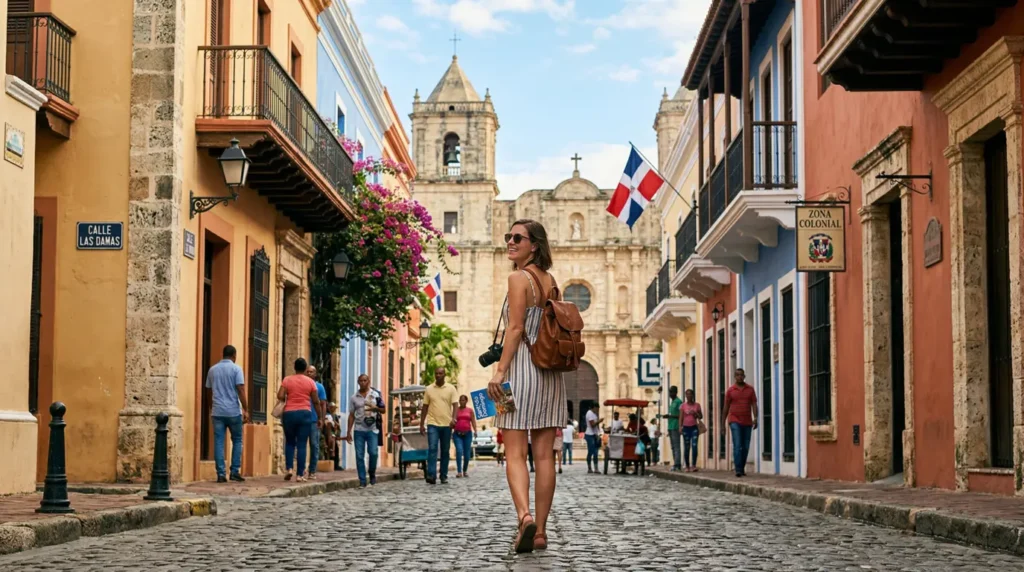
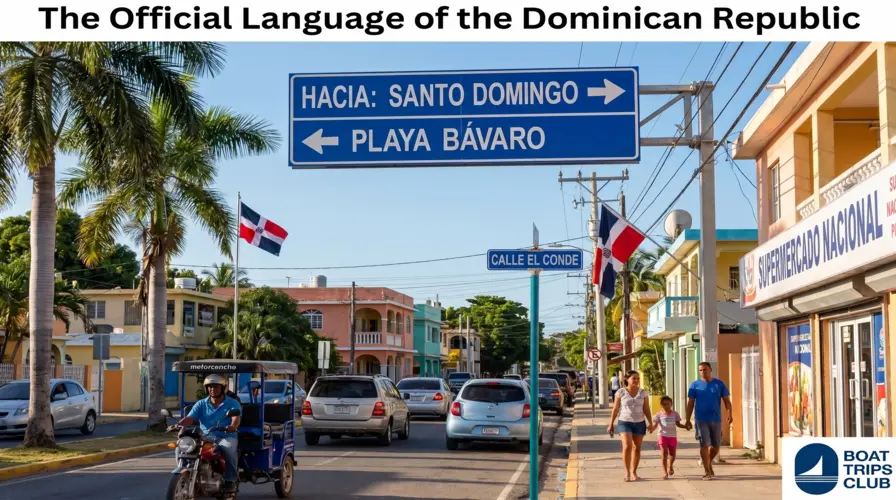
No shocker here. Spanish takes the crown as the official language of the Dominican Republic. It’s what you’ll see on street signs, hear on the radio, and use if you ever need to chat with local officials. But there’s a catch.
Textbook Spanish is great, but the Dominican dialect plays by its own rules. It’s fast, loud, and incredibly expressive. If you learned Spanish in Spain or Mexico, your ears might need a minute to adjust.
First off, locals tend to swallow the letter "s" at the end of words. "Gracias" sounds more like "gracia." "Dos" becomes "do." They also love mashing words together to save time in a conversation.
Plus, the vocabulary has deep historical roots. A lot of everyday words actually come from the Taíno people, the island's original inhabitants. Words like huracán (hurricane) and barbacoa (barbecue) started right here. And you can’t walk down a street without hearing “¿Qué lo qué?”—the ultimate local slang for “What’s up?”
Honestly? It can be tough at first. The sheer speed of a normal conversation catches a lot of visitors off guard. Even native Spanish speakers from other parts of the world sometimes do a double-take. But don't stress about it. Dominicans are known for being incredibly warm and patient. If you attempt a few words, they’ll usually slow down, smile, and use plenty of hand gestures to get the point across.
If you break out in a cold sweat trying to remember how to conjugate a verb, take a deep breath. You picked the right island for a relaxing vacation.
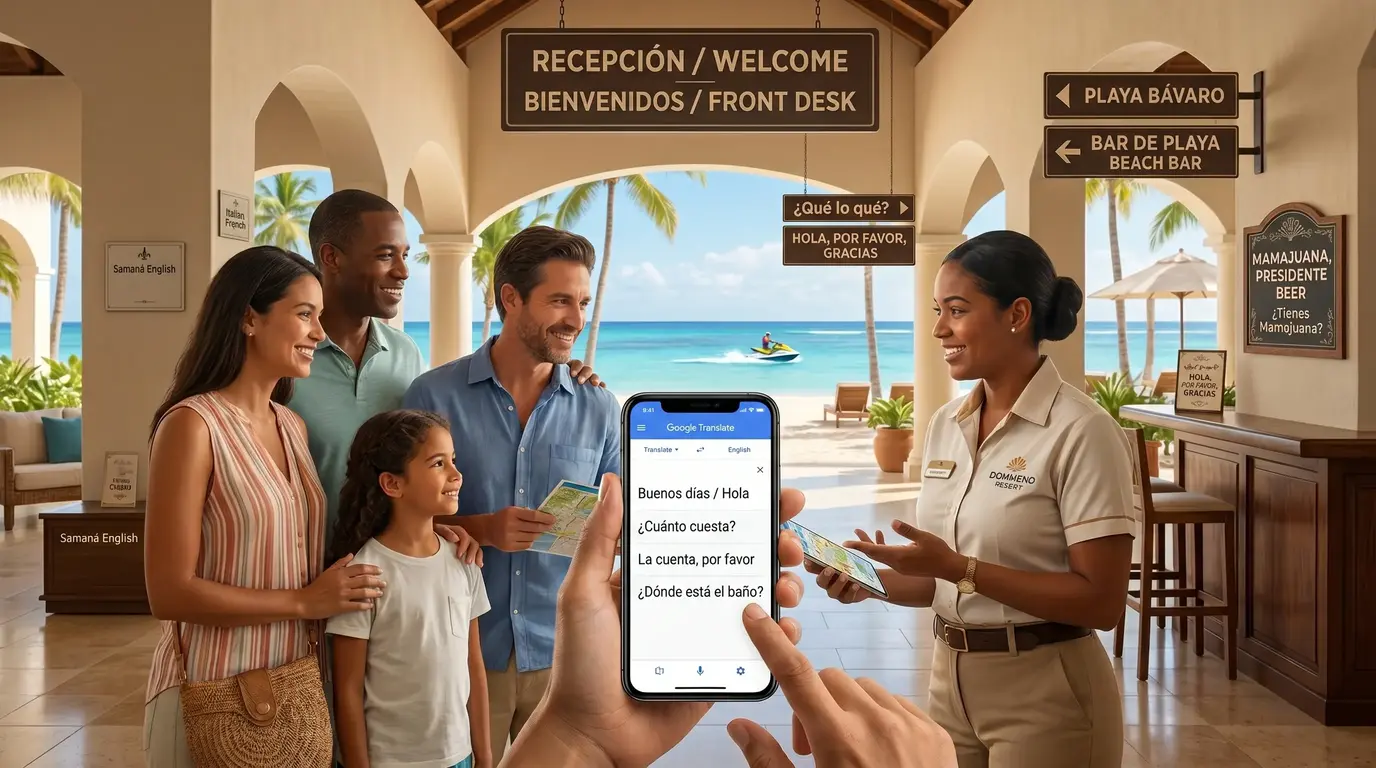
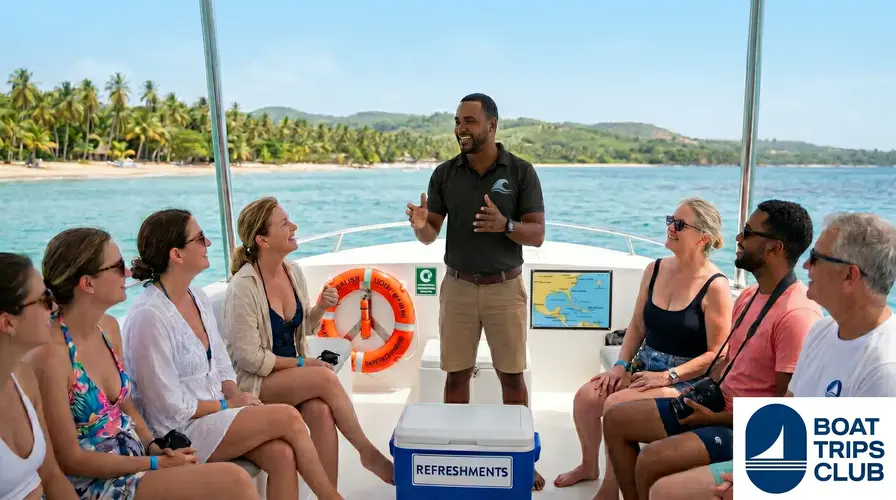
Punta Cana is built around international tourism. Because millions of visitors fly in from the US and Canada every year, English dominates the resort areas. From the moment you arrive until you settle into the best area to stay in Punta Cana, you'll hear English. Front desk staff, bartenders, and excursion guides speak it fluently. Inside the resort bubble, you won't face a language barrier at all.
Step outside those tourist hubs, and the picture shifts. According to the EF English Proficiency Index, the country as a whole ranks in the moderate-to-low tier for English fluency. This means if you rent a car and drive up into the mountains or stop at a small roadside fruit stand, English won't get you very far. But along the coastlines and in business districts, being bilingual is a massive advantage for locals, so you'll still find plenty of English speakers.
Not at all. If your game plan is to lay by the pool and order drinks for seven days straight, you won't need a single word of Spanish. People often ask is Punta Cana safe to visit if you don't speak the language. The answer is absolutely yes.
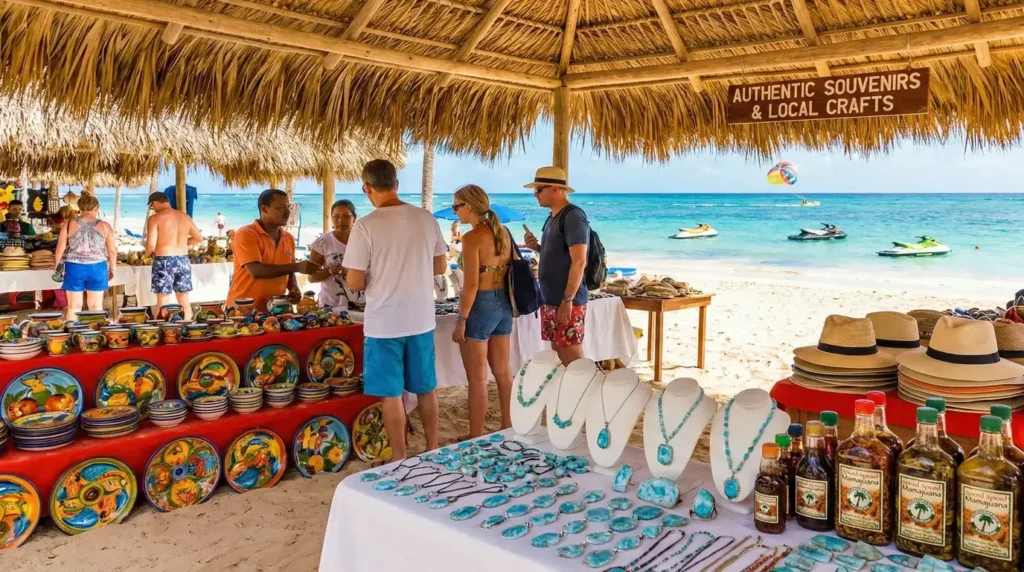
That said, picking up a few basics makes everything better. It opens doors. You'll have an easier time grabbing taxis, negotiating prices for souvenirs, and finding some of the cooler things to do in Dominican Republic that hide just off the main tourist trail.
Spanish and English steal the spotlight, but the island has a couple of other linguistic quirks worth knowing about.
The Dominican Republic shares a border with Haiti. Because of this proximity and the large number of cross-border workers, Haitian Creole is the second most common language you'll hear. It’s especially prevalent in agricultural zones, on construction sites, and in border towns. Many Haitians living here speak both Creole and Spanish flawlessly.
Here’s a wild piece of history. There’s a specific region in the DR where a unique form of English has survived for over two hundred years. On the Samaná Peninsula, descendants of freed African Americans who migrated in the 1820s still speak Samaná English. Standard Spanish has mostly taken over nowadays, but if you hang around older locals in Santa Bárbara de Samaná, you can still catch this rare dialect in action.
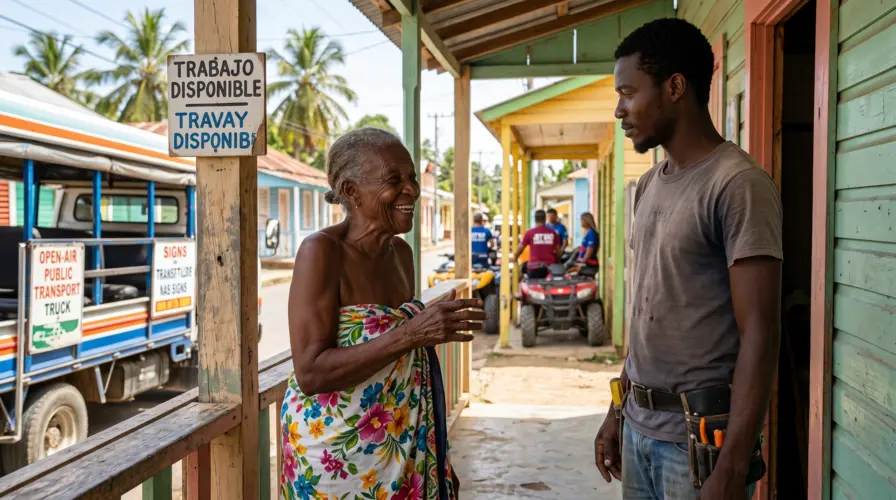
You definitely don't need fluency to have a great time. Just throw a few phrases into your mental toolkit before you board your flight.
Showing up with a handful of Spanish words goes a long way. Locals love it when you try.
Want to sound like a pro at the bar? Ask the bartender, “¿Tienes Mamajuana?” If you haven't looked up what is Mamajuana yet, you're in for a treat. It's a local mix of rum, red wine, honey, and tree bark that packs a serious punch.
Definitely. Your phone is your best translator. Google Translate works wonders down here.
The trick is to download the Spanish language pack onto your device before you leave your house. Your hotel will have great Wi-Fi, but if you're out riding ATVs through the mud or relaxing on a remote beach, your cell signal might drop out entirely. Having the offline version ready saves you from awkward games of charades.
Traveling to the Dominican Republic shouldn't cause any language anxiety. Spanish is the soul of the country, but English is the unofficial language of the tourism scene. You can easily navigate your entire trip without a hitch.
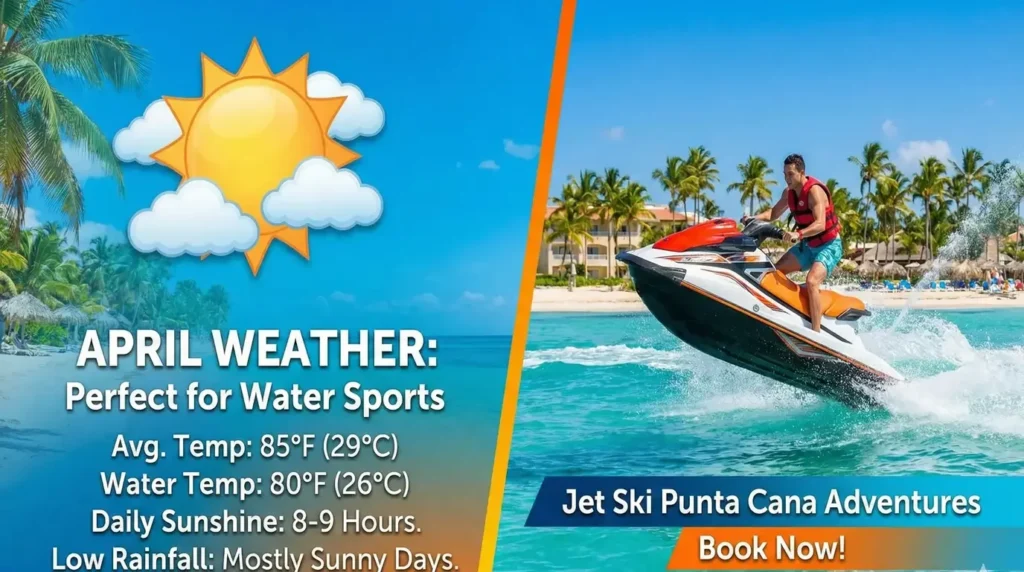
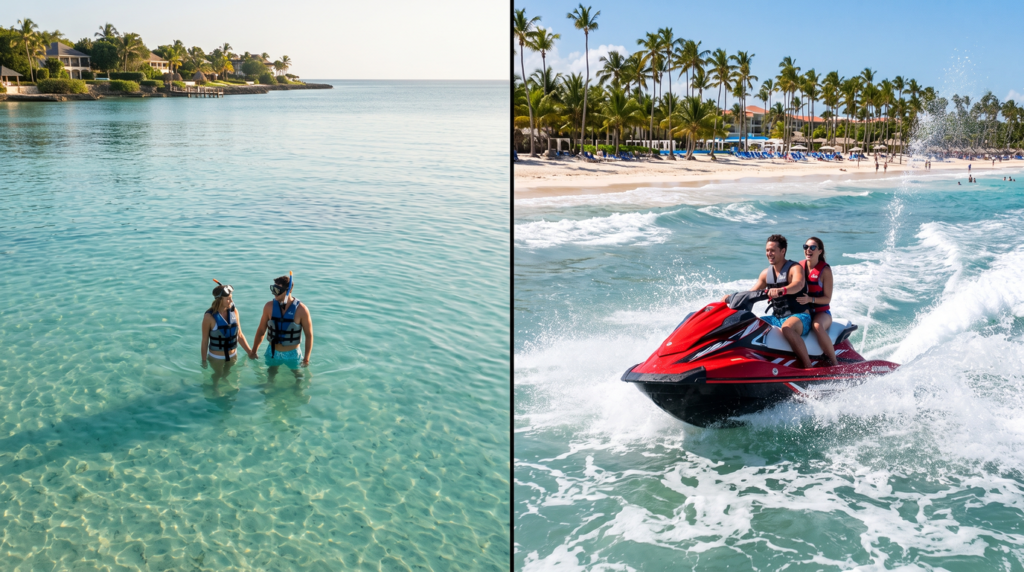
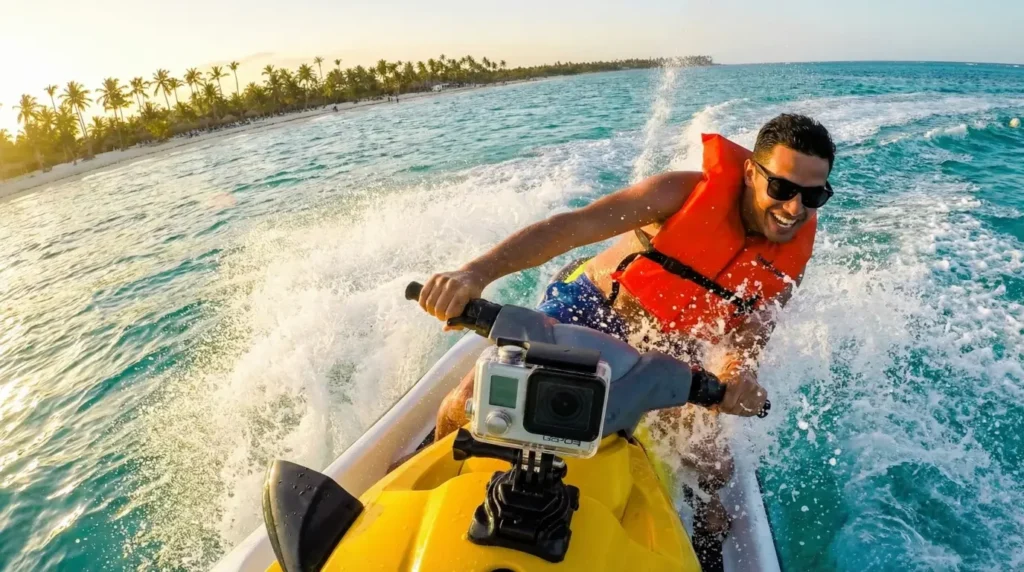
Now that you've got the language basics sorted out, you can focus on the fun stuff. Swap the lazy river for some actual adrenaline. We offer some of the wildest water sports Punta Cana has on the map. Ready to rip through the waves? Book a jet ski Punta Cana tour and make this a vacation you'll actually talk about for years to come.
We have a total of 8 jet skis, perfect for up to 14 participants.
Tour duration is approximately 4 hours and includes round-trip hotel transportation.
Available from Wednesday to Sunday, with departures at 9:00 AM and 2:00 PM.
Pick-up times may vary depending on your hotel location, typically 1 hour before the activity starts.