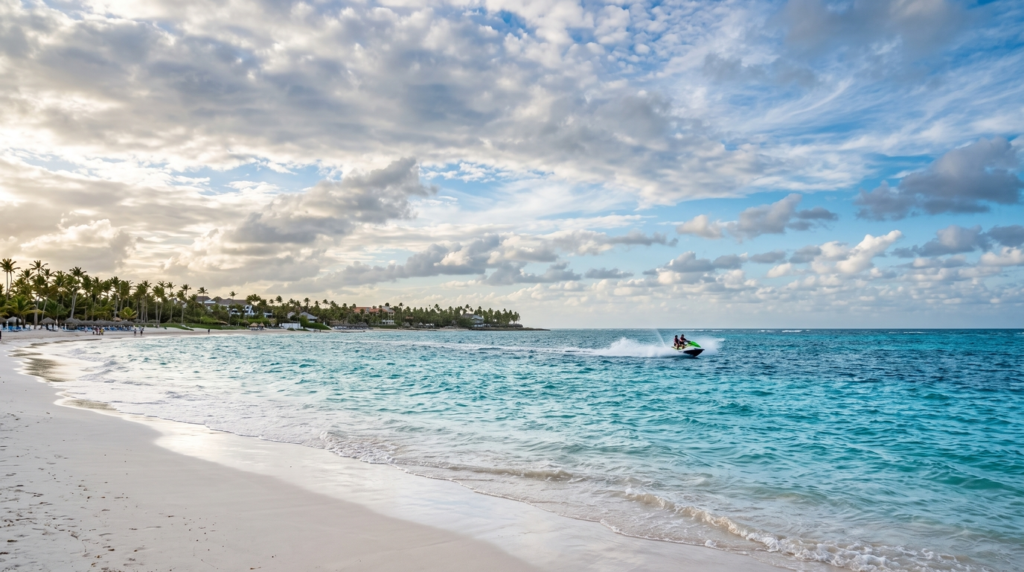
While sharks exist in the deep Caribbean Sea, Punta Cana’s beaches remain highly protected by an extensive natural coral reef. This massive physical barrier keeps large marine life far offshore, making the shallow, turquoise coastal waters incredibly safe for swimming and surface water sports.
Look out at the ocean from any resort balcony in the Dominican Republic, and the sheer scale of the water is intimidating. It’s no surprise that a massive chunk of first-time visitors silently wonder the exact same thing before dipping their toes in the surf: are there sharks in Punta Cana?
We’ve all seen the movies. We all watch the summer news cycles. So, worrying about what might be swimming past your ankles is a completely normal reaction. But the reality on the ground looks vastly different from what Hollywood sells.
The short answer? You aren't going to bump into a shark outside your hotel. They just don't hang around the shallow, sandy zones where tourists swim, splash, and drink piña coladas.
Sure, you might stumble across a wild rumor in a Facebook travel group, but hard data shuts that down fast. If you pull up the global shark attack statistics maintained by the University of Florida’s International Shark Attack File, the numbers speak for themselves. Unprovoked shark attacks in Punta Cana are effectively non-existent. We’re talking about fewer than five unprovoked incidents recorded across the entire Dominican Republic coastline over the last hundred years. You have a significantly higher chance of winning the lottery twice than dealing with a marine predator on your vacation.
Another massive misconception involves the species people fear the most. Travelers constantly ask, are there great white sharks in Punta Cana? Not a chance. Great whites need cold, deep water. They hunt sea lions off the coast of California or South Africa. The warm, bathtub-like temperatures of the Caribbean basin offer absolutely nothing they want.
Take a close look at a map of Punta Cana resorts. Notice how almost every single property sits right against a shallow lagoon? If you are currently trying to figure out the best area to stay in Punta Cana, you can book with total confidence. Whether you pick an adults-only spot up north or a family mega-resort down south, the coastline's natural layout acts as a permanent shield against the open ocean.
If you want to know exactly why are there no sharks near Punta Cana beaches, you just have to look at the underwater topography. Nature essentially built a massive wall right off the coast.
The eastern edge of the Dominican Republic features an extensive natural coral reef barrier. It runs parallel to the shore for miles.
So, how does the coral reef keep sharks away in Punta Cana? Think of it as an underwater fortress. Starting way up near the surfing breaks of Macao Beach Punta Cana and stretching continuously down the coast through the bustling sands of Bavaro Beach, this reef system rises sharply from the dark ocean floor. It stops just inches below the water's surface.
Stand on the beach and look out toward the horizon. See those white waves crashing a half-mile out? That’s the open ocean hitting the reef. The water trapped between that break line and your beach chair forms a shallow, tranquil lagoon.
Large pelagic sharks—the kind that make the news—need deep water to survive. They rely on open space to swim, hunt, and breathe efficiently. Navigating a maze of sharp, jagged coral just to enter a four-foot-deep, sun-heated lagoon packed with noisy humans is biological suicide for a large predator. They physically cannot cross the reef safely, and they have absolutely zero desire to try. The barrier locks them out, leaving tourists with a massive, perfectly safe saltwater swimming pool.
Now, let's be realistic. The ocean isn't a sterile swimming pool. Once you cross over that reef and drop down into the deep blue water, the ecosystem explodes with life. Knowing exactly which Punta Cana shark species actually live miles offshore helps put the true risk into perspective.
Most sharks native to the Caribbean are small, completely uninterested in humans, and highly skittish.
Out on the deep diving wrecks, scuba instructors regularly spot Nurse sharks. These guys are the couch potatoes of the ocean. They are bottom-dwellers that spend 90% of their day sleeping under rock ledges. You practically have to poke them with a stick to get them to move. Further out, you might find Caribbean reef sharks. They stick to the deeper channels and actively swim away from the noisy bubbles created by scuba gear.
And then there are the gentle giants. During specific migratory windows, massive Whale Sharks cruise through the deep oceanic trenches far off the coast. They look intimidating because of their size, but their throats are only about the size of a quarter. They eat microscopic plankton.
Here is a quick breakdown of what actually lives out in the deep water:
| Shark Species | Typical Habitat (Deep Sea vs. Reef) | Threat Level to Humans |
| Nurse Shark | Shallow outer reefs & sandy ocean floors | Harmless (Unless provoked) |
| Caribbean Reef Shark | Deep outer reefs (60+ feet deep) | Very Low |
| Whale Shark | Deep open ocean, migratory channels | Harmless (Plankton feeder) |
| Lemon Shark | Mangroves & deep outer sand flats | Very Low |
If we’re talking about real Punta Cana water safety, marine life shouldn't even be in your top five concerns. The actual power of the ocean—things like rip tides, shifting sandbars, and heavy shorebreaks—commands way more respect than anything with fins.
Because the ocean changes daily based on wind and weather, every major resort operates on an internationally recognized flag warning system. The lifeguards update these flags every morning.
Before you claim your lounge chair, check the wooden stand. Here is exactly what those colors mean for your day:
Seeing a red flag does not mean a shark was spotted. It just means Mother Nature is acting up. If you hit a red flag day, pivot your plans. Stay out of the ocean and book a day pass to Caribbean Lake Park. You can still get your adrenaline fix wakeboarding and zip-lining over a completely controlled, man-made lake.
People get wildly misinformed about water sports. A surprisingly high number of tourists assume that firing up a jet ski and heading away from the beach somehow exposes them to deep-sea predators.
Let's look at the operational reality. Is it safe to jet ski in Punta Cana waters? Yes. In fact, if you want a complete guarantee that you won't interact with any marine life whatsoever, hopping on a wave runner is the smartest thing you can do.
Fish and sharks rely on an incredibly sensitive biological radar called a lateral line system. They use it to detect low-frequency vibrations—like a wounded fish thrashing in the water miles away. A modern jet ski engine produces massive, chaotic acoustic noise. Add in the cavitation bubbles from the jet pump and the high-speed impact on the water's surface, and it completely overwhelms their senses.
To a shark, a jet ski sounds like a terrifying underwater explosion. They scatter instantly. Marine life universally flees from heavy mechanical noise.
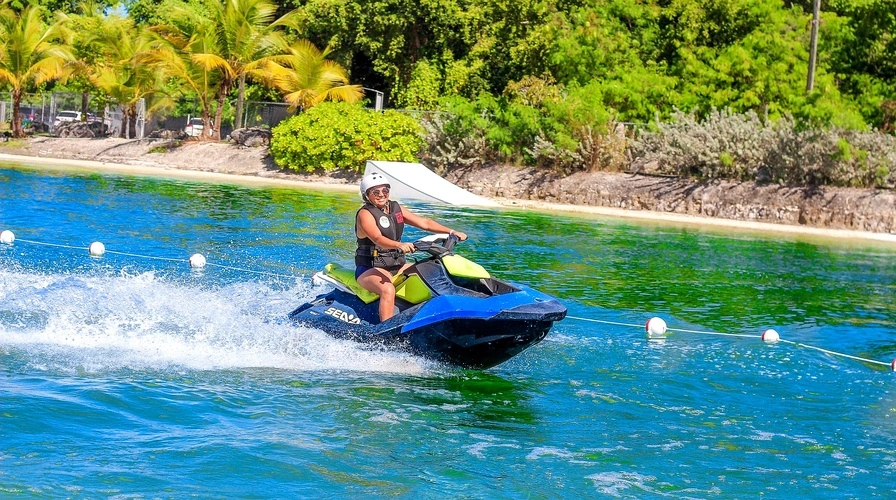
Because you are blasting across the very top layer of the water, you create a massive acoustic dead zone around yourself. This is exactly why booking an afternoon with Jet Ski Punta Cana is so popular. You get all the massive thrills of the open ocean with zero anxiety about what’s underneath you. Whether you decide to book a standard water sports Punta Cana run, rally through the mud before hitting the water with the aqua splash trio pack, or spend hours on the waves with the aqua splash Punta Cana package, you are moving too fast and too loud for any marine life to stick around.
So, let's settle it: is it safe to swim in Punta Cana? Yes, entirely. But leaving your common sense at the airport is never a good idea. Even in a protected lagoon, you need to respect the environment.
Whether you’re swimming directly in front of the Caribe Deluxe Princess or exploring a quiet, unnamed stretch of sand, follow basic ocean protocols.
First, take off your jewelry. Keep the silver chains, diamond rings, and shiny watches locked in your room safe. When sunlight hits reflective metal underwater, it flashes exactly like the silver scales of a struggling baitfish. You don't want a barracuda or a snapper getting curious about your wrist.
Second, stick to the designated swimming zones. The buoys exist for a reason. Wandering past the ropes puts you directly in the path of speeding speedboats and incoming catamaran traffic. A boat propeller is a very real danger; a shark is not.
Finally, don't swim at dawn or dusk. These are high-traffic feeding hours for the entire ocean ecosystem. When the sun goes down, visibility drops, and fish move into the shallows to hunt. Keep your swimming to the bright daylight hours.
We’ve established that Punta Cana sharks aren't a threat, but there are a few minor nuisances you should actually watch out for.
The most common marine life you will physically interact with are sea urchins. These little black, spiky balls love to wedge themselves into rocky crevices and coral beds in shallow water. Stepping on one will absolutely ruin your afternoon. If you plan on walking through rocky tide pools rather than soft sand, spend ten dollars on a pair of hard-soled water shoes.
Jellyfish also show up occasionally. They don't live near the beach, but heavy offshore winds can blow them over the reef and into the swimming zones. Most local species are harmless, delivering a sting that feels roughly like a bad mosquito bite or a mild bee sting. If you see clear blobs floating in the water, just swim around them. If they get too thick, the lifeguards will throw up a purple flag to warn you.
If you are the type of traveler who actually wants to see marine life, you have to leave the beach behind. The absolute best places to see marine life in Punta Cana are out on the edge of the barrier reef.
Tourists often ask: is it safe to snorkel in Punta Cana with sharks? It is. If you book an organized snorkeling tour, the guides take you to heavily vetted, protected coves. In these specific spots, you can jump in the water and swim right over sleeping nurse sharks and massive Southern stingrays. It’s a highly controlled, safe experience.
But if you came to the Caribbean looking for extreme, adrenaline-pumping predator encounters—like shark cage diving Punta Cana style—you’re going to be disappointed. The Dominican Republic simply doesn't offer cage diving. The massive, aggressive species required to run those kinds of tours don't live in these warm waters.
If you want the best of both worlds, we always recommend getting out on a boat. The boat trips Punta Cana operators put together are legendary. By chartering a private catamaran Punta Cana style, you control the pace. You can anchor at a remote natural pool, throw on some goggles to check out the reef fish, and then climb back aboard for cold rum and loud music. It gives you the ocean experience entirely on your own terms.
The Dominican government doesn't just care about keeping tourists safe; they are fiercely protective of the ocean itself. Sharks are apex predators. Without them, the entire marine ecosystem collapses. If sharks disappear, mid-level predators overpopulate and eat all the herbivore fish. Without the herbivores, algae overgrows and smothers the coral reef.
Realizing this, the Dominican Republic made a massive move in 2017. They completely banned the fishing, capturing, and commercial sale of all sharks and rays across their entire exclusive economic zone.
This turned the country's waters into a massive marine sanctuary overnight. The government recognized that a living shark patrolling the deep reef brings in millions of dollars in long-term eco-tourism and scuba diving revenue, while a dead shark caught in a net is a one-time payout. This aggressive conservation stance ensures the outer reefs will stay healthy and vibrant for decades.
Geographic facts and statistics are comforting, but sometimes you just need to hear from someone who was swimming there last week. Here is what actual travelers report about the water conditions:
"I usually panic in the ocean, but the water in Bavaro is unreal. It’s so clear you can count your toes in chest-deep water. We spent a week swimming and jet skiing. The only thing I saw was a school of tiny silver fish. Beautiful and totally safe." – Sarah T., Chicago
"I read some ridiculous rumors online before we flew down. Once you get to the beach and actually see the massive waves breaking on the reef way out in the distance, you instantly understand why nothing big can get in. Best vacation ever." – Marcus L., UK
"We did a private catamaran trip and stopped to snorkel. Our guide actually pointed out a sleeping Nurse Shark tucked under some coral. It didn't even flinch while we swam over it. It wasn't scary at all, just a really incredible thing to see up close." – Elena D., Toronto
By now, you should have officially deleted "ocean predators" from your vacation worry list. Put that energy into packing your bags and organizing your arrival.
First, upgrade your sunscreen. Buy high-quality, mineral-based, reef-safe sunscreen before you fly. The cheap chemical stuff bleaches the exact coral reef that is protecting your beach. Check the Punta Cana weather in December (or whatever month you arrive), and you'll quickly realize you’ll be spending 90% of your trip in a bathing suit. It's hot, sunny, and perfect.
Get your paperwork done early. Fill out the mandatory e-ticket Dominican Republic customs form on your phone before you even leave for the airport to skip the lines. If you're traveling with college kids, remember the drinking age in Punta Cana is 18, so plan accordingly. Book your excursions, grab your sunglasses, and get ready for incredible beaches. The water is waiting.
No, encounters are incredibly rare. Large predators live miles offshore in the deep open ocean. The shallow, crowded beaches attached to the resorts are blocked off by a massive natural coral reef, making it highly unlikely you will ever spot a shark near the sand.
The deeper Caribbean waters support several species, including docile Nurse Sharks, deep-water Caribbean Reef Sharks, and massive, plankton-eating Whale Sharks. These species stay far away from the shallow resort lagoons and generally avoid human contact unless cornered by scuba divers.
Stick to daylight hours, leave your shiny jewelry in the hotel room so you don't attract curious reef fish, and always swim within the marked buoy zones. Pay attention to the daily colored flag system on the beach, and avoid the water entirely if a red flag is flying.
Yes, but you have to book a specific boat excursion. Guided snorkeling tours often take guests to protected marine parks where you can safely swim near sleeping Nurse Sharks and stingrays. However, extreme activities like great white cage diving simply do not exist here.
Absolutely. Jet skis are incredibly safe because their loud engines, intense mechanical vibrations, and high-speed surface impacts naturally scare away all marine life. Operating above the water at high speeds guarantees an adrenaline-pumping experience with zero wildlife interaction.
We have a total of 8 jet skis, perfect for up to 14 participants.
Tour duration is approximately 4 hours and includes round-trip hotel transportation.
Available from Wednesday to Sunday, with departures at 9:00 AM and 2:00 PM.
Pick-up times may vary depending on your hotel location, typically 1 hour before the activity starts.