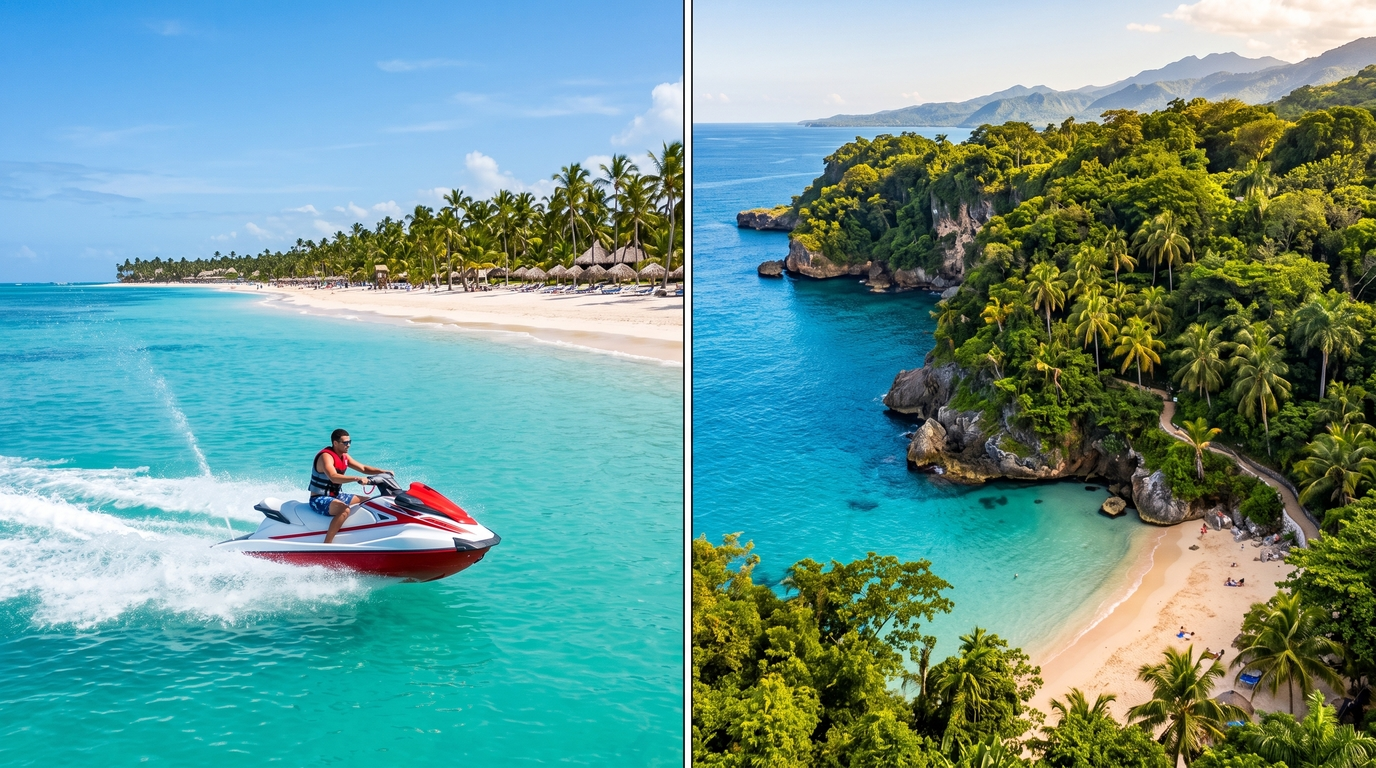
Quick Overview: If your 2026 travel priority is unmatched aquatic adrenaline, flat-water high-speed jet skiing, and highly accessible luxury all-inclusive resorts, Punta Cana is your definitive choice. If you prefer rugged mountain terrain, dense cultural history, and cascading river waterfalls, Jamaica takes the lead. This guide breaks down the data, logistics, and on-the-ground reality to help you book the exact Caribbean experience you want.
Choosing between the Dominican Republic and Jamaica is the classic Caribbean dilemma. Both islands deliver pristine sand and heavy doses of sunshine, but 2026 travel trends show a massive shift in what visitors actually demand from their time off. Modern travelers want more than a generic beach chair. You want seamless logistics, high-octane offshore accessibility, and serious value for your dollar. Figuring out the best time to visit Punta Cana or Montego Bay often dictates the trip, but the core destination vibe dictates the memories. For instance, experiencing Punta Cana weather in January offers perfectly flat, cool offshore breezes ideal for high-speed riding, a factor often overlooked in standard travel brochures.
| Destination Feature | Punta Cana, Dominican Republic | Jamaica |
| Primary Vibe | High-energy resort luxury, massive aquatic sports scene, seamless logistics. | Cultural depth, rugged mountain exploration, laid-back reggae atmosphere. |
| Top Beach | Bavaro Beach (Uninterrupted 48km stretch, protected reef). | Seven Mile Beach (Iconic western sunset views, narrow coves). |
| Best For | Adrenaline junkies, all-inclusive luxury seekers, families, jet ski enthusiasts. | Nature hikers, music history buffs, river rafting enthusiasts. |
| Average Cost Level | Highly competitive. Excellent high-end value and affordable offshore excursions. | Premium pricing. Higher costs for specialized off-resort transit and tours. |
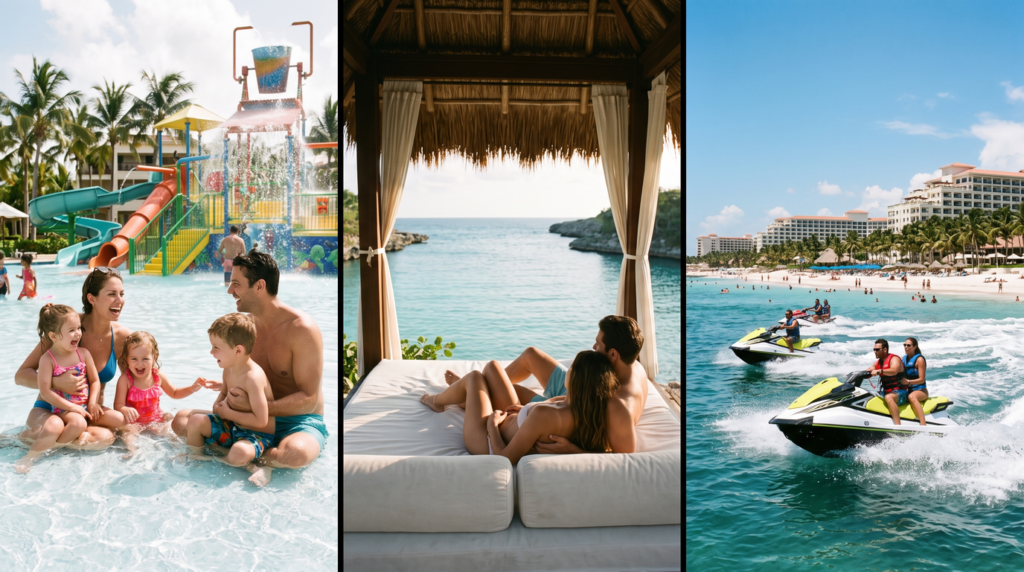
Punta Cana offers expansive, palm-studded coastlines protected by barrier reefs, optimizing the water for both relaxation and high-speed motor sports. Jamaica’s beaches feature narrower, dramatic cliffside coves and calm, localized swimming bays.
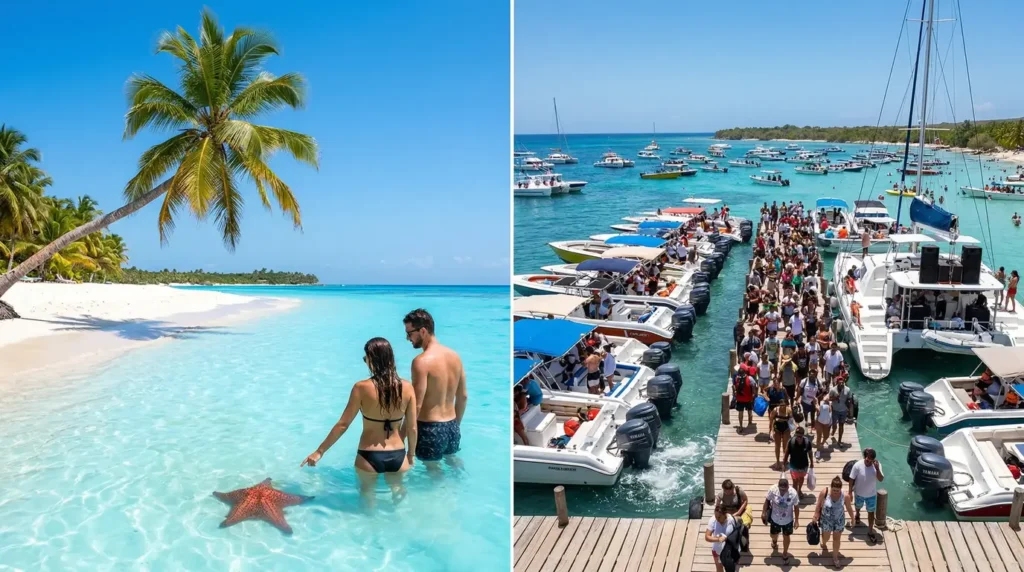
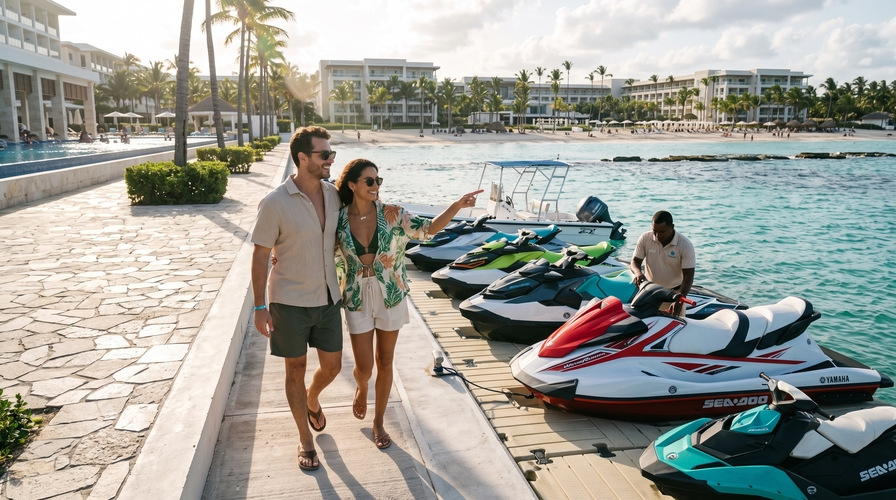
The eastern coastline of the Dominican Republic does not just have beaches; it features an interconnected mega-coast. Bavaro Beach serves as the undisputed hub for action. Because an offshore coral reef breaks the harsh Atlantic currents, Bavaro acts like a massive saltwater swimming pool. This flat, predictable water makes it the absolute epicenter for motorized water sports. You can walk right out of your resort lobby and instantly hop on a wave runner.
Further north, Macao Beach delivers a radically different physical environment. The reef drops away here, allowing rolling Atlantic swells to crash onto the shore, making it the premier destination for surfing and rugged shoreline buggy rides. Down south, Playa Juanillo offers an ultra-exclusive, manicured luxury aesthetic. It features blindingly white powder sand and zero seaweed, perfect for high-end lounging before boarding a catamaran Isla Saona excursion.
Jamaica’s coastline is fiercely independent and highly varied. Seven Mile Beach in Negril provides the classic postcard image: calm, clear water framed by spectacular western sunsets. It feels more intimate than Bavaro, though the shoreline is noticeably narrower.
Bloody Bay, located just north of Seven Mile, offers intensely calm, shallow waters ideal for wading and paddleboarding. Over in Montego Bay, Doctor’s Cave Beach remains the historical anchor of Jamaican tourism. Fed by mineral springs, the water here is exceptionally clear, though the beach itself is heavily commercialized and requires an entry fee if you aren't staying at an adjacent property.
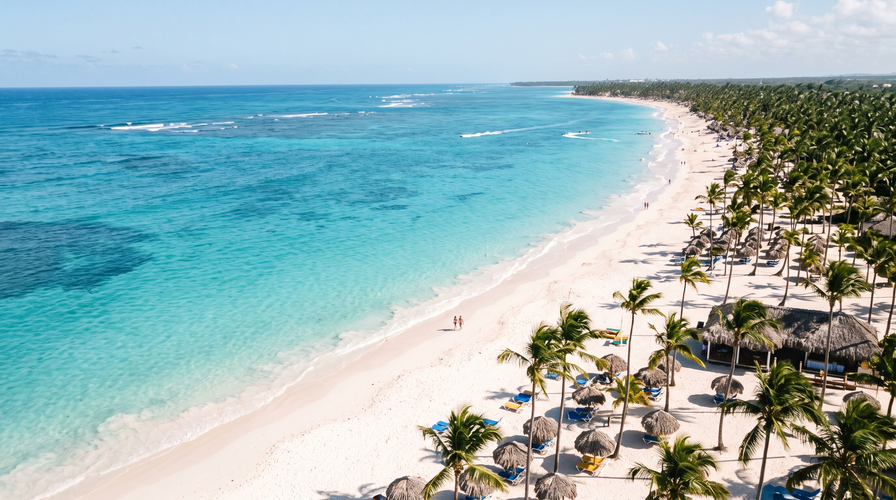
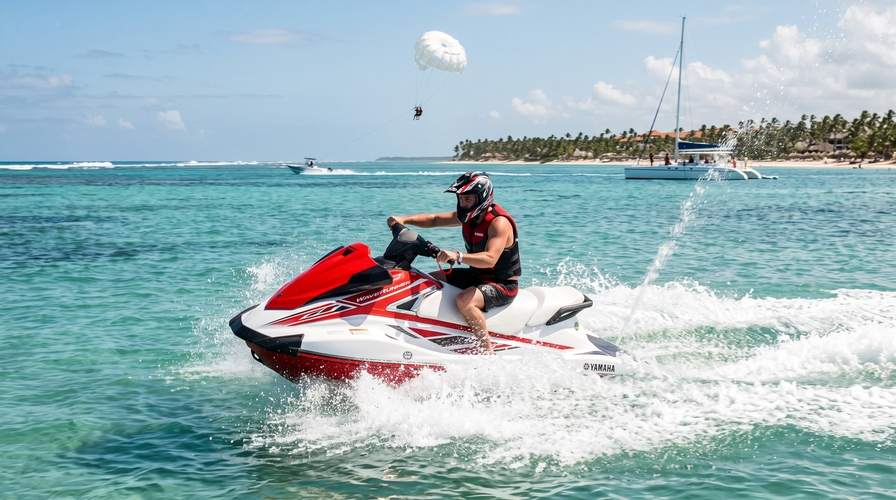
For pure aquatic adrenaline, Punta Cana vastly outpaces Jamaica. The DR's accessible, calm barrier reefs allow for immediate high-speed jet skiing, massive party boats, and parasailing directly offshore, whereas Jamaican water sports are often strictly localized or require longer transit times.
This is where the Dominican Republic completely changes the equation. While Jamaica is undeniably beautiful, Punta Cana—specifically the Bavaro stretch—offers unmatched, immediate accessibility for high-adrenaline water sports. You don't have to book a shuttle and drive forty minutes to find the action. The action lives directly on the shoreline.
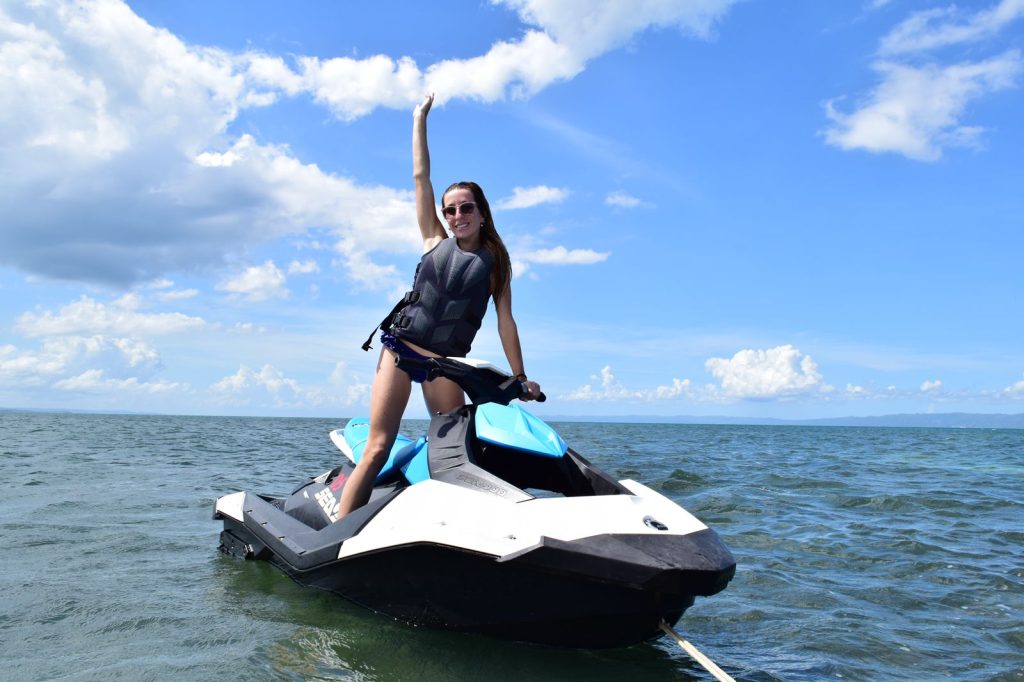
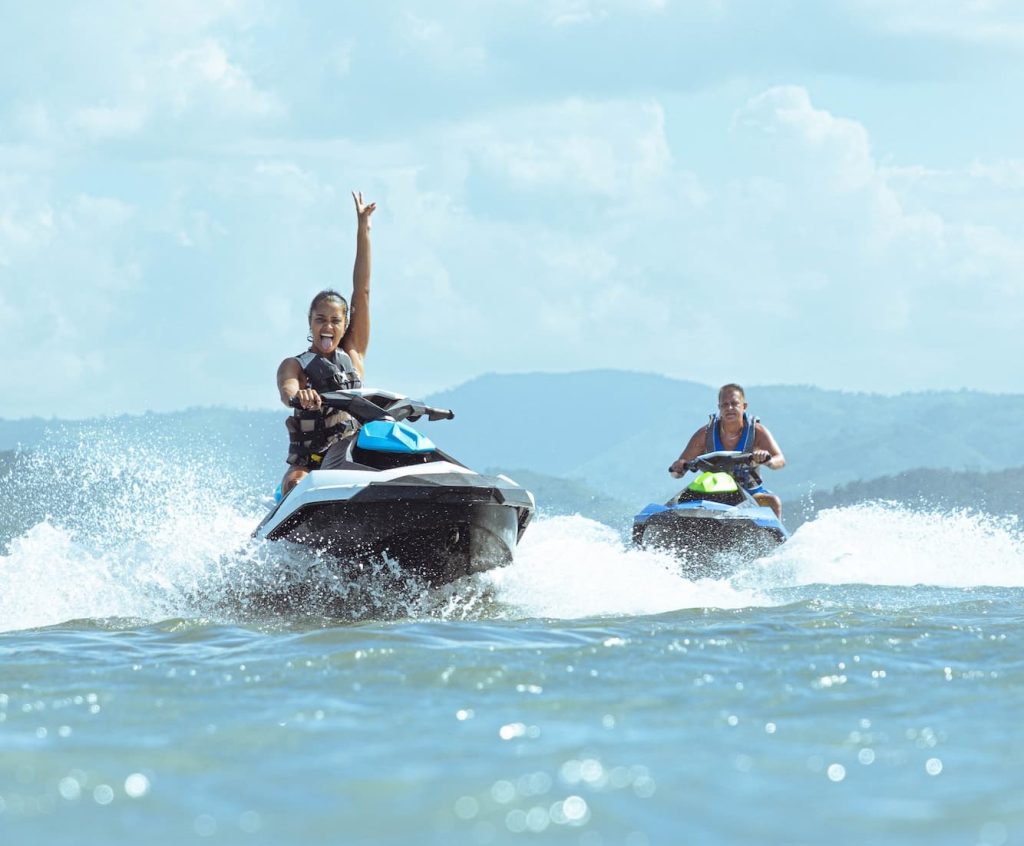
Riding a high-powered Yamaha or Sea-Doo over the brilliant turquoise Caribbean waves is a visceral, mechanical thrill. The salt spray hits your visor, the engine roars over the sound of the wind, and you have miles of flat, protected reef water to open up the throttle. If you want this specific, heart-pounding experience, you need to book with Jet Ski Punta Cana. Our local operational expertise guarantees you get top-tier equipment rather than beat-up tourist traps.
You can easily upgrade your itinerary by browsing our full suite of water sports Punta Cana options. For travelers who want to maximize their time on the water without dealing with massive crowds, booking a combined jet ski and aqua kart package Punta Cana delivers back-to-back offshore speed sessions that you simply cannot replicate on the tight coves of Montego Bay.
When you drop below the surface, both islands compete fiercely. Punta Cana leverages its offshore islands. Isla Catalina and Isla Saona boast massive, vibrant star-coral formations and heavy populations of eagle rays and reef sharks. The diving here involves deeper wall drops and strong drift currents.
Jamaica counters with the heavily protected Montego Bay Marine Park. Because the local authorities fiercely regulate this zone, the shallow reef snorkeling is incredibly dense with parrotfish, stingrays, and nurse sharks. Jamaica’s water clarity in these protected coves often hits 100 feet of visibility on a calm morning.
Both destinations sit on the edge of massive oceanic trenches, making them highly viable for big game fishing. Punta Cana’s marina infrastructure in Cap Cana is world-class, routinely hosting international Billfish tournaments. You are chasing Blue Marlin, Mahi-Mahi, and Wahoo just a few miles offshore. Jamaica offers similar pelagic species off Port Antonio, but the charter boat fleet in Punta Cana is significantly larger, newer, and often more competitively priced due to sheer volume.
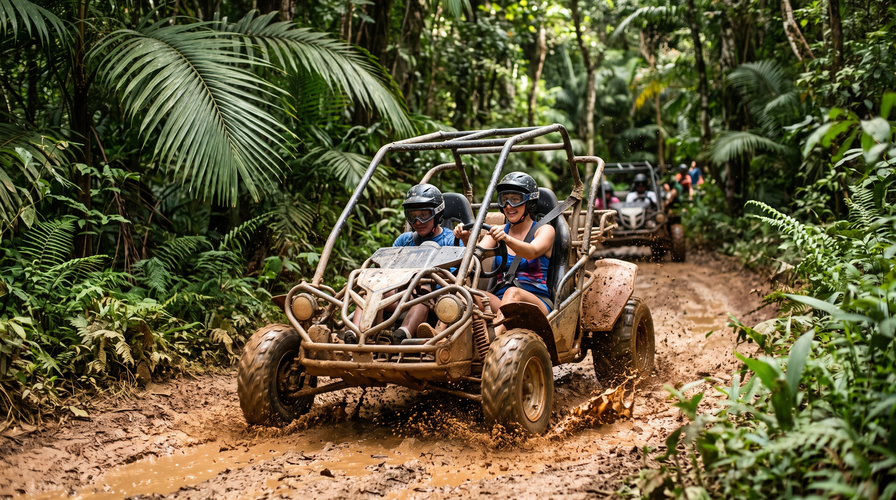
Jamaica dominates in steep mountain terrain and cascading river waterfalls, while Punta Cana excels in dense jungle buggy trails, massive cavernous cenotes, and rugged dirt tracks.
Step away from the sand in the Dominican Republic, and the landscape turns into dense, unforgiving jungle and ancient limestone rock. Scape Park is a massive natural theme park built directly into a cliffside, featuring the famous Hoyo Azul—a breathtakingly deep, shockingly blue cenote hidden inside a cavern.
If you prefer dirt and gasoline, the DR owns the off-road market. Tearing through the muddy backcountry trails toward Macao Beach in a steel-caged buggy is a mandatory rite of passage. You can easily pair the dirt with the ocean by booking a buggy and jet ski package Punta Cana, giving you the ultimate surf-and-turf adrenaline day.
Jamaica’s interior is defined by massive, looming peaks and heavy river systems. Dunn’s River Falls in Ocho Rios is legendary for a reason. You physically link arms with a guide and hike directly up the cascading limestone rock faces against the cold, rushing mountain water. It is a highly tactile, physically demanding excursion. For a slower pace, floating down the Martha Brae River on a 30-foot bamboo raft steered by a local captain provides a deeply peaceful, historically rich contrast to the DR's high-revving jungle buggies.
Punta Cana is generally more affordable than Jamaica. The massive concentration of all-inclusive resorts in the DR drives down baseline package prices, and local excursions offer higher value compared to Jamaica's premium-priced tours.
Let’s look at the hard math for 2026. Because Punta Cana features over 40,000 hotel rooms stretched across its coastline, the sheer density of competition forces resorts to offer incredibly aggressive pricing. You can secure a five-star, luxury all-inclusive suite in Bavaro or Uvero Alto for significantly less than a comparable room in Negril or Ocho Rios.
The value extends beyond the hotel lobby. When factoring in off-resort spending, from heavy offshore excursions down to picking up authentic Punta Cana souvenirs, the DR simply stretches the dollar further. Even during peak seasonal spikes, like navigating Punta Cana weather in March, flight routes into the DR remain heavily subsidized by major carriers, keeping airfare highly manageable. Jamaica carries a distinct premium. The island’s high import taxes and reliance on private transport contractors mean that stepping off your resort property in Jamaica generally costs more per hour than it does in the Dominican Republic.
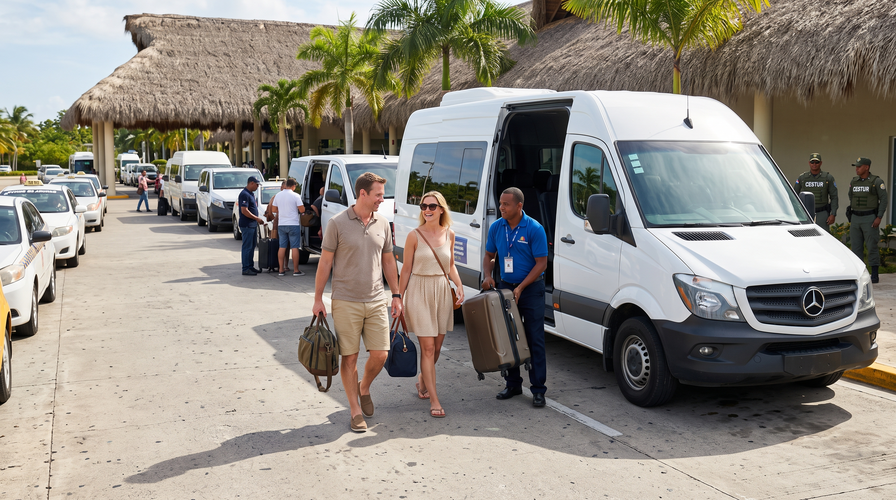
Punta Cana International Airport (PUJ) offers remarkably fast, efficient transfers directly to the resort zones, and the region maintains a heavily secured, structurally isolated environment making it statistically highly safe for international tourists.
Punta Cana International Airport (PUJ) is a logistical masterpiece. It is the most connected airport in the Caribbean. You step off the plane, walk through the open-air, thatched-roof terminals, and clear customs rapidly. Most major resorts are located within a 15 to 30-minute drive from the baggage carousel. Booking a private Punta Cana airport transfer means you can land at 1:00 PM and be sitting on a jet ski by 3:00 PM.
Jamaica requires a bit more transit patience. While Sangster International Airport in Montego Bay is efficient, reaching the prime beaches in Negril or Ocho Rios requires a winding 90-minute to two-hour drive along the coastal highway.
Safety dictates the itinerary. The Dominican Republic has physically engineered Punta Cana specifically for tourist security. The entire Bavaro and Cap Cana zones are essentially massive, highly regulated safe zones patrolled by specialized tourist police (Cestur). Statistically, crimes against tourists inside these zones are exceptionally rare. You can comfortably walk the beaches and take verified excursions, even checking out the Dominican Republic weather in December holiday rush, with zero anxiety.
Jamaica requires slightly more situational awareness. While the resorts themselves are fortress-level secure, traveling between cities or walking through downtown Montego Bay requires common sense and preferably a certified guide.
Data, pricing, and geography point to two very different vacation profiles. Your ultimate choice depends entirely on how you want your heartbeat to act while on the island.
If you decide to pull the trigger on the Dominican Republic—whether you are escaping the winter cold or riding out the hot Dominican Republic weather in July—do not settle for a boring itinerary. Experience the coastline the right way. Book a high-speed excursion with Jet Ski Punta Cana today and command the Caribbean water on your own terms.
Punta Cana is undeniably better for motorized water sports. The flat, reef-protected waters of Bavaro Beach create ideal conditions for high-speed jet skiing, parasailing, and large catamaran party boats directly off the shoreline.
Both islands offer excellent visibility, but Jamaica’s protected Montego Bay Marine Park often provides slightly clearer water for shallow snorkeling. However, Punta Cana’s offshore islands, like Isla Saona, feature blindingly clear, turquoise waters that easily match Jamaica’s best coves.
Most North American and European citizens do not need a visa for short tourist stays in either country. Both destinations simply require a valid passport with at least six months of validity remaining and a completed electronic entry/exit ticket prior to arrival.
We have a total of 8 jet skis, perfect for up to 14 participants.
Tour duration is approximately 4 hours and includes round-trip hotel transportation.
Available from Wednesday to Sunday, with departures at 9:00 AM and 2:00 PM.
Pick-up times may vary depending on your hotel location, typically 1 hour before the activity starts.