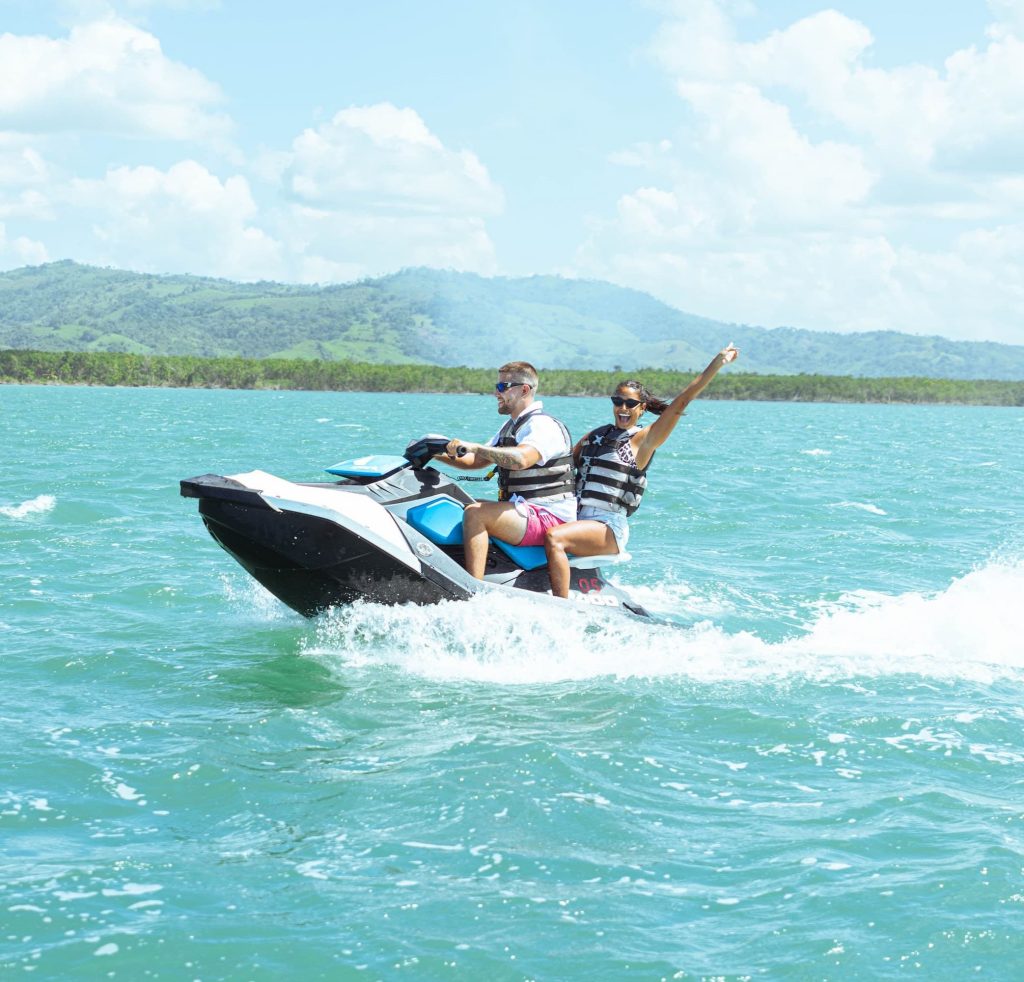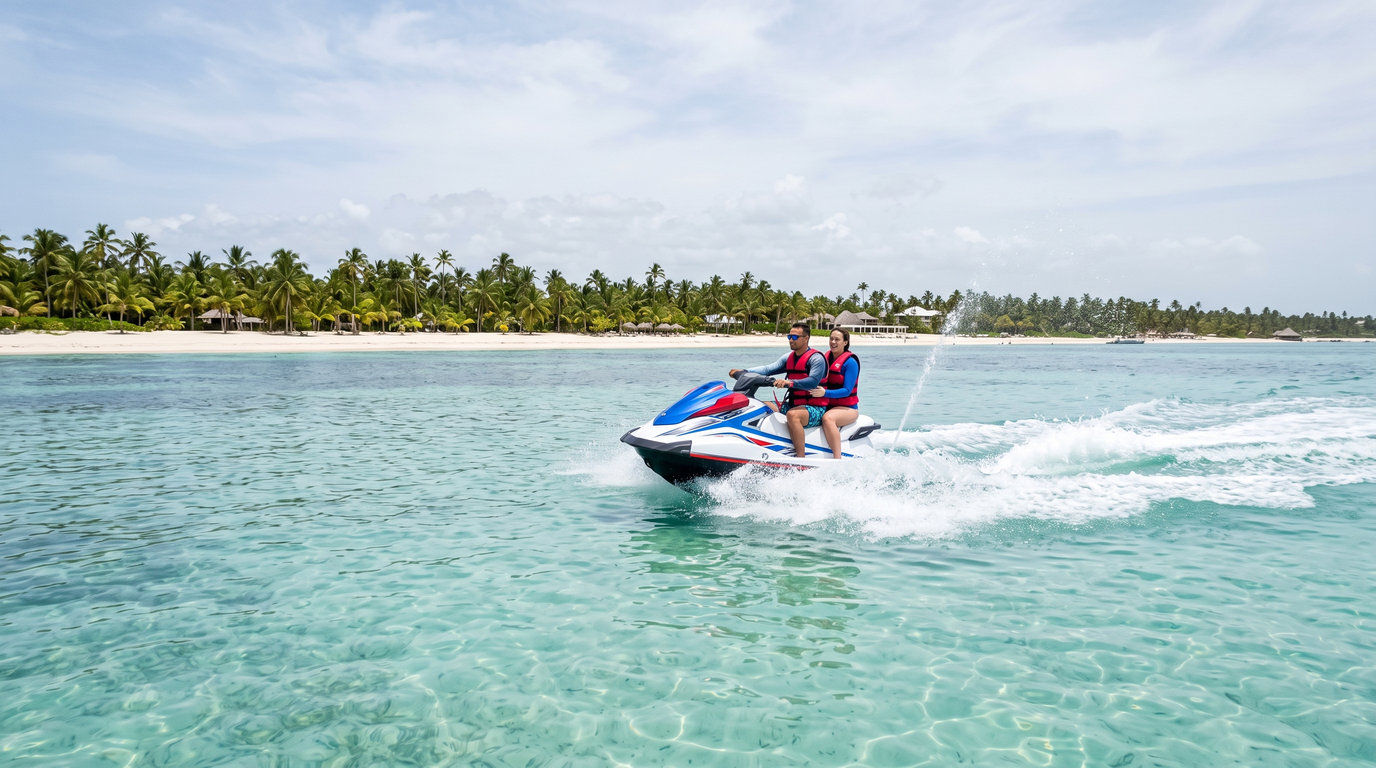
Quick Overview: April serves as the ultimate "sweet spot" for visiting the Dominican Republic. You get calm, predictable ocean conditions ideal for high-speed jet skiing, average highs of 82°F (28°C), and water temperatures hovering near 81°F (27°C). While quick afternoon tropical showers happen, they rarely ruin a day on the water.
If you are hunting for the perfect Caribbean escape, you probably already know that spring weather can be wildly unpredictable. Our on-the-water operations show that April represents a massive transition period for the local climate. The heavy winter ocean swells flatline. The intense mid-summer heat hasn't yet arrived. What remains is a perfectly balanced micro-climate that turns the coastline into a flawless playground for water sports Punta Cana.
As local aquatic experts running daily coastal excursions, we track sea states, wind knots, and incoming fronts with exact precision. We see travelers panic over standard weather forecasts that display storm clouds every single day of their upcoming trip. Do not let your smartphone application fool you. The reality of coastal Dominican weather operates entirely differently than standard radar models suggest.
Understanding the exact atmospheric conditions requires separating satellite data from daily reality. Standard forecasting tools aggregate regional data, meaning they often pull moisture readings from the high-altitude central mountains rather than our specific eastern shoreline.
| Climate Metric | Average April Data | What It Actually Means For You |
| Average High Temperature | 82°F (28°C) | Warm enough for swimwear all day without suffocating mid-summer heat. |
| Average Low Temperature | 74°F (24°C) | Perfect evening weather; you rarely need a jacket, even after the sun sets. |
| Ocean Surface Temperature | 81°F (27°C) | Feels like stepping into a heated pool; no wetsuits required for snorkeling. |
| Average Monthly Rainfall | ~3 to 5 inches | Highly concentrated into aggressive, 15-minute afternoon downpours. |
The Weather App Effect: You will almost certainly open your iPhone before your flight and see a rain icon plastered across your entire 7-day forecast. This causes immense, unnecessary panic. In our localized coastal zone, a 60% chance of rain simply means there is a high likelihood of a rapid, 15-minute passing shower occurring somewhere in the region. It does not mean the sky will be gray from sunrise to sunset. If you want the absolute best time to visit Punta Cana, relying on local behavioral patterns rather than global digital models is essential.
Air temperature readings only tell half the story when you evaluate tropical climates. When the mercury hits 82°F (28°C) on the eastern coastline of the Dominican Republic, it does not carry the stagnant, heavy oppression of an August afternoon.
The secret lies in the coastal trade winds. These steady breezes blow off the Atlantic Ocean directly onto the Bavaro and Uvero Alto shorelines, acting as a massive, natural air conditioning system. During peak daylight hours, the direct solar radiation is undeniably intense. You will feel the heat baking the white sand. However, the moment you step onto a boat or accelerate away from the beach, the ambient temperature drops significantly.
Nighttime conditions shift the dynamic slightly. Once the sun drops below the horizon, the air cools to a very comfortable 74°F (24°C). The humidity levels stabilize, making outdoor dinners and evening beach walks incredibly pleasant. You do not need to pack heavy sweaters or thick layers.
Many travel forums mistakenly lump April into the beginning of the Caribbean rainy season. This generalized statement completely ignores the localized "Tropical Shower Pattern" that defines our eastern coastline.
While it is true that April technically sees roughly 5 inches of precipitation, the delivery mechanism of that rain matters most. The moisture does not arrive in slow, drizzling, all-day frontal systems. Instead, the intense morning sun heats the shallow coastal waters, generating localized condensation clouds by mid-afternoon. Around 3:00 PM, the sky might suddenly darken. The wind picks up. For about 10 to 15 minutes, a heavy, torrential downpour washes over the beaches.
Almost as quickly as it started, the shower pushes inland. The clouds break apart, and the late afternoon sun returns, reflecting off the freshly washed palm trees. These rapid showers actually drop the humidity and cool the late afternoon air. Your entire day is never washed out, and most tours continue operating right through these brief tropical resets.
For anyone looking to book aquatic adventures, this is the most critical metric. The condition of the ocean dictates exactly how much fun you will have.
By the time April rolls around, the heavy, aggressive winter swells rolling down from the North Atlantic have completely died off. Unlike the choppy, surging waters you might experience earlier in the year—as detailed in our Punta Cana weather in February breakdown—springtime brings a localized calm. The ocean surface smooths out considerably.
Sea temperatures stabilize at a stunning 81°F (27°C). This temperature eliminates any initial shock when jumping off a boat. It literally feels like bathwater. Furthermore, the lack of massive winter wave action means the sand sediment settles to the ocean floor. Underwater visibility skyrockets during this month, creating pristine, crystalline conditions for observing coral reefs and marine life. Whether you are throttling a personal watercraft or floating with a snorkel mask, the Caribbean Sea is highly cooperative.
Timing your excursions correctly can drastically improve your vacation experience. Based on years of launching tours, here is the exact operational breakdown of a typical April day.
Morning is undeniably the crown jewel of the Caribbean day. The offshore winds have not yet energized, leaving the ocean surface entirely flat and glass-like. For pure performance and speed, this is the ultimate window. You will glide over the water rather than slamming into choppy waves. If you plan on booking a high-adrenaline jet ski and aqua kart package Punta Cana, reserve the earliest time slot available. Beginners will find the lack of wave resistance incredibly reassuring, allowing them to build confidence quickly.
As the sun reaches its zenith, the UV index spikes dramatically. This direct overhead lighting illuminates the shallow sandbars, transforming the water into that iconic, blindingly bright turquoise color you see on postcards. It is the absolute best time for photography and high-visibility swimming. Because the heat is at its peak, getting soaked during an aqua splash Punta Cana excursion provides the perfect thermal relief. Just remember to aggressively reapply your sunblock.
By mid-afternoon, the trade winds fully activate. The flat morning water shifts into a slightly choppier, textured surface. While it requires a bit more physical effort to navigate, this texture provides excellent launch ramps for wave jumping. Riders looking for a more aggressive, bouncy ride often prefer the late afternoon conditions. This is also the exact window when the brief tropical showers are most likely to pass through, cooling everything down before sunset.
Here is a massive insider secret that directly impacts your travel logistics. Semana Santa (Holy Week) is the largest domestic holiday in the Dominican Republic. During this week, massive crowds flood the coastal resorts, and the government strictly prohibits motorized water sports to protect beachgoers.
In many years, this restrictive week lands squarely in the middle of April. However, Easter Sunday 2027 falls on March 28. This calendar shift means the intense holiday rush—and all associated boating bans—will be entirely contained within the previous month. If you are comparing travel windows, reading about the crowds during Punta Cana weather in March will show you exactly what you are avoiding. Visiting in April 2027 guarantees you get the beautiful spring weather without navigating the suffocating holiday traffic. You will have wide-open access to the reefs and untouched rental availability.
Forget packing heavy denim or thick jackets. Your suitcase needs to focus entirely on solar defense and aquatic utility. The sun acts as a physical force here.
With the ocean swells minimized and the heat manageable, certain activities yield significantly higher satisfaction rates during this specific month.
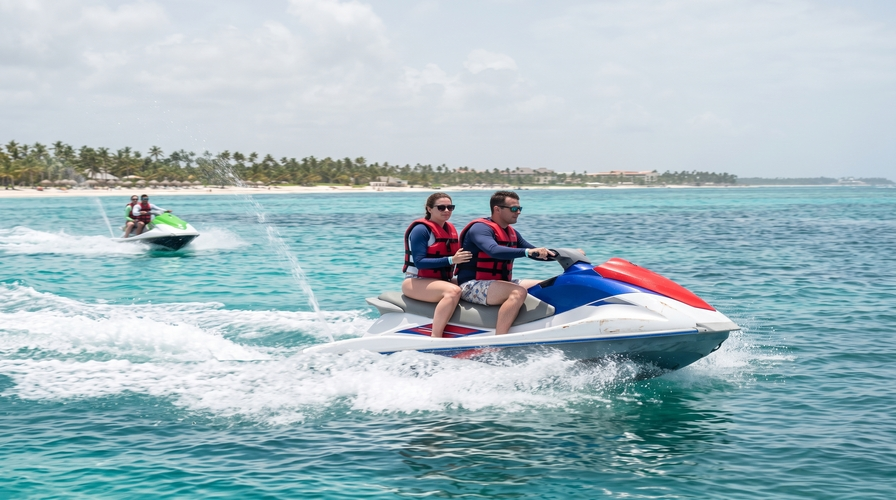
The calm morning sea states we discussed earlier create a drag-racing strip just off the Bavaro coastline. Without heavy winter chop pushing against the hull, you can maximize your top speed safely. Booking a dedicated jet ski Punta Cana rental allows you to explore miles of shoreline in a fraction of the time it takes a standard boat, capitalizing entirely on the flat water conditions.
Remember those brief, 15-minute afternoon showers? They serve a brilliant purpose. The sudden influx of rainwater saturates the inland dirt trails, turning dusty jungle paths into spectacular mud tracks. Tearing through these coastal farmlands on an off-road buggy is infinitely more enjoyable when the trails are slick. Combining this with a coastal run through a buggy and jet ski package gives you the ultimate dual-terrain experience.

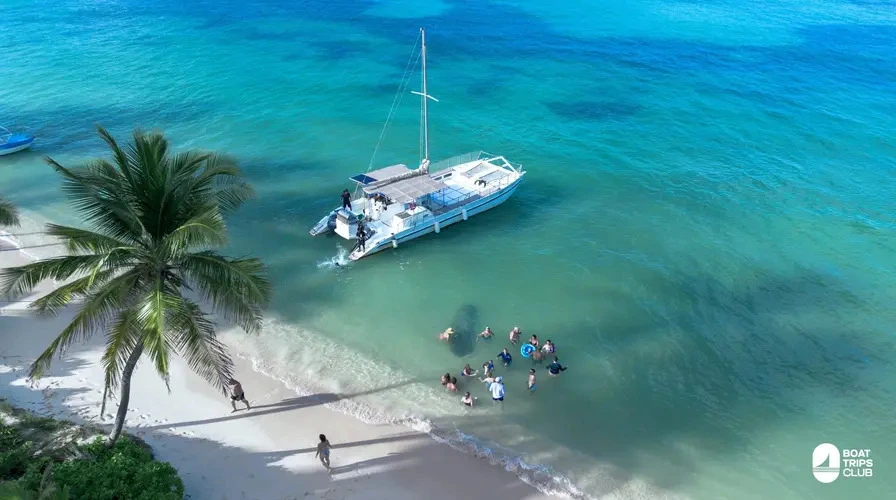
Because the winter waves are gone, the ocean floor sediment settles perfectly. April offers some of the highest underwater visibility rates of the entire year. Chartering a private catamaran Punta Cana allows your group to anchor at the protected reefs and natural pools without bouncing violently in the swells. You get crystal-clear views of the tropical fish below.
Choosing exactly when to fly down requires balancing crowds, heat, and storm risks. April sits in the perfect transitional middle ground.
If you travel during the peak winter rush—outlined in our Punta Cana weather in January guide—you face massive tourist crowds, significantly higher hotel rates, and ocean waters that can feel surprisingly brisk (dropping down to 77°F). You also deal with rougher sea states driven by northern weather fronts.
Push your trip into the late summer, as seen in our Punta Cana weather in September data, and you run directly into the heart of the Atlantic hurricane season. The humidity becomes suffocating, and the risk of multi-day washouts increases dramatically.
Even when comparing it to the immediate following month—see Punta Cana weather in May—April holds a distinct advantage. May historically triggers the start of the heavier spring rains. By targeting April, you secure the winter-level sunshine while avoiding the winter-level crowds, all while enjoying bathwater-warm oceans.
Yes, April is arguably the best month for high-speed water sports. The heavy winter swells have completely died down, leaving the morning ocean surface flat and glass-like, while the water temperature sits at a perfect 81°F (27°C).
No, all-day washouts are incredibly rare. You should expect the "Tropical Shower Pattern," which consists of brief, heavy 15-minute downpours in the mid-afternoon, followed immediately by clearing skies and bright sunshine.
Yes, absolutely. The ocean surface temperature averages 81°F (27°C), which feels incredibly warm. You will not need a wetsuit, and the calm spring conditions provide excellent underwater visibility.
The UV index is extremely high, frequently hitting levels between 7 and 10. The tropical sun is intense, making UPF-rated clothing, hats, and mandatory reef-safe sunblock non-negotiable if you plan on being out on the water.
No, April is completely outside the Atlantic hurricane risk window. According to the National Hurricane Center, the official storm season does not begin until June 1st. If you want to understand the exact climate shift that happens later in the year, review our Punta Cana weather in June guide.
We have a total of 8 jet skis, perfect for up to 14 participants.
Tour duration is approximately 4 hours and includes round-trip hotel transportation.
Available from Wednesday to Sunday, with departures at 9:00 AM and 2:00 PM.
Pick-up times may vary depending on your hotel location, typically 1 hour before the activity starts.