Quick Overview: Planning a trip to the Dominican Republic early in the year? February is the undisputed peak of the dry season. Expect daytime highs around 81°F (27°C), evening lows near 74°F (23°C), and water temperatures sitting comfortably at 79°F (26°C). You will see over 10 hours of daily sunshine and barely 3 inches of rain all month. Whether you want to lounge on the sand, book an offshore charter, or throttle up a watercraft, the conditions simply do not get better than this.
Ask any local boat captain or tour operator when they actually prefer to hit the water, and they will almost always give you the exact same answer: February.
It sits perfectly in the sweet spot of the Caribbean calendar. The suffocating summer humidity is entirely gone. The ocean breezes are crisp. The water is clear, flat, and inviting.
Yet, every single winter, we see incoming travelers completely panic just days before their flights. Why? Because they checked their phone’s default weather widget, saw seven consecutive days of lightning bolts and rain clouds, and assumed their expensive vacation was about to wash down the drain.
Take a deep breath. Your trip is going to be spectacular.
This guide strips away the algorithmic forecasting errors and gives you the actual, on-the-ground truth about what to expect. We are breaking down real temperature data, surf conditions, packing strategies, and the undeniable reality about why weather apps get the Dominican Republic so incredibly wrong. Let's dive in.
Forget the vague daily forecasts. If you want to plan your daily itineraries and excursions, you need to look at the historical and operational averages for La Altagracia province.
Here is exactly what the climate metrics look like for this specific month:
February delivers the most physically comfortable climate profile of the entire year. While folks up north are aggressively scraping ice off their windshields, eastern Hispaniola sits under a blanket of consistent, mild warmth.
During the core of the day—roughly 10:00 AM to 4:00 PM—the temperature typically caps out right around 81°F (27°C). The true magic here isn't just the number on the thermometer; it is the absolute lack of heavy humidity. The air actually feels breathable. You can comfortably hang out by the shore, explore local markets, or hike without feeling that sticky, draining tropical exhaustion that hits travelers in the late summer.
Once the sun dips below the horizon, things cool off nicely to about 74°F (23°C). With the offshore trade winds blowing in, the evenings feel refreshing. You can sit outside at a beachfront restaurant in total comfort. If you are trying to weigh your options across the entire winter quarter, our deep dive on the best time to visit Punta Cana breaks down exactly how February stacks up against the surrounding months.
This happens every week. A guest books a premium excursion, checks their iPhone five days before arrival, and frantically emails us asking to cancel because the app shows thunderstorms for a week straight.
Do not let bad software ruin your anticipation.
February represents the absolute peak of the dry season. The total rainfall for the entire month barely scratches 3.1 inches.
When it does rain, it almost never ruins a day. Roughly 80% of the precipitation we get in February falls between 2:00 AM and 6:00 AM. It is driven by the maritime air cooling rapidly overnight. You will likely sleep right through it. By the time you wake up and grab a coffee, the resort staff has already wiped down the lounge chairs, and the sky is brilliant blue. And this fantastic dry streak isn't just a fluke; it rolls right along into the Punta Cana weather in March.
So why does Apple or Google Weather insist a monsoon is coming?
Standard mobile apps use broad geographic forecasting models. These models scan massive grids of land and sea. When they detect high ambient humidity and warm ocean water—which the Caribbean always has—the algorithm calculates a 30% chance that a tiny, isolated rain cloud will form somewhere within a 50-mile radius.
Because the probability is above zero, the app slaps a rain icon on your entire day.
What it doesn't tell you is that a tiny cloud might drop rain on an empty sugarcane field three towns over for exactly ten minutes, while your specific resort sits under blinding sunshine all day long. Stop stressing over the app. Your vacation is safe.
We operate commercial vessels and watercraft off these beaches every single day. We know the water dynamics down to the hour. And from a purely operational standpoint, February is a dream.
Absolutely. The ocean holds incredibly steady at a welcoming 79°F (26°C).
You won't experience that awful, breath-stealing cold shock when you wade in. Based on official ocean surface temperature data tracked by satellite, the water here stays remarkably consistent. It feels genuinely refreshing. Kids, adults, and the elderly regularly spend hours swimming or floating without getting chilled to the bone.
The winter months bring steady Easterly Trade Winds. To an outsider, "wind" might sound like bad news for a beach trip, but it is actually the secret ingredient to perfect water conditions.
Bavaro Beach specifically is shielded by a massive natural offshore coral reef. This reef acts as a physical wall, absorbing the heavy, deep-ocean swells rolling in from the Atlantic. Inside that barrier, the water stays incredibly flat, clear, and glassy.
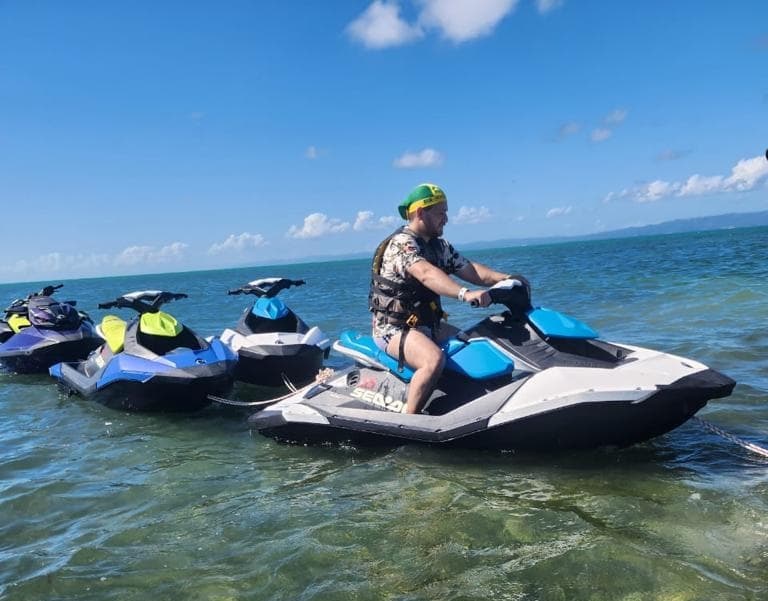
These flat-water lagoon conditions are absolutely flawless for parasailing and high-speed riding. It is exactly why renting personal watercraft here feels so dialed in—you get razor-sharp steering and smooth acceleration without bouncing violently over heavy chop.
Nobody wants to fly thousands of miles to look at a beach covered in brown algae.
Fortunately, February is historically a highly reliable, low-sargassum month. The massive seaweed blooms you read about in the news require intense heat to reproduce rapidly. Because the Atlantic surface waters are at their coolest point of the year, the algae simply doesn't grow fast enough to become a nuisance.
Verified historical sargassum tracking data consistently shows February marking the annual low point for biomass density in our region. You can expect clean sand and striking blue water. For a closer look at how this changes throughout the year, check out our dedicated report on seaweed in Punta Cana.
Prepare for massive amounts of daylight. You will get over 10 hours of bright sunshine daily, with sunrise kicking off just before 7:00 AM.
But there is a trap here that catches thousands of tourists off guard. Because the temperature is a mild 81°F and the ocean breeze feels so cooling, people forget they are sitting remarkably close to the equator.
The UV index here routinely hits 10 or 11. That is extreme territory. Unprotected skin will burn badly in under 20 minutes around midday.
Do not mess around with the Caribbean sun. Slather on a broad-spectrum SPF 50+ sunscreen every two hours. More importantly, make sure you buy a reef-safe formula (look for zinc oxide or titanium dioxide) to ensure we keep the local coral structures alive. Throw on a wide-brimmed hat, grab UV400 polarized sunglasses to kill the glare off the ocean, and keep a rash guard handy.
Packing for this specific window requires a bit of strategy. You need gear for the intense midday sun, but you also want to be comfortable when the wind picks up at night.
Keep your suitcase focused on this core list:
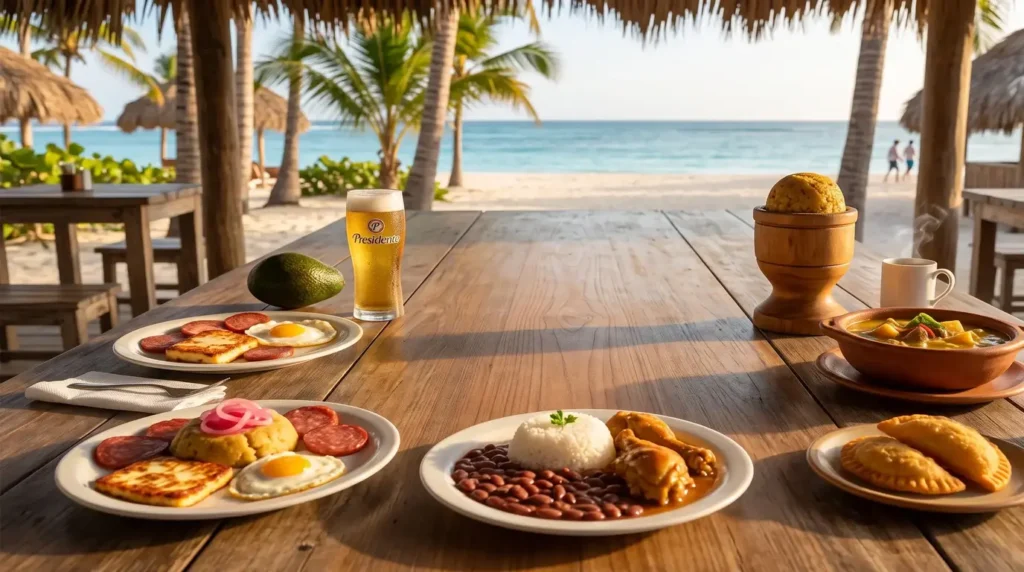
Leave a little extra space in your checked bag for the flight home. You will definitely want to bring back some local cigars, whole-bean Dominican coffee, or a traditional bottle of mamajuana to share with friends.
Dry skies, manageable heat, and calm seas open up the entire playbook. If you want to build an itinerary that actually maximizes these specific weather patterns, take a look at our full lineup of water sports Punta Cana to see what fits your style.
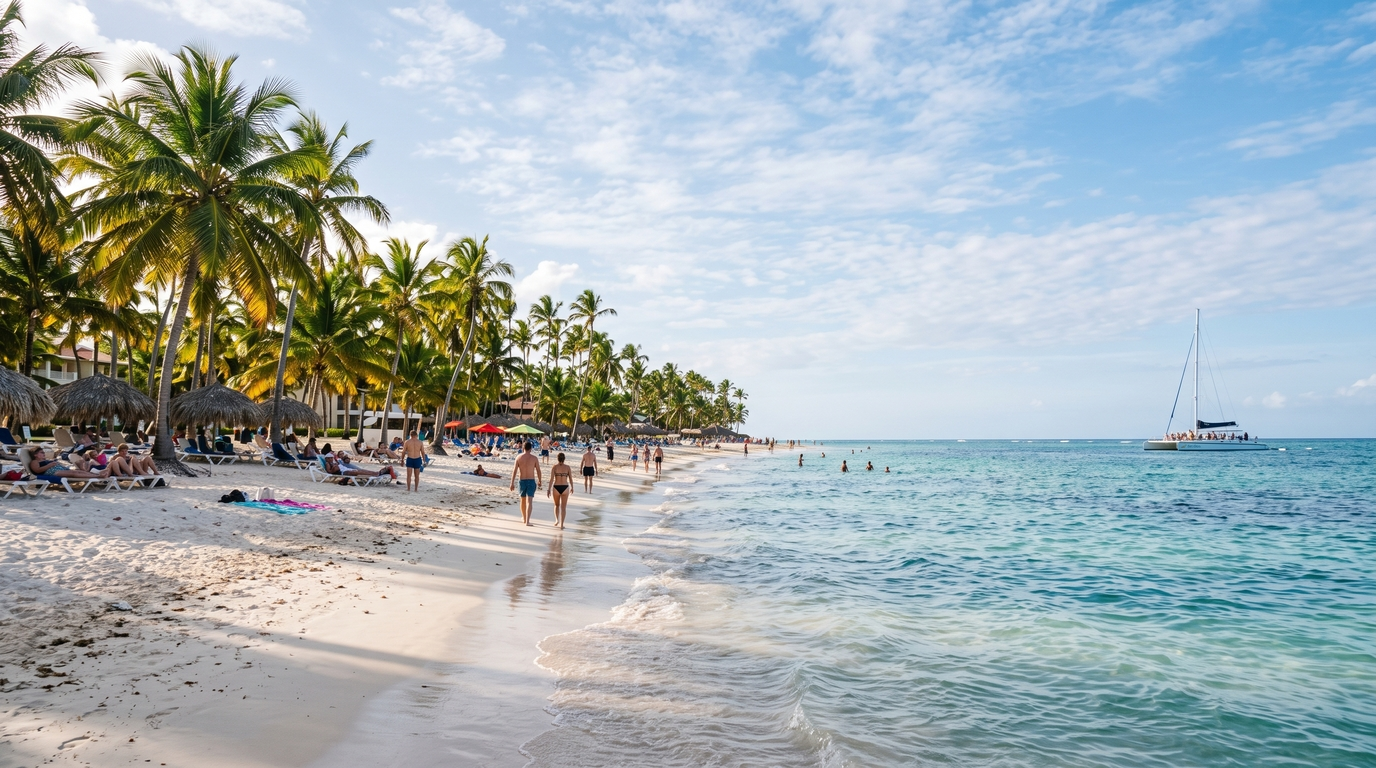
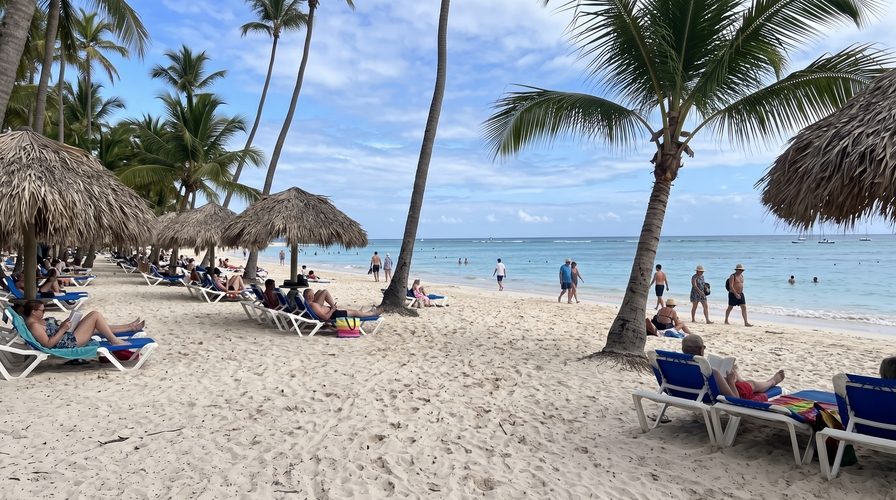
Sometimes the best activity is doing absolutely nothing. Post up at Bavaro Beach or Macao Beach. The white coral sand at Bavaro has a unique property—it actually stays cool to the touch even when the midday sun is blasting it. Grab a lounger, flag down a drink server, and just relax.
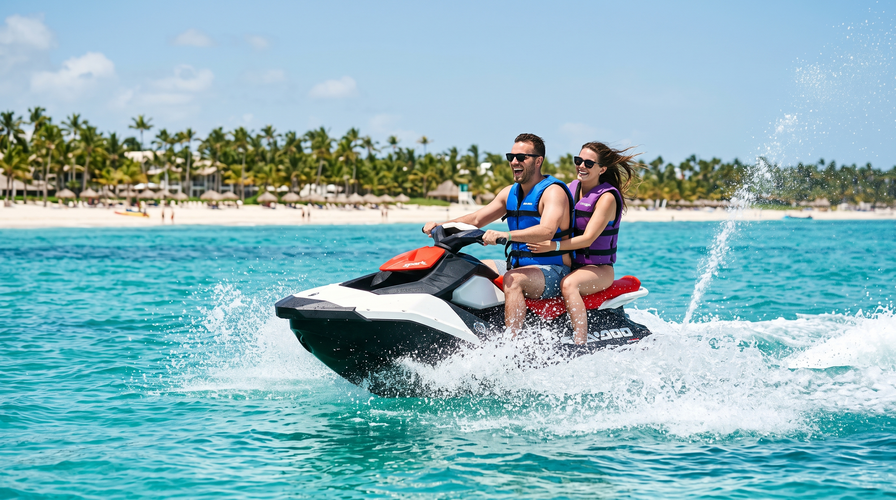
We cannot stress this enough: February's water conditions are the best you will get all year for personal watercraft. The barrier reef knocks out the heavy waves, leaving you with an aquatic playground.
At Jet Ski Punta Cana, we maintain a premium fleet of high-output machines designed to let you carve up the flat water with total confidence. If you want to push the adrenaline even higher, look into our jet ski and aqua kart package. It pairs traditional agile riding with the wildly unique experience of drifting a specialized go-kart directly across the ocean surface. Just a heads up—February is the absolute peak of the high season, so advance reservations are strictly mandatory.
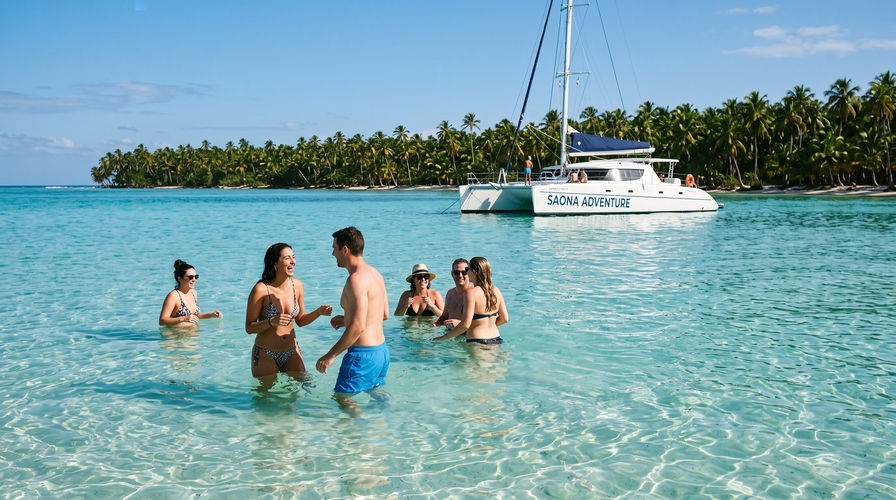
The calm winter sea state means offshore boat rides are smooth, stable, and highly enjoyable. Book a spot on a catamaran Isla Saona run to spend the afternoon standing waist-deep in a natural ocean sandbar surrounded by starfish. If you are more interested in marine life, an Isla Catalina tour offers access to incredible coral walls with underwater visibility easily pushing past 80 feet this time of year.
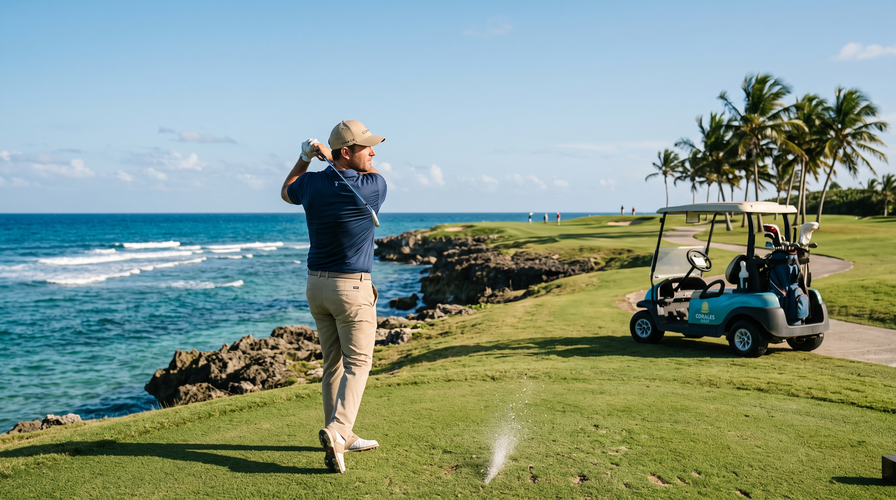
The Dominican Republic features some of the best golf architecture on the planet. Courses like Punta Espada and Corales are legendary. Playing 18 holes in February is a joy because you get the stunning coastal views without dealing with the exhausting, dripping sweat of a July tee time.
If you are traveling with kids, or if you just prefer floating over fighting heavy surf, location matters. The coastline here is not uniform.
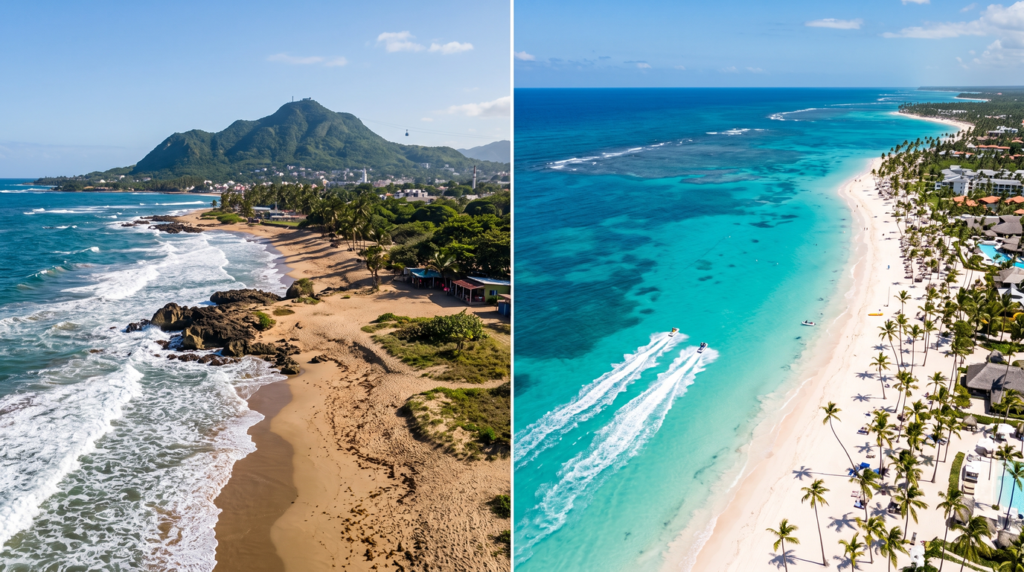
Bavaro Beach is the undisputed champion for calm water. Because it faces east and sits behind a massive, continuous coral barrier reef, the heavy ocean energy gets destroyed hundreds of yards away from the sand. The water lapping at the shore is gentle and highly protected.
Macao Beach, located further northwest, tells a different story. It lacks that protective reef system, meaning it takes the North Atlantic swells right on the chin. It is visually stunning and excellent for surfing, but it features heavy breaking waves that can easily knock you off your feet. Stick to Bavaro for a relaxed, flat-water experience.
The vibe in town during February is electric. The resorts are full, the weather is perfect, and the tour operators are running at full capacity.
With Valentine's Day anchoring the month, the demand for couples' excursions skyrockets. Sunset catamaran cruises are the heavy favorite here. Drifting along the coastline while the sky turns neon pink, armed with a glass of sparkling wine and a warm ocean breeze, is exactly why people book these trips in the first place.
If you get bored easily sitting on a beach towel, it is time to mix dirt and saltwater. The ultimate local hack is booking combination tours that knock out two completely different biomes in one day.
Lock in the buggy and jet ski package Punta Cana to tear through muddy jungle trails and local villages before washing off the dirt by blasting across the Caribbean Sea. If you want maximum variety, the aqua kart and buggy package Punta Cana lets you drift on the dirt tracks in a 4x4, then head to the ocean to drift on the water in a marine kart.
Why do travel veterans fiercely defend February as the ultimate time to fly down? Look at the hard numbers compared to the rest of the calendar.
| Time of Year | The Reality on the Ground |
| February | The Gold Standard: You get zero humidity, completely flat water, zero storm threats, and perfect mid-80s heat. |
| January | The Warm-Up: Very similar to February with excellent dry conditions and cool nights. See the data in our Punta Cana weather in January guide. |
| July | The Sweaty Season: The heat spikes, the humidity gets heavy, and the rain starts picking up. Compare the vibe in our Punta Cana weather in July breakdown. |
| September | The Storm Watch: High heat, heavy rain potential, and active hurricane monitoring. Check out our Punta Cana weather in September analysis. |
Is February a good time to visit Punta Cana?
Absolutely. It is arguably the best month of the entire year. You land right in the middle of the dry season, guaranteeing mild 81°F temperatures, low humidity, and beautifully clear skies for your entire trip.
Does it rain a lot in Punta Cana in February?
No, it barely rains at all. February averages just about 3.1 inches of rain for the entire month. When showers do pop up, they usually happen in the middle of the night and disappear in ten minutes.
Is there seaweed in Punta Cana in February?
No, you are traveling during the lowest risk period. The cooler winter ocean temperatures prevent the sargassum seaweed from blooming aggressively, leaving the beaches and swimming areas remarkably clean.
Is the water too cold to swim in February?
Not even close. The ocean stays right around a highly comfortable 79°F (26°C). You can jump right in without taking a cold shock, and it is warm enough to swim in for hours.
Are the waves too rough for Jet Skiing in February?
No, the waters are generally calm and perfect for it. The offshore barrier reef completely protects the Bavaro coastline, keeping the surface flat, smooth, and ideal for pushing a watercraft to its limits.
We have a total of 8 jet skis, perfect for up to 14 participants.
Tour duration is approximately 4 hours and includes round-trip hotel transportation.
Available from Wednesday to Sunday, with departures at 9:00 AM and 2:00 PM.
Pick-up times may vary depending on your hotel location, typically 1 hour before the activity starts.