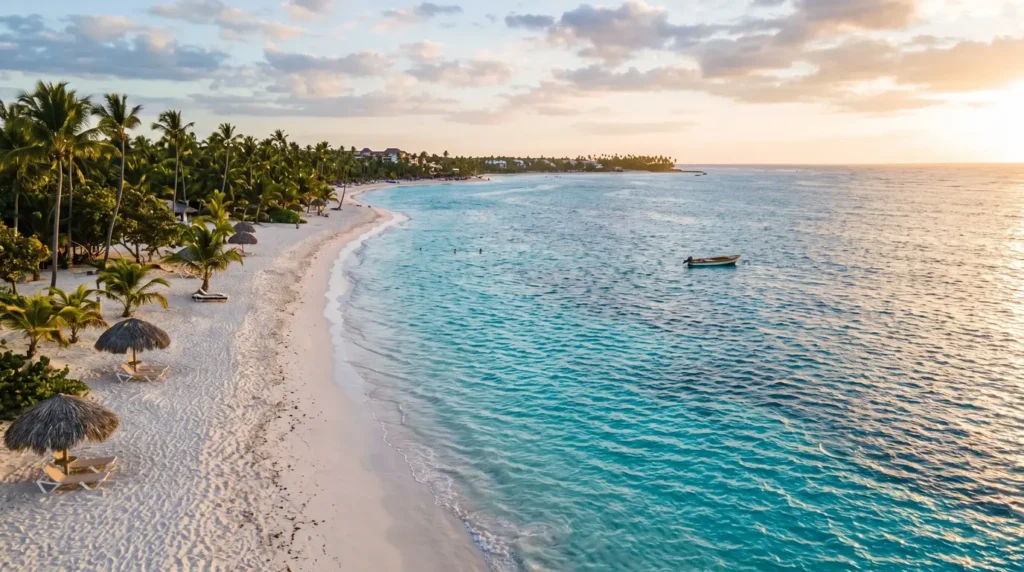
Saona Island is an untouched, government-protected Caribbean nature reserve off the Dominican Republic’s southeast coast. This guide helps travelers navigate the full-day trip. Expect average costs to run between $75 and $180 per person, with total excursion times lasting roughly 10 to 12 hours from hotel pickup to drop-off.
Right out of the gate: Saona Island belongs to Cotubanamá National Park, a massive, government-protected ecological reserve spanning land and sea. That means no paved highways. No sprawling hotel towers. Just raw, preserved Caribbean shoreline.
Millions of people make the trek here every single year. The reason is purely geographical. Bávaro resort beaches are gorgeous, but they sit on the Atlantic side. Saona Island faces the Caribbean Sea. You get water that stays impossibly flat, incredibly warm, and holds a neon-blue tint that looks fake in photos until you are actually standing in it.
When travelers start mapping out the best things to do in Punta Cana, this excursion always dominates the conversation. It delivers that exact remote-island aesthetic you see in brochures, trading modern resort luxury for a few hours of unfiltered, off-grid island life.
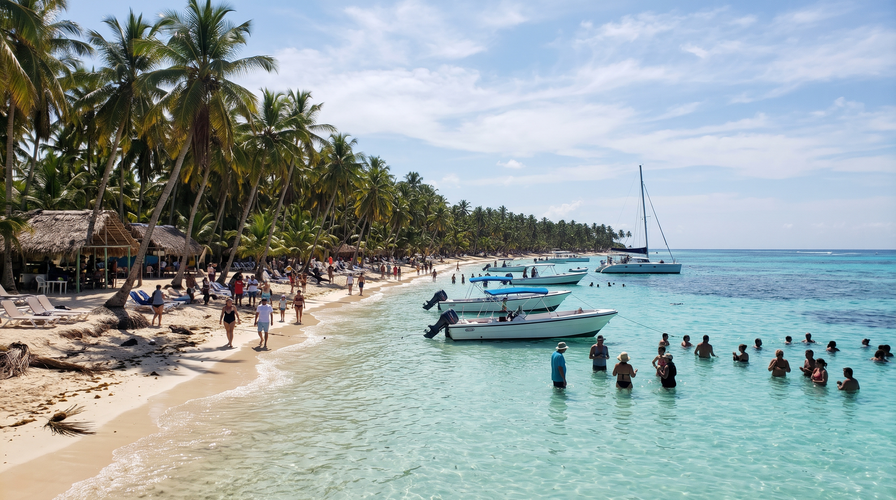
It sits just off the southeastern tip of the country, physically separated from the mainland by the Catuano Channel. You don't just step off your resort and onto the sand. You have to travel to the coastal town of Bayahíbe first.
Forget the idea of a quick 20-minute shuttle ride. We run these routes daily. Driving from the main hotel zones down the Autopista del Coral highway will eat up about 1 hour and 15 minutes of your morning in typical 2027 traffic. Staying up north in Uvero Alto? Budget closer to an hour and 45 minutes. Pull up a map of Punta Cana resorts to figure out exactly how long your morning commute to the dock will be.
Every single tour boat launches from the public docks at Dominicus Marina in Bayahíbe. It's a small fishing town that practically handles all marine traffic for the southeast coast. And if you're already checking out things to do in La Romana, you're in a great spot—the two towns border each other, cutting your morning drive down to barely 25 minutes.

You are looking at a two-part transit. Step one involves an air-conditioned bus hauling you from your hotel lobby to the Bayahíbe marina. Step two puts you on a boat for the actual ocean crossing.
That crossing completely changes depending on the vessel you book. Your main options are massive sailing catamarans or twin-engine speedboats. Most standard tours actually mix the two. They will throw you on a speedboat in the morning to outrun the massive crowds, then put you on a catamaran for a slow, rum-fueled sail back in the afternoon with bachata blasting on the speakers.
| Feature | Speedboat (Lancha Rápida) | Sailing Catamaran | Best For |
| Transit Time | 30 - 45 Minutes | 1.5 - 2 Hours | Speed: Adrenaline & direct routes |
| Water Stability | Bumpy / High Impact | Very Smooth / Gliding | Catamaran: Seasickness prone |
| Atmosphere | Windblown, fast, adventurous | Social, music, open bar, dancing | Speedboat: Small groups |
| Passenger Count | 15 - 30 People | 50 - 80+ People | Catamaran: Party crowds & families |
These tours run like clockwork. Once you hit Bayahíbe around 9:00 AM, you get on the boat and make a beeline for the natural pool at La Palmilla. You swim for an hour. Then the captain throttles up and heads for the main island beaches.
Lunch kicks off around 12:30 PM. Keep your expectations grounded. This is an off-grid beach feeding hundreds of hungry tourists simultaneously, not a five-star Michelin spot. You get heavy, traditional Dominican food: barbecued chicken, pork chops, rice, beans, pasta salad, and fruit. The open bar never stops pouring. Expect heavy doses of local rum, Presidente beer, and soda.
After you eat, you get two or three hours of total downtime. Walk the surf, pass out on a lounger, or track down a piña colada served inside a whole pineapple. By 3:30 PM, the crews start rounding everyone up for the ride back. You will generally walk back into your resort lobby by 6:00 PM.
La Palmilla is a giant offshore sandbar. The water stays waist-deep and ridiculously clear. Boats drop anchor right in the middle of it, and the crew typically jumps in alongside you with a floating bar.
This exact spot is home to massive red cushion sea stars. Listen carefully: do not pull them out of the water. Lifting a starfish into the air, even for a quick three-second photo, causes massive biological damage. They suffocate. Park rangers enforce strict fines for harassing marine life, and good captains will yell at you if they catch you doing it. Keep them submerged. Take your pictures looking down through the water.
Mano Juan is the only actual town on the island. It is a tiny, vivid fishing village running entirely off solar panels and diesel generators. Life moves incredibly slow here.
It also serves as the headquarters for a massive sea turtle conservation push. Locals work constantly to protect the nesting grounds of Hawksbill and Leatherback sea turtles. They carefully dig up eggs from vulnerable beaches and move them to secure incubators right in the village until they hatch. If your boat stops here, try interacting with the residents. Knowing even a few basic phrases of the local Dominican language helps immensely.
By 1:00 PM, the main buffet beaches get loud and packed. If you want that deserted-island vibe you saw online, you have to push further down the coast to places like Catuano or Playa del Gato.
These stretches of sand are quiet. No massive buffet tents, no fighting for a beach chair, and no booming speaker systems. You just get palm trees and silence. The catch? You almost always need to book a private charter or a highly specific small-group tour to reach them, as the big catamarans bypass them entirely.
If you live for fast-paced action, you are probably asking yourself is Saona Island worth it. It is marketed entirely around relaxation. But yes, it absolutely delivers—as long as you take the speedboat. Smashing through open Caribbean swells in a high-powered lancha rápida gives you a serious adrenaline spike.
Logistically, we tell people to use Saona as a recovery day. Book your high-intensity water excursions right in the middle of your vacation. Burn yourself out on the water. The very next morning, jump on a boat to Saona and let your muscles recover in the sand. Or, knock out two birds with one stone by booking a Saona Island + Buggy Combo. You get the aggressive, mud-flinging rush one day and total Caribbean chill the next.
Seaweed relies entirely on ocean currents. Because Bávaro and Uvero Alto face the turbulent Atlantic, they catch the majority of the incoming Sargassum blooms. Saona Island faces the Caribbean Sea, which physically blocks it from the worst of the seaweed drift.
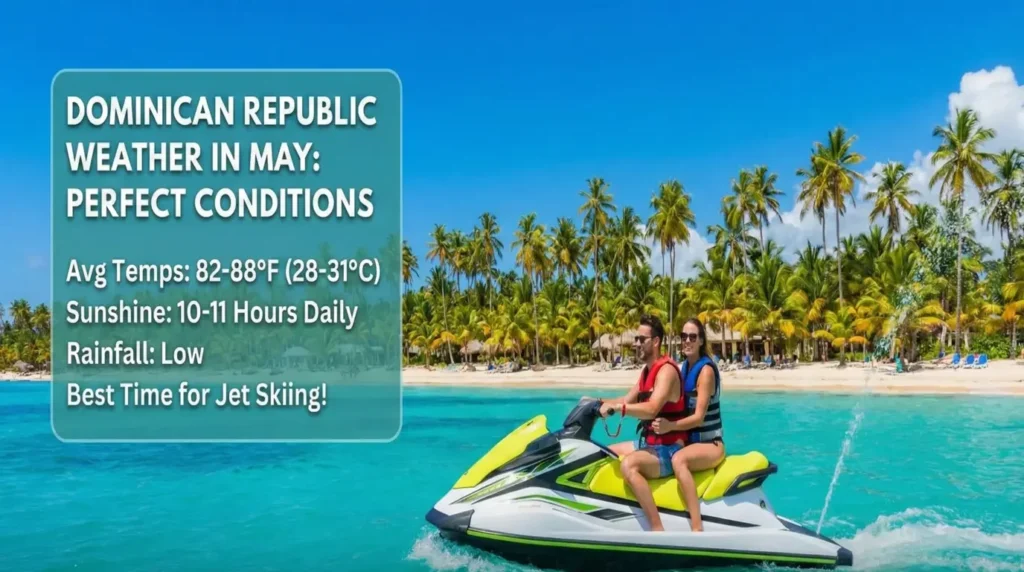
When you rent a Bávaro jet ski Punta Cana on the main coast, you might dodge patches of seaweed depending on the month. Saona, however, stays remarkably clear year-round. Think of it as your geographical backup plan. If your resort beach is choked with brown seaweed, a day trip to Saona practically guarantees you a swim in crystal-clear water.
Aim for late November through mid-December, or the April to May window. The water stays flat, the brutal summer humidity backs off, and the massive winter crowds haven't swarmed the beaches yet.
Check the historical Punta Cana weather in November. Hurricane threats drop to zero, and the daytime heat sits at a highly manageable 84°F (29°C). June through August looks great on paper, but the intense heat means you will have to stay submerged in the water the entire time just to avoid melting.
Standard group tours run around $70 to $90. They are cheap, highly efficient, and loud. The trade-off is a rigid schedule shared with 60 strangers.
If you hate crowds or you are traveling with a massive family, private charters fix everything. Reserving a catamaran Isla Saona boat lets you control the clock. Want to hang at the natural pool for two hours? Do it. Want to skip the buffet and hit Playa del Gato? Done. And if you have the budget, booking a Punta Cana yacht rental to Saona changes the game entirely with private chefs, top-shelf liquor, and total isolation from the tourist masses.
People ruin their own trips by making the exact same errors every week. Don't do this:
Keep it light, but do not leave the best area to stay in Punta Cana without these essentials in your bag:
Long before tourist catamarans existed, the indigenous Taíno people inhabited this land. They called the island Adamanay. When Christopher Columbus showed up on his second voyage in 1494, he renamed it Saona after a friend from Savona, Italy.
The mainland park takes its name from Chief Cotubanamá, a Taíno leader who fought aggressively against Spanish colonization in the early 1500s. Today, the government enforces strict regulations across these 400+ square kilometers of land and sea. They protect the historical and ecological footprint, ensuring it never turns into the concrete hotel jungles found elsewhere.
Typically, the water at the natural pool is waist to chest deep, roughly 3 to 4 feet depending on the tide. It is incredibly calm with a soft, sandy bottom, making it perfectly safe for non-swimmers to stand, relax, and enjoy a drink in the water.
Yes, the main buffet areas and beach clubs have basic restroom facilities, though they are rustic and island-style. Do not expect luxury resort bathrooms; water pressure is low and amenities are basic, so bringing your own hand sanitizer and travel tissues is highly recommended.
Service is extremely spotty and Wi-Fi is practically non-existent outside of Mano Juan. Treat it as an off-grid day. You might get a faint signal near the coastline if you have a local Dominican SIM card, but you should not rely on it for streaming or uploading photos.
Technically yes, by driving to Bayahíbe and negotiating a private boat at the public dock, but it rarely saves money and massively complicates park entry logistics. Organized tours are highly recommended because they cover your mandatory national park bracelets, lunch, drinks, and round-trip resort transfers in one upfront price.
We have a total of 8 jet skis, perfect for up to 14 participants.
Tour duration is approximately 4 hours and includes round-trip hotel transportation.
Available from Wednesday to Sunday, with departures at 9:00 AM and 2:00 PM.
Pick-up times may vary depending on your hotel location, typically 1 hour before the activity starts.