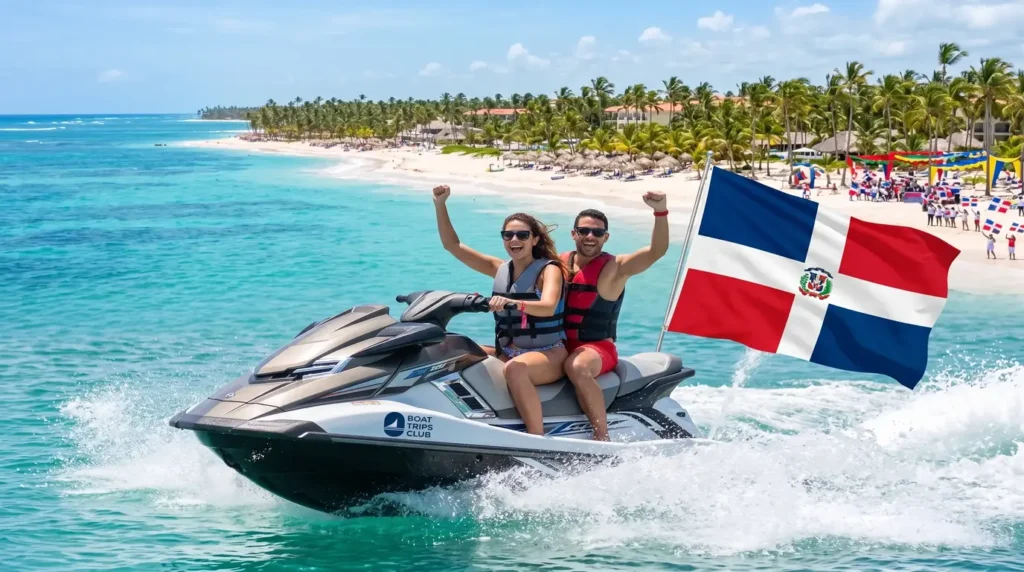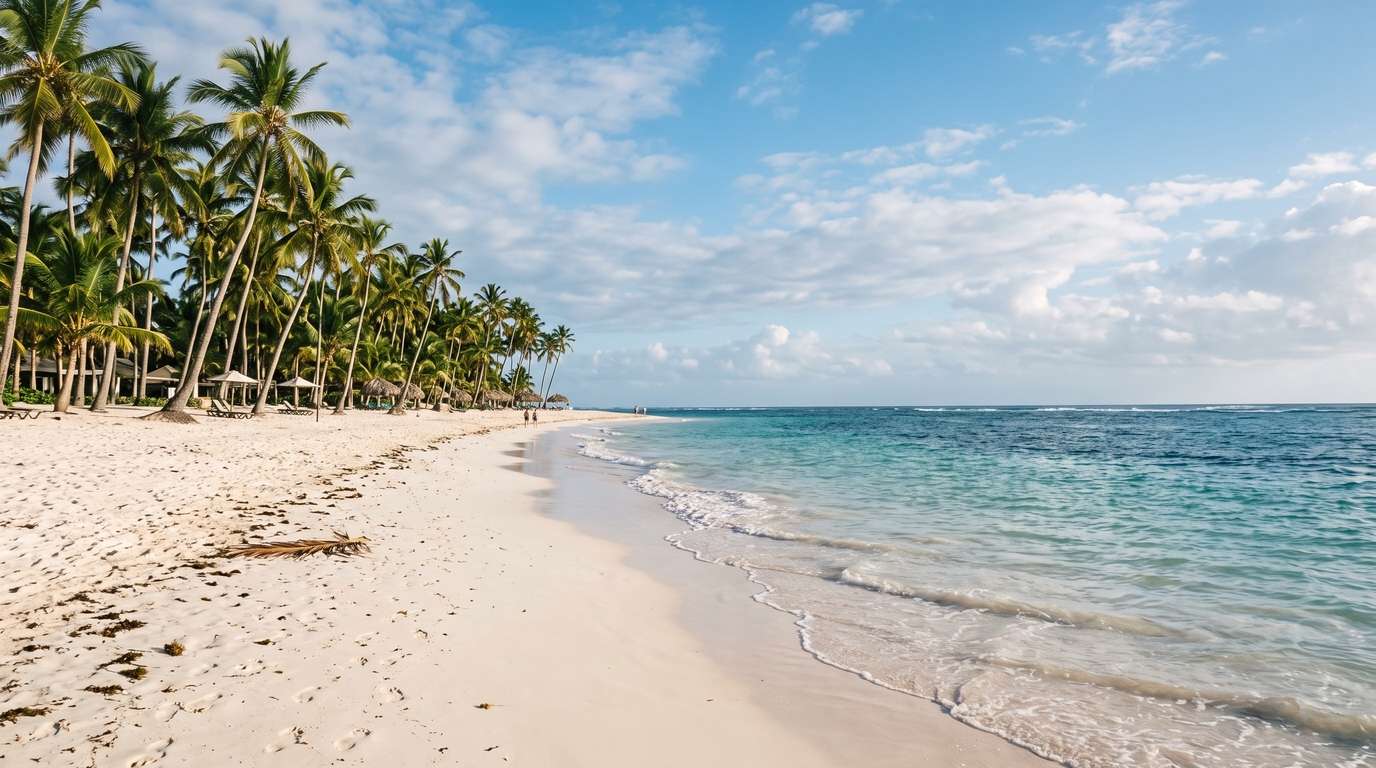
Quick Overview: September brings daytime highs of 88°F (31°C), incredibly warm 84°F (29°C) waters, and short, highly predictable tropical showers. Mornings guarantee sunny skies with glassy, flat waters, establishing 9:00 AM to 1:00 PM as the absolute best window for pristine beach lounging and high-speed Jet Ski excursions.
Key Weather Snapshot:
Bávaro Beach and the surrounding eastern coastline maintain a very specific microclimate during the early fall. The data below reflects the verified meteorological averages you will experience on the ground this September.
| Weather Metric | September Average | Operational Impact for Visitors |
| Air Temperature (High) | 88°F (31°C) | Intense midday heat. Optimal for full water immersion. |
| Air Temperature (Low) | 77°F (25°C) | Balmy, humid evenings. Light resort wear is required. |
| Ocean Temperature | 84°F (29°C) | Peak annual warmth. Feels like a heated swimming pool. |
| Average Rainfall | 4.5 inches (114 mm) | Arrives in sharp, 15-to-30-minute afternoon bursts. |
| Daily Sunshine | 9.5 – 10 Hours | Cloudless mornings followed by scattered afternoon cumulus. |
| Average Wind Speed | 8 – 11 mph (E/NE) | Morning breezes are light; afternoon trade winds pick up. |
Our on-the-ground analysis shows that these numbers only tell part of the story. While the humidity sits higher than in the winter months, the constant cross-shore Atlantic breeze mitigates the heavy air, making outdoor activities highly enjoyable provided you time them correctly.
Deciding on the exact month for your Caribbean vacation requires balancing your budget, crowd tolerance, and heat preference. September represents a strategic sweet spot for travelers prioritizing warm water and uncrowded beaches over zero-precipitation guarantees.
| Month | Avg High Temp | Ocean Temp | Crowd Level | Resort Pricing |
| September | 88°F (31°C) | 84°F (29°C) | Very Low | Lowest (Off-Peak) |
| January | 82°F (28°C) | 79°F (26°C) | Peak | Highest (Premium) |
| July | 87°F (31°C) | 83°F (28°C) | High (Summer Break) | Moderate |
If you are currently evaluating the best time to visit Punta Cana, comparing these transitional fall weeks against other seasonal data points offers clear operational advantages. Looking backward, Punta Cana weather in August carries similar heat profiles but retains the heavy family summer vacation crowds. Fast forward a few weeks, and Punta Cana weather in October sees a slight dip in humidity as the island prepares for winter.
Late fall patterns like Punta Cana weather in November and early winter arrivals looking at Punta Cana weather in December will notice significantly cooler evening breezes, requiring long sleeves for beachfront dinners. Meanwhile, strict high-season months highlighted in our Punta Cana weather in January guide feature the lowest humidity but command premium hotel rates and crowded excursion boats. Conversely, mid-summer comparisons like Punta Cana weather in July share September's ocean warmth but lack the VIP, empty-beach aesthetic that early fall provides.
The primary perk of September? You secure luxury resort accommodations at steep discounts, enjoy VIP-level uncrowded waters, and swim in the absolute warmest Caribbean sea temperatures of the entire calendar year.
Daytime temperatures in September are distinctly tropical. Thermometers consistently peak around 88°F (31°C) between noon and 2:00 PM. Factoring in the high relative humidity—often sitting at 80%—the actual heat index (what your body actually feels) easily pushes past 95°F (35°C).
However, Punta Cana features a geographic advantage. Because Bávaro Beach faces east toward the open Atlantic Ocean and the Mona Passage, steady trade winds hit the shoreline 24 hours a day. This constant ocean breeze acts as a massive natural air conditioner. Sitting under a palm tree or riding across the water feels incredibly refreshing, entirely neutralizing the oppressive stillness found inland.
Nighttime temperatures only drop to about 77°F (25°C). You will not need a jacket, sweater, or heavy pants at any point during your trip. Light linens, breathable cotton, and moisture-wicking evening wear are the practical choices for resort dinners and outdoor shows.
September delivers an average of 9.5 to 10 hours of highly intense, direct tropical sunshine daily. Because the Dominican Republic sits geographically close to the equator, the UV Index routinely hits extreme levels (10+) by 11:00 AM.
Protecting your skin requires specific gear. Standard aerosol sunscreens often wash off in saltwater within twenty minutes. We strictly recommend packing eco-friendly, reef-safe mineral sunscreen (zinc oxide or titanium dioxide). These formulas provide a physical barrier against the sun, last much longer during high-speed water activities, and protect the fragile coral ecosystems lining the eastern coast.
For water sports enthusiasts, sunscreen alone is not enough. Equip yourself with polarized sunglasses to cut the severe water glare and wear long-sleeved UPF 50+ rash guards. Rash guards offer zero-maintenance sun protection, allowing you to focus on driving your machine rather than worrying about mid-day shoulder burns.
Open any standard smartphone weather app in September, search for Punta Cana, and you will likely see a lightning bolt or rain cloud icon plastered across every single day of the month. This display creates massive panic for incoming travelers, but it represents a fundamental flaw in how global weather algorithms display tropical island meteorology.
Weather apps trigger a daily rain icon if there is even a 20% chance of precipitation anywhere within a 50-mile radius. In September, the immense daytime heat causes rapid evaporation over the warm ocean. This moisture condenses into localized cumulus clouds by early afternoon. The result is a brief, highly isolated convection shower. It does not rain all day. It rarely rains all morning.
Here is the factual, on-the-ground daily routine you can actually expect:
September represents the statistical peak of the Atlantic hurricane season. However, understanding the localized geographic reality of the Dominican Republic eliminates unnecessary anxiety.
Punta Cana sits on the extreme eastern tip of the island of Hispaniola. Historically, major cyclonic systems tend to track slightly north or south of this specific coordinate. Furthermore, the Dominican Republic features three massive central mountain ranges (including Pico Duarte, the highest peak in the Caribbean). These aggressive topographical barriers act as a natural weather shield, frequently disrupting and tearing apart low-pressure systems before they can establish direct, catastrophic landfalls on the eastern resort zones.
While the risk of a direct hit remains statistically low, passing offshore storms can generate elevated surf and localized squalls. We rely strictly on verified data from the National Hurricane Center to track marine conditions weeks in advance. To guarantee complete peace of mind, purchase standard "Cancel for Any Reason" travel insurance. This ensures your financial investment is fully protected if a rogue system forces flight delays, answering the common question of is Punta Cana safe to visit with a resounding yes—provided you plan intelligently.
Ocean temperatures hit their annual maximum in September, holding steady at an incredibly warm 84°F (29°C). Wading into the Atlantic feels exactly like stepping into a heated resort pool. This extreme warmth allows for extended snorkeling sessions, prolonged swimming, and zero "cold shock" when falling off a towable tube. Underwater visibility remains excellent, often exceeding 60 feet during the calm morning hours.
Bávaro Beach benefits from a massive, natural limestone barrier reef located roughly half a mile offshore. This structure acts as a marine shock absorber. Even if a distant September storm generates large offshore ocean swells, the barrier reef violently breaks the energy of the incoming waves. The resulting nearshore waters—where swimming zones and excursion departures exist—remain completely glassy, flat, and perfectly safe for high-performance riding.
Wind dynamics dictate water texture. During the morning hours (8:00 AM to 12:00 PM), wind speeds drop to a minimal 5–8 knots. This creates a "mirror glass" effect on the ocean surface, providing the smoothest, fastest, and most comfortable conditions for Jet Ski riding. By 2:00 PM, the trade winds accelerate to 12–15 knots, whipping the surface into a tighter chop. If you want speed and comfort, book your marine activities before lunch.
Sargassum seaweed influxes are a known operational reality across the entire Caribbean basin during the summer months. However, September typically marks the turning point. As ocean temperatures peak and global currents begin their subtle seasonal shift, Sargassum levels generally start dropping aggressively toward the end of the month.
When planning your days, you can track real-time satellite blooms via official Sargassum monitoring maps. On the ground, premium Bávaro Beach resorts and our specific tour departure zones utilize heavy-duty beach clearing tractors at sunrise every single day. This relentless mechanical clearing ensures that your immediate water entry points, lounging areas, and launch zones remain spotless and pristine, regardless of offshore algae mats.
Packing for a September arrival requires ditching heavy fabrics and focusing entirely on moisture management and marine utility.
Beating the afternoon convection showers is the ultimate September strategy. Booking an early buggy and jet ski package Punta Cana ensures you utilize the flattest waters of the day while the sun is shining brightest. There is no better way to explore the coastline than gripping the throttle of a high-powered Yamaha on mirror-glass ocean. If you prefer blending land and sea dynamics, securing a dual jet ski and aqua kart package Punta Cana offers unmatched mechanical adrenaline before the afternoon clouds even form.
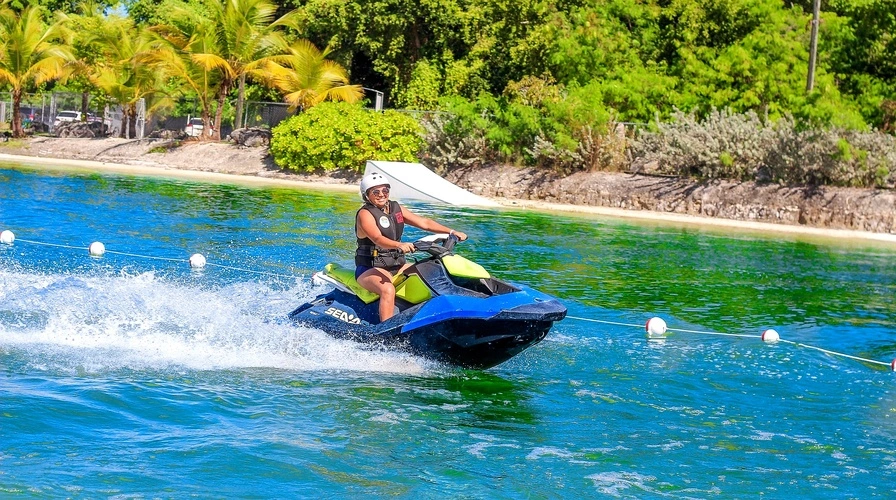
The brief, intense rain showers of September keep the Dominican coastline incredibly lush and vibrant green. Viewing this tropical canopy from 200 feet in the air offers a stunning contrast against the blue water. If you want maximum thrills, combining aerial views with marine speed via an aqua splash Punta Cana excursion delivers a flawless morning itinerary. No matter your preference, early booking for water sports Punta Cana guarantees you the prime, weather-cleared time slots.

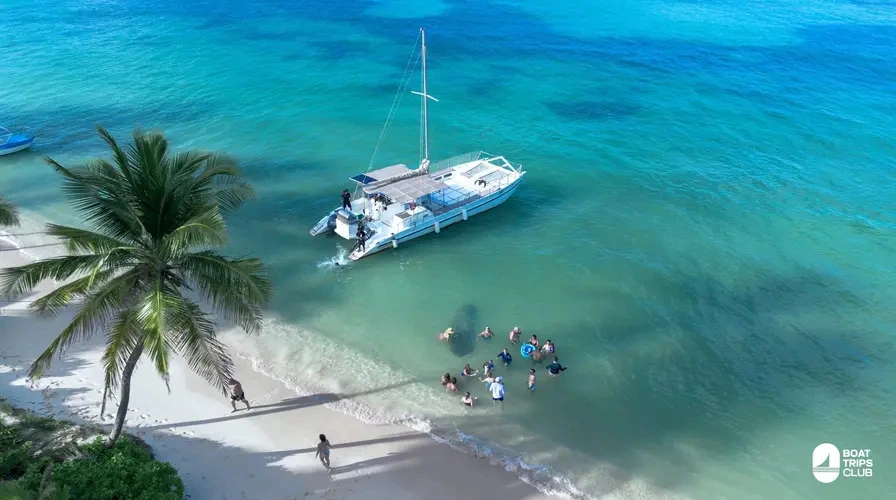
Because the ocean hits an annual peak of 84°F in September, you can snorkel the outer reef for hours without your core temperature dropping. Navigating to the best coral heads requires expert local captains. Booking a private catamaran Punta Cana provides exclusive access to isolated snorkeling zones far away from the crowded party boats. For families or friend groups looking to control their own music and itinerary, a dedicated catamaran Punta Cana Bavaro charter is the ultimate luxury upgrade.
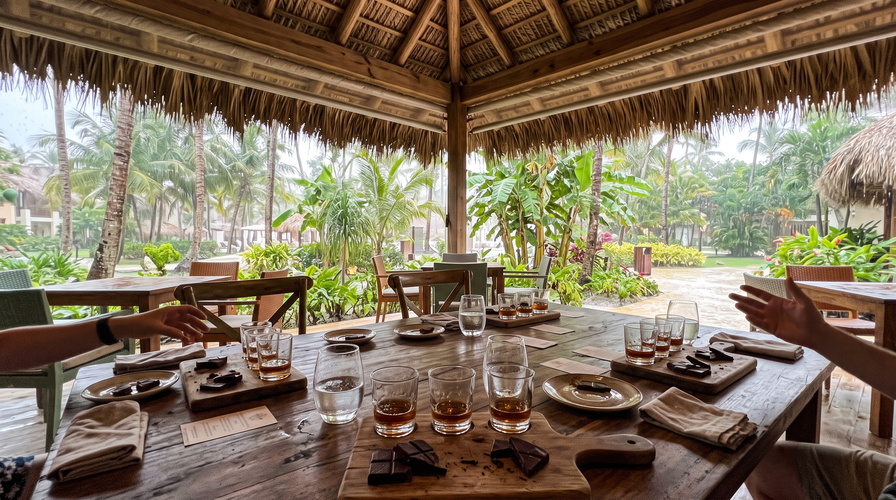
When the 3:00 PM convection shower inevitably rolls across the beach, simply transition to covered cultural experiences. Use this 45-minute rain delay to visit an indoor Dominican chocolate workshop, schedule a top-shelf rum-tasting session at your resort lobby bar, or head to the spa. By the time you finish your drink, the sun will be back out.
We operate with strict adherence to marine safety protocols, ensuring you never lose your vacation investment to a passing storm. Jet Ski Punta Cana monitors live dual-band marine radar and maintains direct communication with the Dominican Navy and Coast Guard.
If official maritime authorities issue a port closure (a "bandera roja" or red flag warning) due to severe offshore swells or lightning, our weather guarantee immediately activates. We offer a 100% free, priority rescheduling policy to move your run to the next available sunny morning. If your flight leaves the next day and rescheduling is impossible, we issue an instant, no-questions-asked cancellation and refund. You assume zero financial risk when booking your water adventures.
Yes, absolutely. Mornings in September offer the calmest, flattest waters of the entire year. By booking your rental between 9:00 AM and 1:00 PM, you avoid the afternoon chop and secure pristine riding conditions inside the protected reef.
No, it represents one of the most strategic times for smart travelers. While the chance of brief afternoon rain increases, September offers the lowest resort crowds, the warmest ocean waters, and massive discounts on luxury hotel pricing.
Rarely. Over 90% of rain events in September are heavy, localized convection showers that last under 30 minutes in the mid-to-late afternoon. All-day washouts are extremely uncommon unless a direct cyclonic system is passing over the island.
The ocean temperature peaks at a very warm 84°F (29°C). This bathwater-like warmth eliminates the need for wetsuits, making extended snorkeling sessions and deep-water swimming incredibly comfortable.
Our operational team tracks live radar and strictly follows Dominican Coast Guard safety flags. If sea conditions become hazardous, our proactive notification system will contact you directly via WhatsApp or email to execute a seamless reschedule or immediate refund.
We have a total of 8 jet skis, perfect for up to 14 participants.
Tour duration is approximately 4 hours and includes round-trip hotel transportation.
Available from Wednesday to Sunday, with departures at 9:00 AM and 2:00 PM.
Pick-up times may vary depending on your hotel location, typically 1 hour before the activity starts.