Quick Overview: Is July a good time to go to Punta Cana? Yes. Punta Cana weather in July 2027 features high temperatures around 86°F (30°C) with bathwater-warm ocean conditions perfectly suited for swimming and water sports Punta Cana. While it lands in the wet season, rainfall typically occurs in brief, late-afternoon showers, leaving mornings bright and ideal for excursions. Identifying the best time to visit Punta Cana depends entirely on your vacation goals, and July delivers peak summer ocean conditions for thrill-seekers.
Yes, July lands right in the middle of the Caribbean wet season. Do not let that deter you. Visiting the Dominican Republic mid-summer offers some of the most spectacular, high-energy beach days of the entire year. The secret? Understanding the daily rhythms. The ocean water is blissfully warm, acting as the ultimate natural escape from the midday heat. If you map out your itinerary correctly, July provides an incredible, sun-drenched backdrop for a tropical getaway.
July in Punta Cana brings distinct peak summer patterns. You will experience high heat, significant humidity, and incredibly warm ocean temperatures. When planning your daily activities, rely on these historical averages to structure your time outdoors.
| Weather Metric | Historical Average in July | What It Actually Means for You |
| Average High Temperature | 86°F (30°C) | Expect intense midday heat. You need to be in the water or shade by 1:00 PM. |
| Average Low Temperature | 78°F (26°C) | Evenings remain very warm and humid. Light clothing is mandatory. |
| Total Rainfall | 89mm (3.5 inches) | Rain comes in fast, heavy, and highly localized afternoon bursts. |
| Ocean Temperature | 84°F (29°C) | The water feels like a warm bath. Perfect for extended swimming sessions. |
| Average Sunshine | 11.7 hours/day | Despite the "wet season" label, you still get massive amounts of direct sun. |
Comparing this data to Punta Cana weather in June or Punta Cana weather in August reveals a consistent tropical plateau. The temperatures do not swing wildly. Instead, the humidity creates a "feels like" temperature that pushes well into the 90s. The ultraviolet (UV) index consistently hits a level 11 (extreme) during this month. Protect your skin aggressively.
Planning around the daily weather pattern is the single most important factor for a July vacation. Mornings in July are almost always bright, sunny, and clear, making it the absolute best time to book excursions like Jet Skiing. If rain does happen, it usually arrives in the late afternoon.
At 7:30 AM, the horizon off the eastern coast of the Dominican Republic is usually razor-sharp. The humidity hasn't fully cooked off the sand yet, and the ocean resembles a massive sheet of glass. From our operational experience running watercraft tours, the window between 8:00 AM and 1:00 PM is golden. The sky is a vibrant blue, the visibility underwater is pristine, and the winds are light.
By 2:00 PM, the dynamic changes. The intense morning heat causes moisture to evaporate rapidly off the ocean, forming towering cumulonimbus clouds over the island's interior. Around 3:30 PM or 4:00 PM, these clouds push toward the coast. The wind picks up. The sky darkens. And then, the rain drops.
This predictable pattern is the ultimate travel hack. Eat breakfast early. Get out on the water by 9:00 AM. Run your high-energy excursions while the conditions are flawless. Then, when the 4:00 PM shower hits, you are already sitting comfortably under a thatched palapa at the resort bar with a rum cocktail in hand, enjoying the sudden drop in temperature.
A "rainy day" in the Caribbean rarely means it rains all day. July rain usually comes in brief, heavy 15-to-20-minute tropical showers that actually help cool down the hot afternoon air.
One of the biggest mistakes travelers make is checking their iPhone weather app a week before their trip. The app inevitably shows a dark rain cloud with a lightning bolt every single day for the entire month of July. Panic sets in. Tourists assume their vacation is ruined.
Here is the Punta Cana weather July real data reality: weather algorithms flag a 20-minute passing shower as a "rainy day." They fail to communicate that the remaining 11 hours and 40 minutes of daylight will feature blinding sunshine. The 89mm of total rainfall spread across the month is actually quite manageable.
When it rains in July, it pours. The drops are massive. It is a dramatic, visually stunning display of tropical weather. But it moves fast. Within 30 minutes, the storm system blows offshore, the sun breaks back through the clouds, and the intense humidity begins to steam off the pavement. Locals actually welcome these afternoon showers because they temporarily shatter the stagnant afternoon heat, making the evening dinner hours significantly more comfortable.
Summer months can bring Sargassum (seaweed) to the shoreline. However, once you get past the shore, the deep water is crystal clear, turquoise, and completely seaweed-free.
We prefer to be entirely transparent with our guests regarding seaweed in Punta Cana. July is historically one of the heavier months for Sargassum blooms in the Caribbean. Ocean currents push these floating mats of brown algae onto the eastern-facing beaches of the Dominican Republic.
Resorts spend massive amounts of money and deploy fleets of tractors at dawn to clear the sand before you even wake up. Some days the shoreline is completely clear; other days, a fresh wave washes up overnight.
But here is the critical solution: the seaweed is strictly a shoreline issue. It piles up in the shallow break zone. If you book an excursion that takes you off the beach, the problem vanishes instantly. When you are out on a jet ski ripping across the waves or anchored out at a snorkeling reef, you are surrounded by the flawless, electric-blue Caribbean water you see in magazines. You do not have to let shoreline seaweed dictate your vacation. Just get off the beach and get onto a boat.
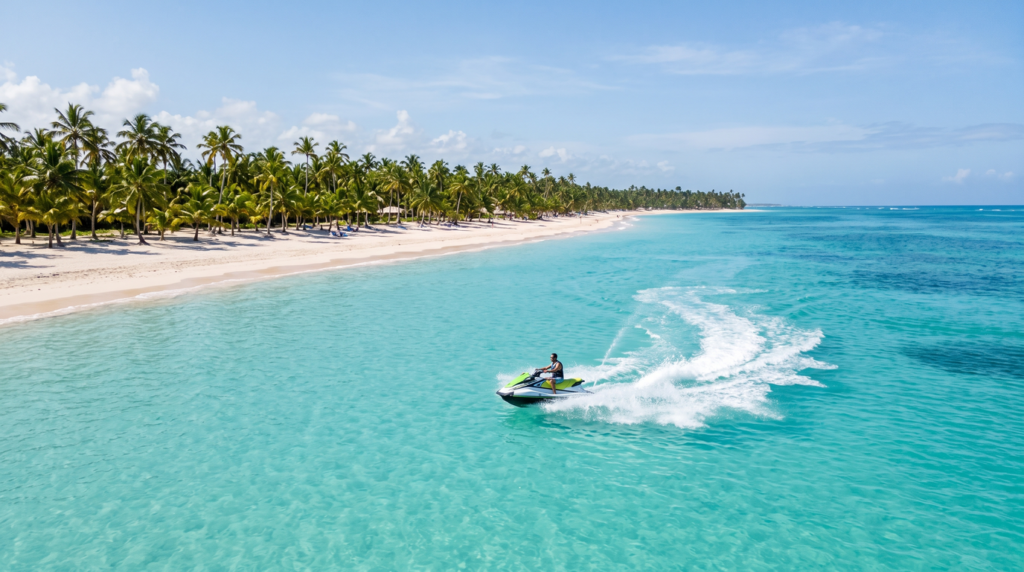
July brings gentle trade winds that keep the heat manageable. The wave conditions at Bavaro Beach and Macao Beach are generally calm and flat in the mornings, creating the ultimate smooth "playground" for high-speed jet skiing.
The eastern tip of the island is heavily influenced by the Atlantic trade winds. In July, these winds average a steady 10 to 15 mph. This breeze is your best friend. Without it, the 86°F heat would feel suffocating.
Geography plays a massive role in water conditions. If you look at where is Bavaro Beach located, you will notice a massive, natural offshore coral reef system that wraps around the coastline. This reef acts as a protective barrier. It absorbs the kinetic energy of the deep ocean swells before they can reach the shore. The result is a massive, shallow lagoon of remarkably flat water.
Over at Macao Beach Punta Cana, the geography opens up to the Atlantic, providing fun, rolling waves for bodyboarding and surfing. But for high-speed maneuvering, the inner reef zones of Bavaro in the early hours are unmatched. The surface tension of the water is practically glass. Cutting through those calm morning waters on a high-powered machine is an entirely different experience than bouncing over afternoon chop.
The ocean temperature in July sits at an incredibly inviting 84°F (29°C), accurately described as "bathwater warm". With 11.7 hours of daily sunshine and high humidity, the absolute best way to stay cool is to be out on the ocean feeling the sea breeze.
You will not experience that shocking, breath-stealing chill when you jump into the water here. The ocean temperature is physically comfortable enough to submerge yourself for hours without feeling cold.
When the midday sun hits its peak, sitting on a dry beach chair becomes an endurance test. The sand gets hot enough to burn your feet. The smartest travelers abandon the lounge chairs by noon. They spend their afternoons wading waist-deep in the water, drinking from floating bars, or exploring the beaches in Punta Cana via watercraft.
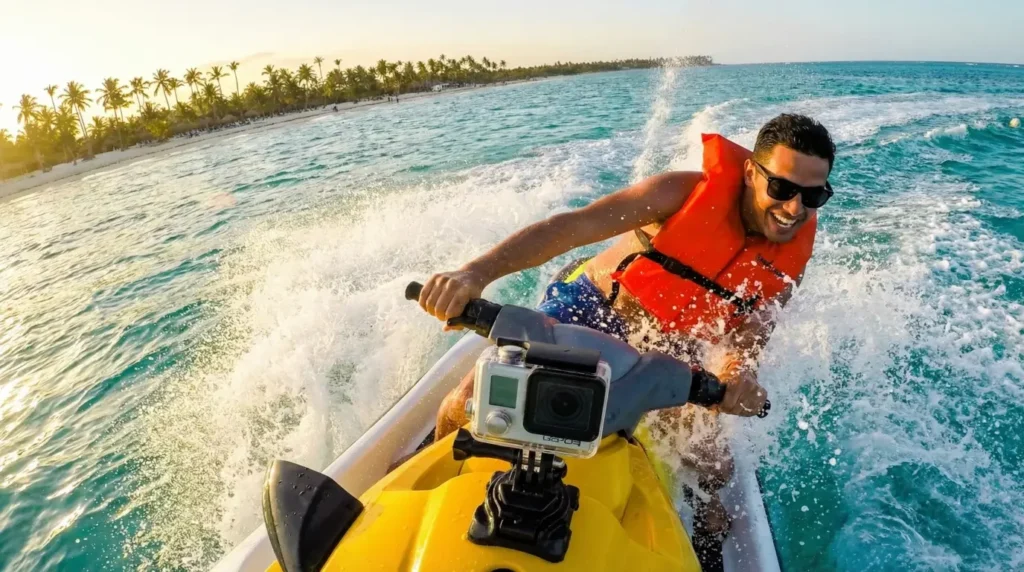
To truly maximize this warm water and beat the heavy summer heat, you need to combine the ocean with velocity. Sitting still in 84°F water is nice. Ripping across it at 45 mph with the sea spray hitting your face is incredible. There is no better method to naturally air-condition your body. Secure your ride and cool off immediately with Jet Ski Punta Cana.
Packing for July requires prioritizing heat management, intense sun protection, and moisture-wicking materials. Leave the heavy denim at home.
Structuring your itinerary around the heat is critical. Focus on the water. Check out our comprehensive guide on things to do in Punta Cana for a wider list, but specifically for July, these are the absolute top-tier options.
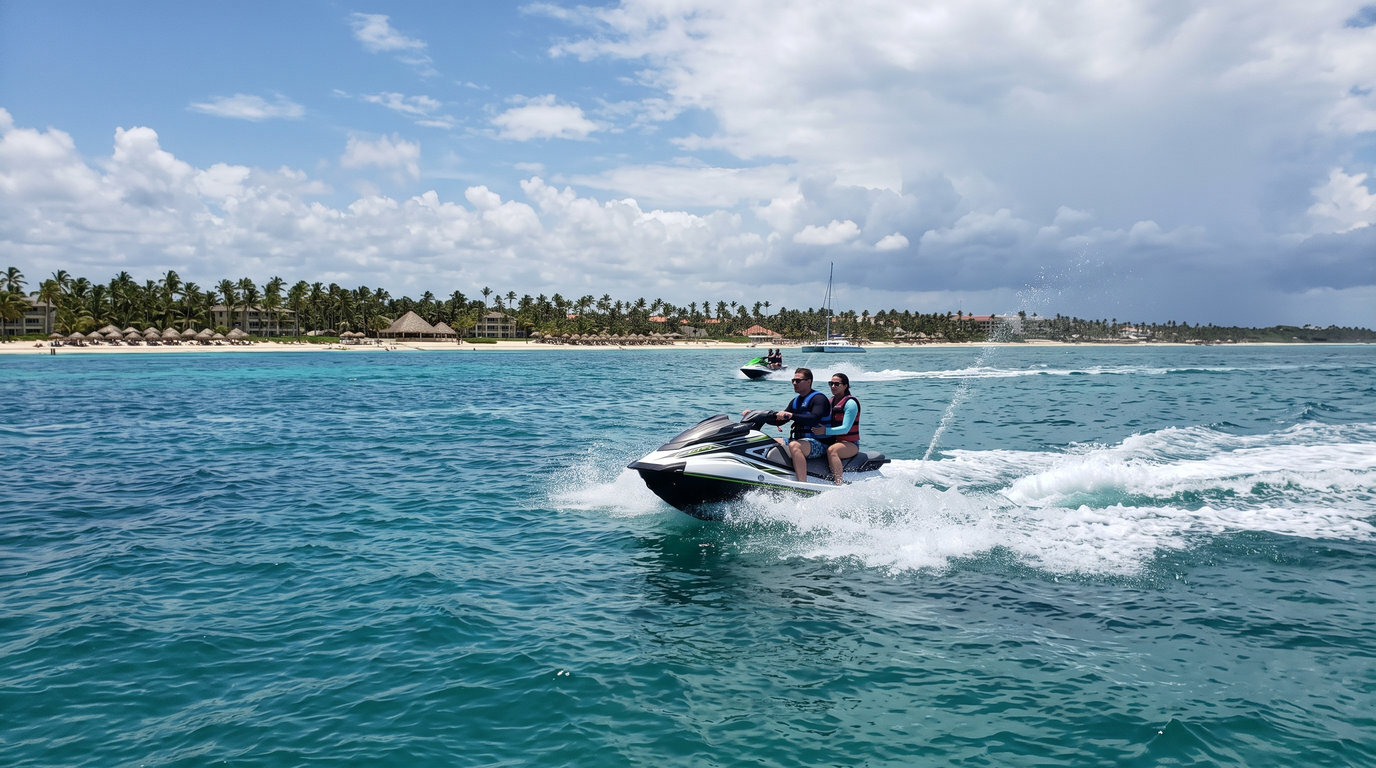
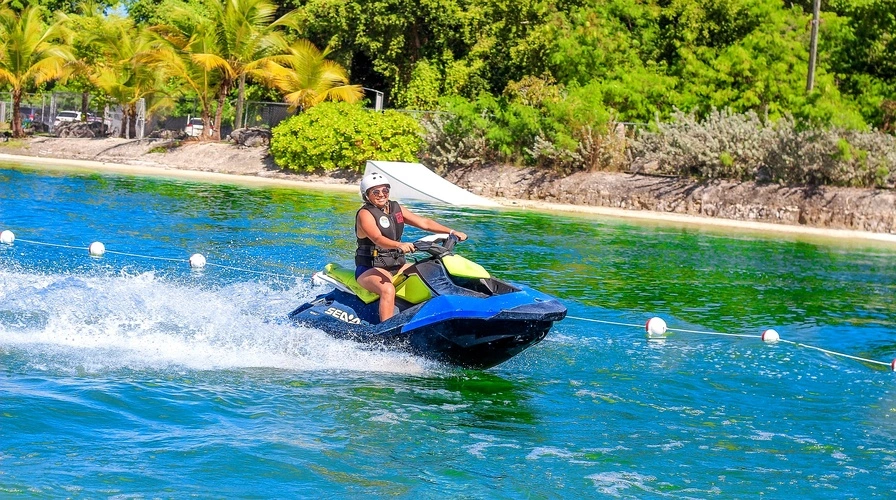
Make this your primary morning target. As mentioned, the ocean is flattest between 8:00 AM and 11:00 AM. Firing up a Yamaha Waverunner and tearing across the Bavaro coastline offers unmatched freedom. You dictate the pace. You find the hidden coves. Combine the thrill of high speed with the refreshing ocean spray by booking an Aqua Splash pack. It is the perfect antidote to the stagnant summer air.
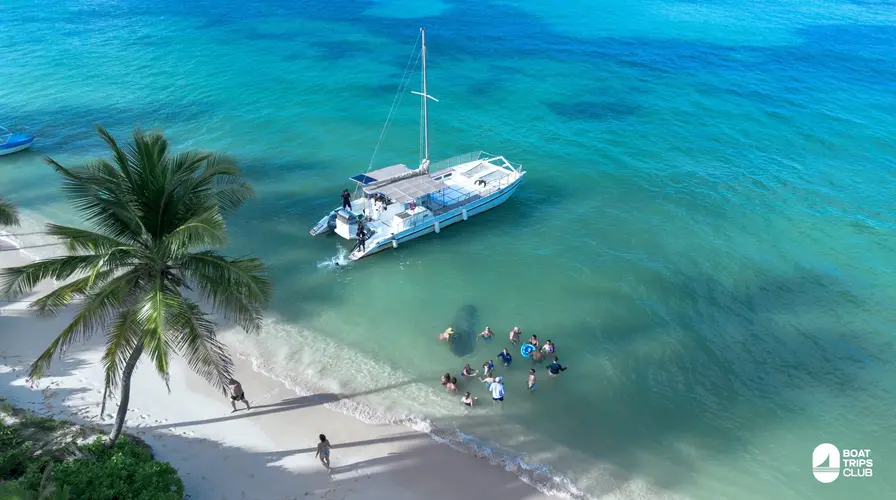
If you want to spend a half-day out on the deeper water away from any potential shoreline seaweed, boat tours are the answer. Securing a spot on a catamaran Punta Cana Bavaro allows you to enjoy the coastal views while shaded by the massive sail. The sea breeze on the top deck is phenomenal. Alternatively, take an Isla Catalina snorkeling tour to explore world-class reef drop-offs where the July water clarity often exceeds 80 feet.
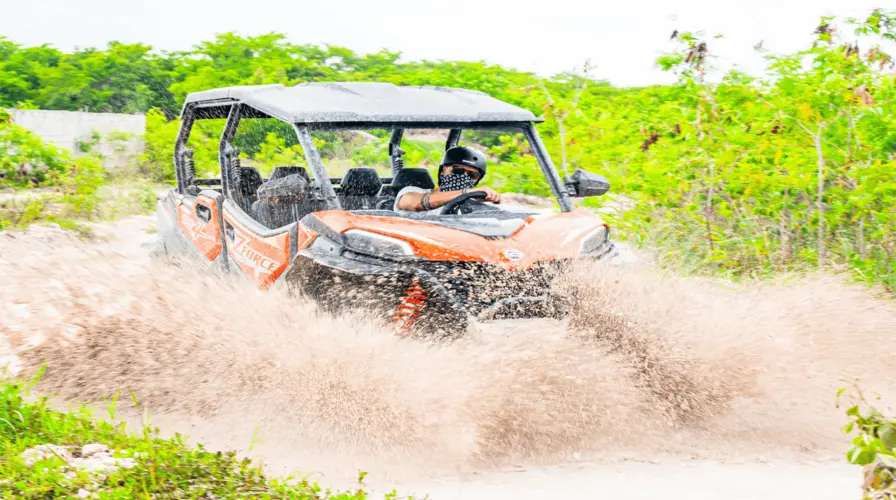
Even in the peak of summer, you should explore the rugged interior. Yes, riding through the jungle trails gets hot and muddy. That is the point. The ultimate payoff comes at the end of the trail when you reach a hidden, underground natural spring. Jumping into a cool cenote feels absolutely incredible in July. You can easily pair the dirt trails with ocean time by booking a combo Buggy and jet ski package. If you want a more relaxed freshwater experience, swimming in the electric blue waters of hoyo azul Punta Cana offers a brilliant escape from the heat.
July is a fantastic, warm month to visit the Dominican Republic. The heat is intense, the ocean is incredibly inviting, and the energy around the island is pure summer. Ignore the generic weather apps showing lightning bolts every afternoon. Understand that the brief 20-minute tropical showers only serve to cool the island down for a perfect evening. To maximize your trip, you must embrace the morning conditions. The ocean is at its absolute best before lunch. Secure your prime sunny morning slots right now. Check availability and book your ultimate water adventure directly through our reservation page.
Yes, light rain is fine and actually quite refreshing while you are already wet. Reputable operators only pause tours for nearby lightning strikes or severe, heavy storm fronts with high winds. Once the brief storm passes, operations resume immediately in calm waters.
Top-tier operators understand tropical weather dynamics. We feature a highly flexible rescheduling and cancellation policy specifically designed for bad weather. If conditions become genuinely unsafe, your excursion will be moved to the next sunny morning or fully refunded.
Yes, the Atlantic hurricane season officially begins in June and runs through November. However, according to historical tracking data from the National Hurricane Center, direct hits to Punta Cana are statistically very rare. If you are concerned about trip interruptions, read our expert guide on managing a Punta Cana hurricane scenario.
The brief afternoon rains combined with high heat create prime breeding conditions for mosquitoes. They are heavily active during the dawn and dusk hours, so packing a high-quality DEET bug spray is highly recommended to protect your ankles during evening dinners.
We have a total of 8 jet skis, perfect for up to 14 participants.
Tour duration is approximately 4 hours and includes round-trip hotel transportation.
Available from Wednesday to Sunday, with departures at 9:00 AM and 2:00 PM.
Pick-up times may vary depending on your hotel location, typically 1 hour before the activity starts.