You’re planning a dream Caribbean vacation, but there is one massive question looming over your itinerary: will the seaweed in Punta Cana ruin the trip? We get this question constantly from travelers looking at beachfront webcams and panicking. Nobody wants to spend thousands of dollars just to stare at a brown, foul-smelling wall of algae blocking the shoreline.
The reality? Sargassum is a natural phenomenon, and it completely changes depending on the month, the specific beach, and how the trade winds blow. You don't need to cancel your flights. You just need a smarter strategy.
We live and work on these waters every single day. We know exactly where the currents push the algae, which resorts fight it effectively, and how you can bypass the messy sand entirely. Forget the generic travel advice. We'll show you exactly what to expect in 2026 and how to guarantee crystal-clear water for your vacation.
The 2026 Punta Cana seaweed situation remains highly variable, with heavy sargassum accumulation affecting east-facing beaches like Bávaro from May to August. However, tourists can find completely clear water by booking offshore boat excursions, visiting south-facing coastlines like Bayahibe, or traveling during the winter months from November to April.
Before you panic about your hotel choice, you need to understand what you're actually dealing with. That brown stuff washing ashore isn't just regular sea grass. It’s sargassum—a free-floating macroalgae that blooms in the Atlantic Ocean.
Ocean currents act like a giant conveyor belt. They drag massive mats of this algae directly from the open ocean into the Caribbean Sea. When the trade winds blow hard from the east, they push that floating mass right onto the Dominican Republic's eastern coastline.
Scientific tracking from the USF Optical Oceanography Lab indicates that 2026 will follow similar cyclical patterns to recent years. This means the algae will arrive in waves. One week, the shoreline might look like a messy brown swamp. Three days later, a shift in the wind leaves the sand spotless and the water looking like blue glass.
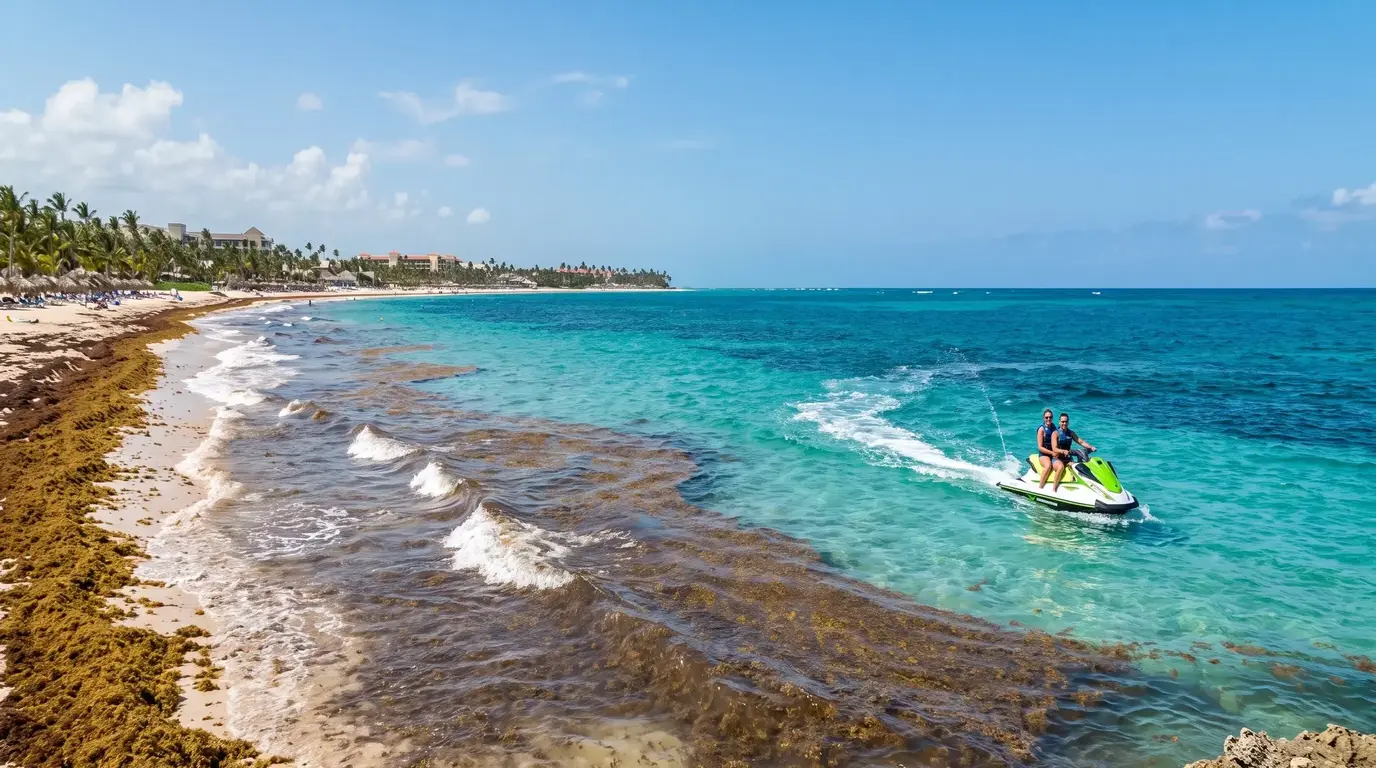
Is sargassum harmful to humans? Not directly. Touching it won't burn you. But as it rots in the hot Dominican sun, it releases hydrogen sulfide gas. It smells distinctly like rotting eggs. It's unpleasant, it attracts tiny sand fleas, and it completely kills the vibe of a luxury beach day.
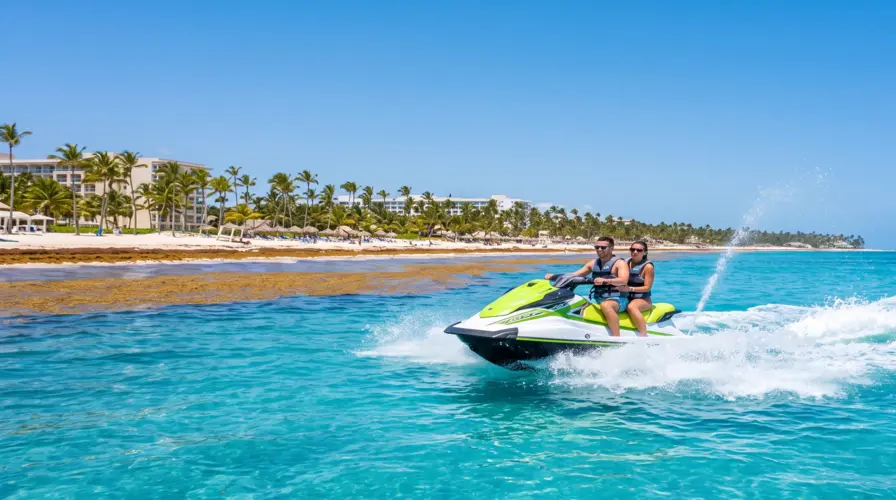
Seaweed season in Punta Cana runs from May through late October, peaking during the hottest summer months of June, July, and August. During this time, ocean temperatures spike, causing massive sargassum blooms. From November to April, cold fronts and shifting winds keep the shorelines almost completely clear of seaweed.
Timing is everything. If your vacation dates are flexible, you can completely avoid the worst of the algae blooms just by booking the right month.
Summer brings the heat, the humidity, and the algae. As the Atlantic Ocean warms up, sargassum reproduces at an explosive rate.
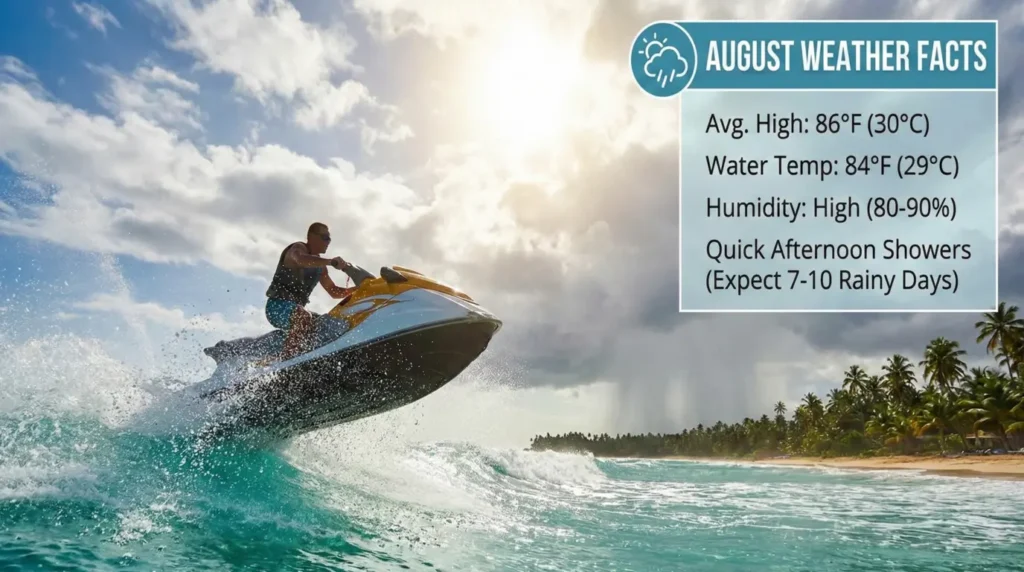
If you book a trip during these months, you must expect to see seaweed on the main beaches. Period. The winds blow consistently from the east, shoving tons of biomass onto the sand every single night. Dealing with Punta Cana weather in July means planning for hot, sunny mornings, afternoon rain showers, and significant seaweed buildup along the Bávaro strip.
Don't let this stop you from coming in the summer. You just need to change your tactics. Stop planning for lazy days sitting in the shorebreak and start booking off-road adventures or island-hopping boat tours.
This is prime time. Winter in the Caribbean shifts the trade winds. Instead of blowing directly onto the eastern beaches, the winds often come from the north.
This pushes the floating sargassum out to sea, completely bypassing the resort coastlines. If you want pristine, postcard-perfect sand right outside your hotel room, this is the best time to visit Punta Cana. You pay a premium for winter flights and hotel rates, but you buy yourself a seaweed-free guarantee.
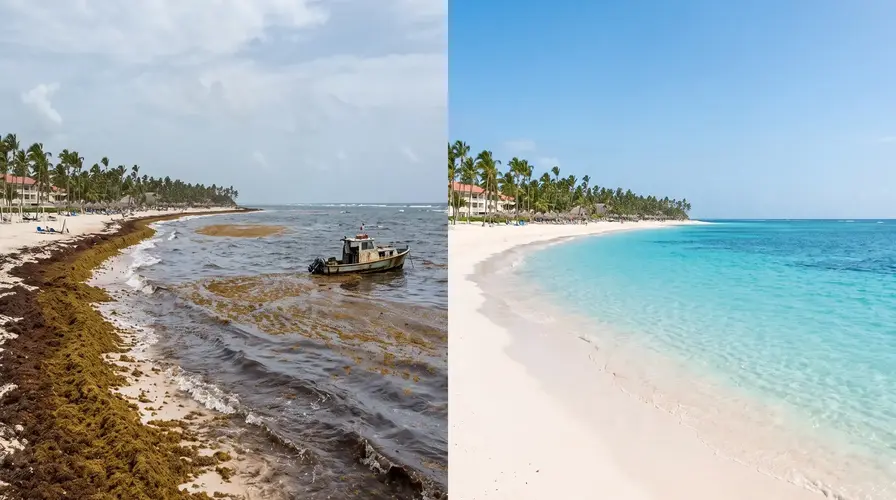
Not all coastlines take the same hit. Because of the way the island curves, some areas act like a catcher’s mitt for algae, while others sit completely protected. We've mapped out the top beaches in Punta Cana based on their real-world 2026 sargassum risk.
| Beach Zone | Coastal Facing Direction | 2026 Seaweed Risk Level | Water Clarity & Condition |
| Bávaro Beach | East (Direct Atlantic Wind) | High | Murky during summer; clean in winter. |
| Cap Cana (Juanillo) | South-East (Protected Cove) | Medium | Often blocked by marina jetties, clear near shore. |
| Macao Beach | North (Atlantic Swell) | Low | Heavy waves push seaweed away; great for surfing. |
| Bayahibe / Saona | South (Caribbean Sea) | Zero to Very Low | Crystal clear, flat, calm, and perfectly blue all year. |
Yes, most luxury resorts in Punta Cana install heavy-duty offshore netting to block seaweed from reaching the shore. Additionally, resorts deploy large tractors and cleaning crews every morning at sunrise to rake and bury any sargassum that bypasses the nets overnight.
The major hotel chains aren't just sitting back and letting the algae ruin their business. Millions of dollars go into fighting this problem every year.
Look out at the water from your balcony. You will likely see a long line of yellow or orange buoys floating about 200 yards offshore. Underneath those buoys hangs a heavy mesh net. This barrier catches the massive floating mats of sargassum before they hit the sand. It works surprisingly well, but it isn't perfect. Heavy swells will push the algae right over the top of the barrier.
When that happens, the ground crews take over. Starting around 5:00 AM, you'll hear the rumble of heavy machinery on the sand. The Dominican Republic Ministry of Tourism mandates strict coastal maintenance, meaning resorts use specialized tractors to scoop up the rotting algae, load it into dump trucks, and haul it away before you even finish your morning coffee.
They fight hard. But nature often wins. On bad days in July, the crew can clear the entire beach by 8:00 AM, only for a fresh wave of brown muck to wash up by noon.
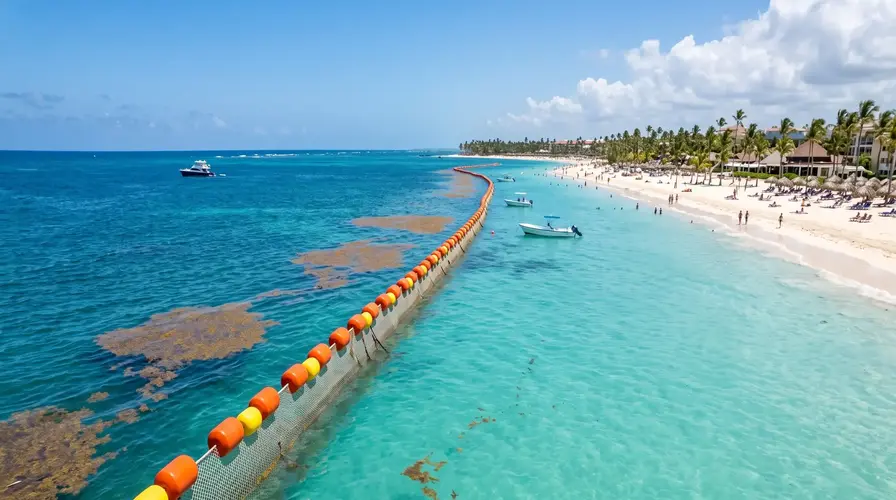
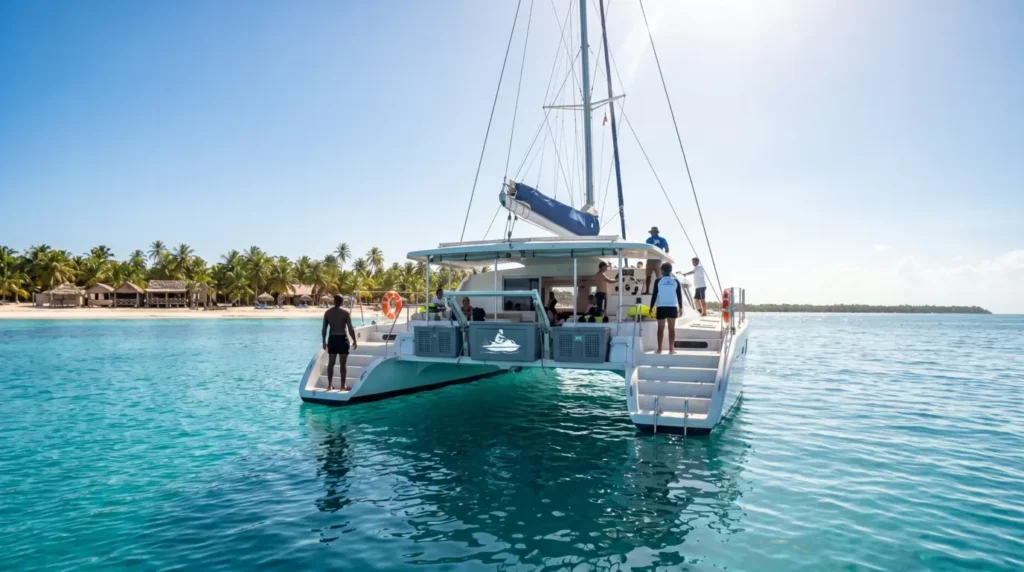
Tourists can avoid seaweed in Punta Cana by leaving the east-facing Bávaro coastline. Book excursions to south-facing Caribbean islands like Saona, take off-road trips to north-facing Macao Beach, or book motorized water sports that take you past the shoreline accumulation and into deep, clear water.
You landed at the resort. The beach is covered in brown algae. Your kids are disappointed. What do you do? You pivot. The biggest mistake tourists make is sitting by the pool and complaining. The local strategy involves getting off the property.
Drive 20 minutes north. Macao Beach faces a completely different direction than the main resort strip. Because it points north into the Atlantic swell, the strong waves generally keep the sargassum from settling. The water stays violently blue, the sand stays clean, and the local fish tacos taste incredible.
Alternatively, head south. The luxury enclave of Cap Cana features protected coves like Juanillo Beach. The geography naturally blocks the easterly winds, meaning they experience a fraction of the seaweed that Bávaro gets hit with.
This is the ultimate hack. Sargassum is strictly a shoreline accumulation problem. The open ocean isn't completely covered in it—it just stacks up where the water meets the land.
If the beach is gross, leave the beach. Once you get about 50 to 100 feet past the shoreline break, the water transforms back into that famous, crystal-clear turquoise you saw in the brochures. This is why booking a jet ski Punta Cana rental is the best way to save a ruined beach day. You throttle past the murky surf zone, leave the foul smell behind, and suddenly you're carving through perfectly clean, open water.
Don't let the shoreline dictate your trip. By booking high-speed water sports in Punta Cana, you completely bypass the problem. The algae just floats in isolated patches out deep; it’s incredibly easy to steer around.
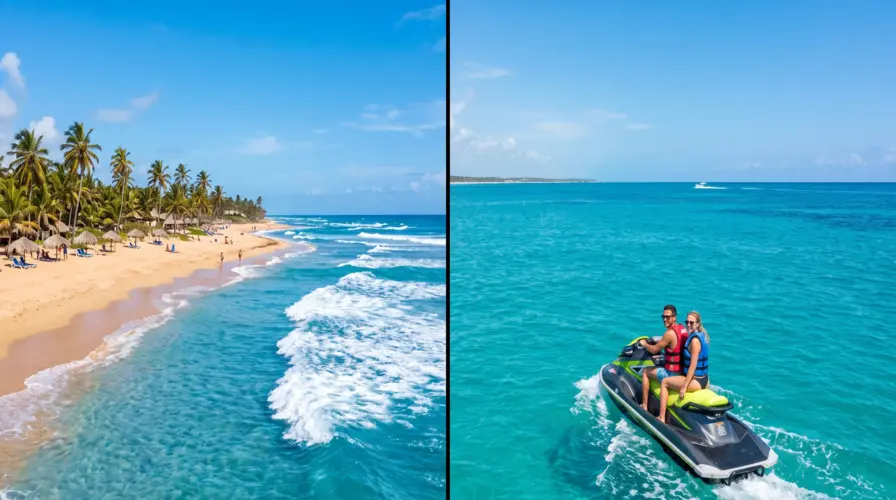
When the coast looks grim, you need backup plans. Here are the most effective ways to guarantee an incredible day without looking at a single piece of rotting macroalgae.
Need more ideas? Check out our complete list of Punta Cana travel tips to see how locals pivot when the weather acts up.
Absolutely not. Canceling a Caribbean vacation because of an unpredictable algae bloom is a massive overreaction.
Yes, sargassum is annoying. Yes, it might mean the beach directly in front of your all-inclusive resort isn't perfect for wading every single afternoon in July. But Punta Cana is massive. The water offshore is flawless. The excursions run daily, the rum is always cold, and the jungle trails are waiting.
Expect it. Plan for it. If you wake up and the beach looks brown, turn your back to it. Book a boat. Rent a jet ski. Head north to the surfing beaches or south to the Caribbean islands. The Dominican Republic has too much adventure to offer to let some floating plants ruin your week.
We have a total of 8 jet skis, perfect for up to 14 participants.
Tour duration is approximately 4 hours and includes round-trip hotel transportation.
Available from Wednesday to Sunday, with departures at 9:00 AM and 2:00 PM.
Pick-up times may vary depending on your hotel location, typically 1 hour before the activity starts.