Quick Overview: Families, solo adventurers, and couples usually want to know one specific thing before they hit the "book" button: Is Punta Cana safe to visit in 2027? The short answer is yes. It remains one of the most secure, heavily guarded tourist destinations in the entire Caribbean. Because the local economy relies completely on your peace of mind, violent crime against tourists is exceptionally rare. You just need to follow a few basic rules—stick to bottled water, book your transit ahead of time, and only use licensed tour operators. Do that, and you are setting yourself up for an incredible trip.
Let’s cut past the internet rumors and look at the reality on the ground. When you dive into the Punta Cana crime rate statistics within the established resort bubbles, the numbers remain incredibly low. Over 99% of visitors experience a flawless, incident-free vacation. Because millions of travelers pass through PUJ airport every single year, the Dominican government does not mess around with security. They have massively expanded the presence of POLITUR—the dedicated tourist police. You will see these officers everywhere. They patrol the shorelines, monitor hotel entrances, and keep a watchful eye on major transit corridors.
People constantly check the internet, see a Level 2 advisory, and immediately panic. Don't let standard government warnings derail your trip. A Level 2 Punta Cana travel advisory simply means you should "exercise increased caution." What most people don't realize is that the U.S. Department of State Travel Advisory applies this exact same Level 2 tag to countries like France, the UK, and Italy. It is standard protocol. Most of the time, these advisories are targeting deep urban neighborhoods in Santo Domingo or specific border towns—places you won't be anywhere near while sipping a drink on your beach chair.
We operate excursions here every single day. We talk to thousands of visitors, and their daily feedback paints a very clear picture. Tourists feel overwhelmingly secure. Recent visitors consistently point out how attentive the hotel security staff are. The beach patrols are highly visible but never intrusive. Whether travelers are grabbing a late dinner, walking between adjacent resorts at sunset, or heading out for a morning boat tour, the consensus for 2027 is a feeling of total, absolute relaxation.
Choosing the right neighborhood totally dictates your daily experience. Security is tight everywhere, but the vibe changes depending on your zip code. If you are still trying to figure out the layout, referencing a visual map of Punta Cana resorts can really help you understand how these specific tourist zones are divided.
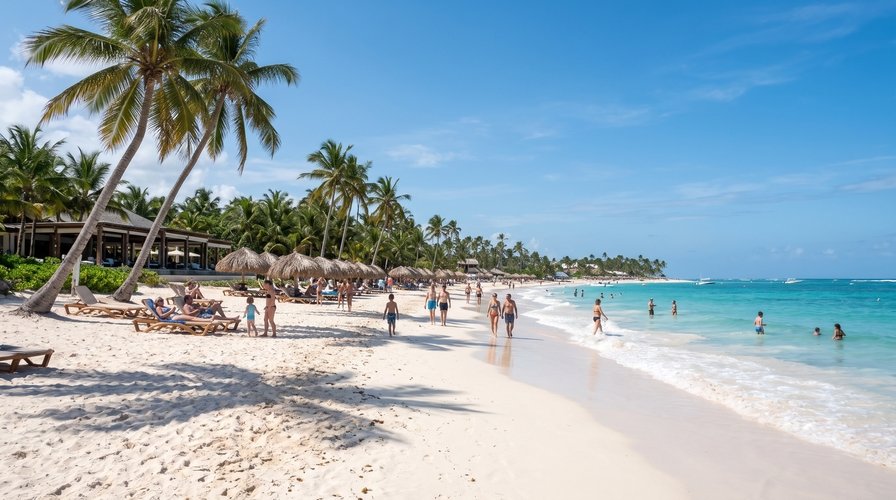
Bávaro is the absolute center of the action. It is loud, busy, heavily patrolled, and packed end-to-end with established all-inclusive resorts. Because of the sheer volume of high-end properties stacked next to each other, Bavaro beach safety protocols set the benchmark for the whole island. If you find yourself asking where is Bavaro Beach located, it sits just a quick 20-minute drive north of the airport. It offers a dense, highly monitored strip of pristine sand that never feels isolated.
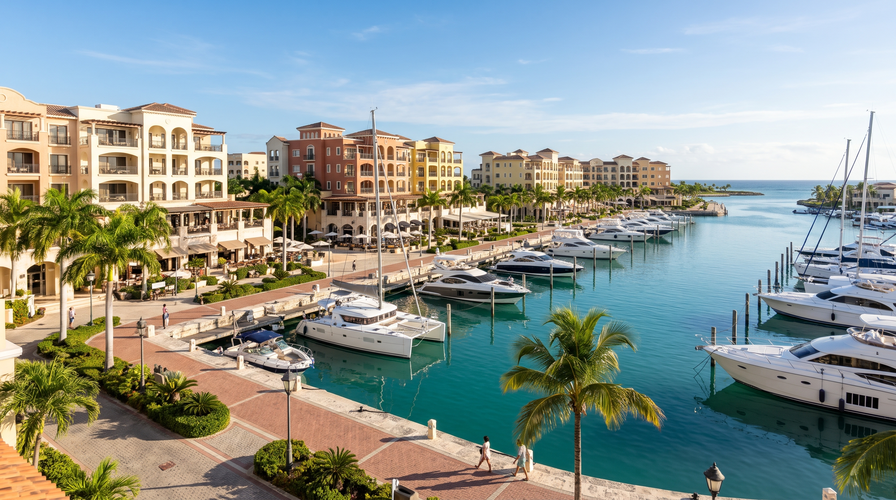
Cap Cana operates differently. Think of it as a massive, ultra-exclusive gated community. Security here is ironclad. You literally cannot get past the front gates without passing through guarded checkpoints, which keeps unauthorized foot traffic at zero. It is the go-to spot for celebrities and anyone wanting pure privacy. It also happens to be the best marina on the island. If you want to book a yacht rental Punta Cana for a completely private day on the water, this is where you start.
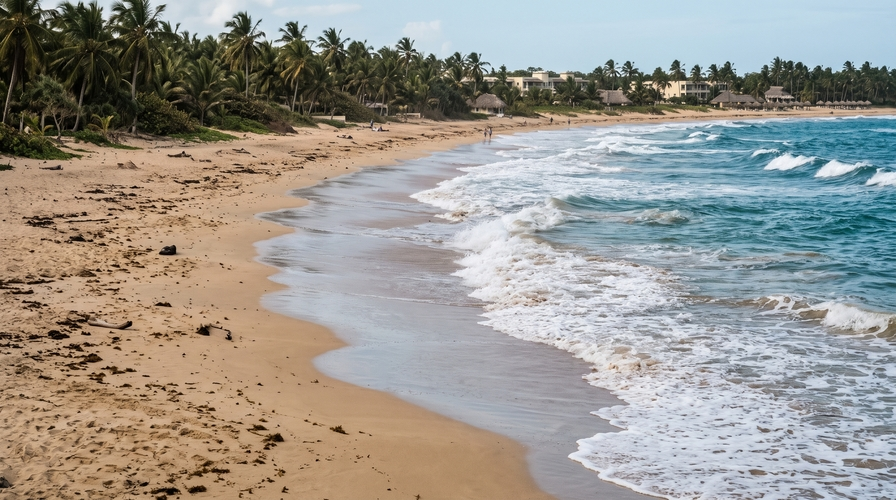
Head a bit further north and things quiet down fast. Uvero Alto and Macao are perfect if you want to escape the crowds. Because these hotels are geographically spaced out, the foot traffic on the sand is strictly limited to hotel guests and staff. That isolation is essentially a built-in security feature. You deal with fewer people, almost zero beach vendors, and a deeply peaceful environment.
It is incredibly easy to fall down a rabbit hole of internet anxiety. Most issues you read about are completely preventable if you just use some basic situational awareness. Let’s break down the facts.
Look, petty theft happens everywhere. It happens in Rome, it happens in New York, and yes, it happens down here if you completely drop your guard. Never leave a thousand-dollar smartphone sitting unattended on your towel while you swim. Lock your passports, excess cash, and jewelry in your room safe the minute you check in. If you bring a bag to the ocean, keep it in your line of sight. It's really that simple.
Punta Cana tourist scams are rarely dangerous. Usually, they are just annoying. The most common hustle involves aggressive beach vendors pushing fake cigars or offering "discounted" shadow tours that don't actually exist. If you want authentic Punta Cana souvenirs, buy them inside the resort shops or at established local plazas. When a hustler approaches you on the sand, a firm "No, gracias" works wonders. Just keep walking.
Violent crime targeting foreigners inside the resort bubble is virtually non-existent. The entire Dominican economy would crash overnight if tourists started getting hurt. Because of this, local syndicates and criminals actively avoid messing with visitors. You are surrounded by an invisible fortress of private hotel guards, local police, and heavy economic incentives to keep you safe.
Can you drink tap water in Punta Cana? Absolutely not. Can you drink tap water in punta cana resorts? Still no. The underground pipe infrastructure here just isn't built for human consumption. But don't worry. Every decent hotel provides endless bottles of purified water in your room. The ice in your piña colada? It’s made from commercially filtered water. Brush your teeth with bottled water, drink bottled water, and your stomach will survive just fine.
Endless free booze under a 90-degree tropical sun is a recipe for disaster if you aren't careful. Heat exhaustion hits incredibly fast here. Pace your drinking, force yourself to drink a glass of water between every cocktail, and never accept a random drink off-property. Also, if you decide to try the local famous drink—mamajuana—go easy. It’s a wild, potent mix of rum, red wine, and honey soaked in tree bark, and it kicks much harder than your standard resort vodka.
The ocean requires respect. As the top crew handling water sports Punta Cana, we know firsthand that excursion safety means strictly following local weather protocols and operating standards.
The Atlantic side of the island sometimes kicks up serious rip currents. Before you jump in, always look at the colored flags planted on the beach. Green means you are good to go. Yellow means caution. Red means stay out of the water entirely. If you want to swim in totally flat, waist-deep turquoise water regardless of the flags, your best bet is booking a catamaran Punta Cana Bavaro run out to the protected natural sandbars.
If you are on a public stretch of sand, guys will walk up and down selling hats, sunglasses, and cheap massages. They do not hold official vendor licenses. Do not engage in a 10-minute conversation if you have no intention of buying anything. A polite refusal is perfectly fine. More importantly, never book a boat trip with a guy holding a faded laminated flyer on the beach. Those are unregulated shadow operations with zero insurance.
Riding high-speed watercraft requires serious maintenance and professional oversight. When you book a jet ski Punta Cana package, only trust highly rated, licensed companies. A real operator provides properly fitted life jackets, runs a mandatory safety briefing before you touch the throttle, and uses certified local guides on new Yamaha or Sea-Doo machines. We enforce hard boundaries and strict speed rules for a reason: it keeps every single rider safe.
Caribbean weather is aggressive. Knowing how the seasons work ensures you don’t end up sunburned and miserable on your second day.
Yes, hurricane season eats up half the calendar year, but direct hits are actually incredibly rare. Hotels here are built like concrete bunkers to withstand heavy wind. Plus, modern satellite tracking gives you days of warning if a storm is forming. If you are checking the Punta Cana weather in September, don't let the forecast scare you. You will mostly encounter short, aggressive 20-minute rain dumps in the afternoon, followed immediately by bright sunshine.
The sun hits differently this close to the equator. A severe burn will ruin your entire week. Apply a reef-safe SPF 50 every couple of hours, wear a long-sleeve rash guard if you are out on the water, and try to grab some shade between noon and 2 PM. Heat stroke is actually the number one reason tourists end up calling the resort doctor. Drink double the water you normally would at home.
Is it safe to leave the resort in Punta Cana? Yes. Is it safe to leave my resort in Punta Cana? One hundred percent. Is it safe to do excursions in punta cana? Absolutely, provided you use verified tour companies. Staying trapped behind the buffet lines for a week means missing out on the best parts of the Dominican Republic. Getting out and exploring is highly recommended.
The trick to leaving the hotel safely is using guided infrastructure. Stick to established, proven routes. Ticking off the best things to do in Punta Cana is completely seamless when you book officially. Whether you take a fully guided cruise down to Saona Island or rip through the jungle on a buggy and jet ski package Punta Cana, doing it with professionals gives you an insured, structured, and wildly fun way to see the real country.
Do not rent a car. Driving here is an extreme sport. Local traffic laws are largely treated as suggestions, and navigating the chaotic roundabouts will spike your blood pressure.
Uber exists here, but it is complicated. They face intense friction from the local taxi union (the Sindicato). Often, resort security will not even let an Uber driver past the front gate to pick you up. Official union taxis, on the other hand, are parked right in your hotel lobby. They are highly regulated, completely safe, and heavily tracked. Yes, they cost noticeably more than an Uber, but the peace of mind is worth it.
Never walk out of the terminal and jump into a random unmarked car. Booking your transit in advance eliminates the stress of haggling on the curb. Lock in your Punta Cana airport transfers weeks before your flight. Also, figure out exactly what time is it in Punta Cana when you land. Smartphone timezone glitches happen constantly, and you do not want to miss your excursion shuttle because your phone didn't update.
Different travel styles require different planning. The local tourist infrastructure is designed to accommodate everyone safely.
If you are looking for a punta cana solo female traveler safety guide, here is the reality: solo female travel punta cana is incredibly popular and very safe. You just apply the same street smarts you would in any major city. Do not go walking down pitch-black, empty stretches of the beach at 2 AM. Ignore the occasional catcall, never take a drink from a stranger, and book group excursions rather than wandering into isolated rural areas alone.
When parents ask about the safest resort area in punta cana for families, Bávaro always wins. The surf is gentler, and the resorts feature massive, heavily secured kids' clubs. For daytime activities, you want enclosed, highly supervised environments. Getting the kids out for an aqua splash Punta Cana trip gives them massive thrills in a structured setting, keeping them away from unpredictable open-ocean swells.
Medical emergencies happen on vacation. Knowing the landscape before you twist an ankle stops the panic.
The medical facilities located right in the tourist zones are surprisingly modern. The equipment is state-of-the-art, and most of the doctors speak perfect English. Hospiten Bávaro and IMG Hospital are the absolute top-tier options. Before you fly, save a quick guide to Punta Cana area codes on your phone. If you need a late-night pharmacy run or an ambulance, knowing how to dial locally is crucial.
Here is the hard truth about local healthcare: it is a for-profit business. If you break your arm, the private hospital will demand a massive credit card deposit upfront before a doctor even looks at you. Travel insurance isn't just a suggestion down here; it is mandatory. It guarantees you can bypass the financial red tape and get immediate, top-tier medical care without draining your savings account.
Dengue fever is a real thing in the Caribbean. Resorts fight it by aggressively fumigating their grounds every single day. Still, you have to protect yourself. Buy a heavy DEET-based bug spray and coat your legs every night before you walk to dinner. And always keep your balcony glass doors firmly shut at night so the bugs stay outside where they belong.
Is punta cana safer than cancun or jamaica? When you look at the statistics, yes. The Dominican government tightly controls the corridors where tourists operate.
| Safety Metric | Punta Cana (DR) | Cancun (Mexico) | Montego Bay (Jamaica) |
| Tourist Police Presence | Extremely High (POLITUR) | High (National Guard) | Moderate |
| Resort Isolation | High (Private access) | Low (Public strips) | Moderate |
| Risk of Violent Crime | Very Low | Moderate (Cartel proximity) | Moderate to High |
| Overall Tourist Safety Rating | Excellent | Good | Fair |
Because the hotels here are so physically isolated from major urban centers, local geopolitical and economic issues simply do not spill over into the areas where you are trying to relax.
Lock these fundamentals in before you even pack your bags.
Absolutely. Do not let sensationalized media headlines rob you of an amazing trip. The reality on the ground is profound security, massive local investment in tourist infrastructure, and genuinely warm hospitality. Pack your bags. Leave your daily stress at home. Book your verified, adrenaline-pumping excursions with Jet Ski Punta Cana, stack up on sunscreen, and get ready for the absolute trip of a lifetime.
Is Punta Cana safe to visit right now?
Yes. Punta Cana is highly secure for tourists. Heavily guarded resort zones are constantly patrolled by specialized tourist police (POLITUR). Violent crime involving foreigners is almost non-existent, making it one of the safest hubs in the entire Caribbean.
Can I walk on the beach at night in Punta Cana?
Walking along the bright, illuminated beach sections directly behind your hotel is totally safe. However, you should completely avoid wandering down pitch-black, abandoned stretches of sand alone after midnight.
Are Jet Skis and boat tours safe in Punta Cana?
Yes, but only if you book with licensed operators. Official companies enforce strict safety boundaries, maintain their engines, and provide real life jackets. Never book heavy machinery from random guys walking the shoreline.
Can I use US dollars everywhere?
Yes. US dollars are eagerly accepted at every hotel, excursion desk, and tourist shop. You really don't need to exchange your cash into Dominican Pesos unless you plan on driving deep into off-the-grid local neighborhoods.
Do I need any specific vaccines for the Dominican Republic?
No special vaccines are required to enter. Just stick to routine shots. The biggest health focus is preventing mosquito bites with strong DEET spray and strictly drinking bottled water to avoid basic stomach bugs.
Quick Overview: Punta Cana experiences an average air temperature of 82°F (28°C) and an average ocean temperature of 81°F (27°C) year-round. The dry season runs from December to April, while the rainy season spans May to November. Despite seasonal shifts, water sports and excursions operate safely and comfortably all 12 months of the year.
When you land in the Dominican Republic, the first thing you notice is the immediate, wrapping warmth of the Caribbean air. Understanding how that warmth translates to ocean conditions is the key to planning the perfect itinerary.
The beauty of this coastline is its absolute consistency. You can expect an average daily air temperature hovering between 78°F and 86°F. The ocean remains incredibly inviting, averaging 81°F, meaning you will never need a wetsuit. On average, the region enjoys 8 to 9 hours of brilliant, direct sunshine every single day, making things to do in the Dominican Republic easily accessible regardless of when you book your flights.
If you check your generic smartphone weather app a week before your trip, it will likely show rain icons for every single day. Do not panic. A rain icon in the Caribbean usually signifies a brief, intense 15-minute tropical shower that rolls through mid-afternoon, completely clearing up shortly after. These passing showers rarely ruin a beach day. True multi-day washouts are exceptionally rare, meaning that forecast of "rain" is usually just a brief pause before the sun comes roaring back.
The ocean’s texture changes entirely depending on the time of day, driven by the Atlantic Trade Winds. Early mornings are consistently glassy, flat, and calm. If you want to ride with Jet Ski Punta Cana, the hours between 8:00 AM and 11:00 AM provide mirror-like surface conditions. As the afternoon progresses, the trade winds pick up, creating choppy, textured water that is fun for splashing in the waves but slightly bumpier for high-speed riding.
The shoreline is massive. The ocean behaves entirely differently depending on exactly where your resort is located. Choosing the right beach is just as important as choosing the right month.
If you want smooth sailing, this is the prime zone. Bávaro Beach is protected by a massive offshore barrier reef. This natural wall breaks the heavy Atlantic swells miles out, leaving the shoreline waters calm, flat, and exceptionally safe. Understanding exactly where is Bávaro Beach located is crucial, because this protected stretch is exactly where we run our core jet ski operations. The reef protection guarantees optimal riding conditions almost every day.
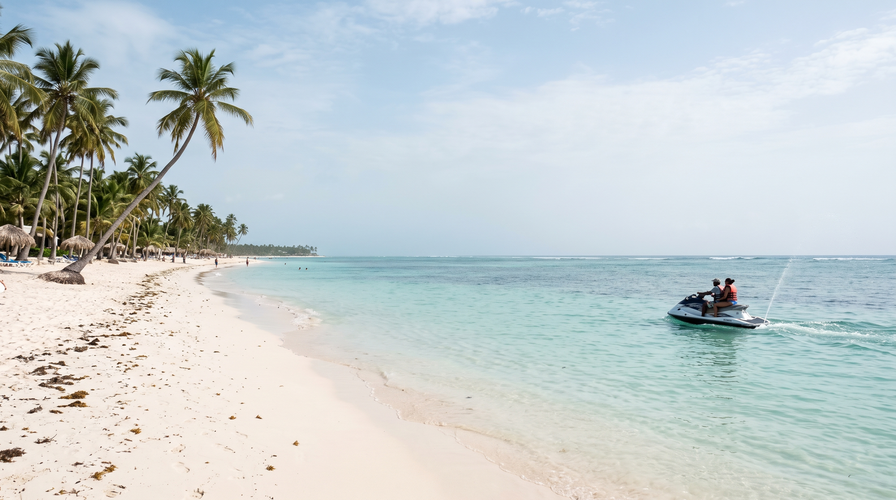
Moving slightly south, these areas form sheltered, scooped bays. The water here is highly tranquil, making it an excellent spot for leisurely swimming and wading without fighting heavy undercurrents.
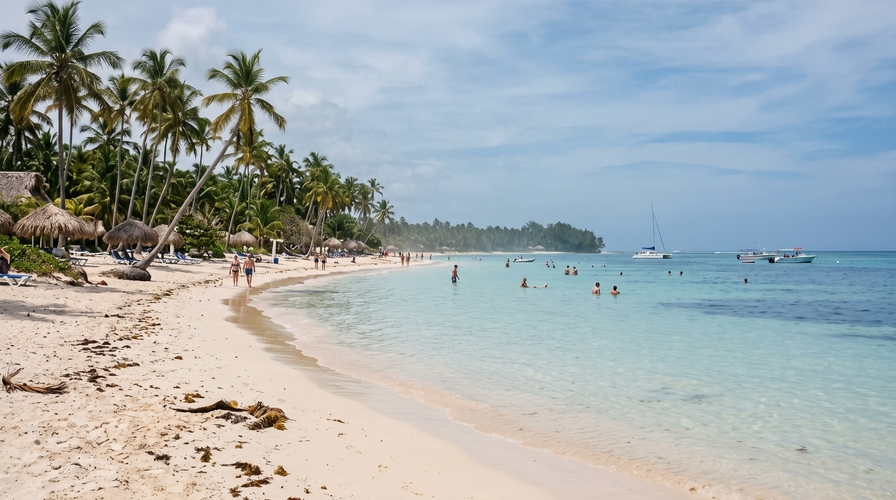
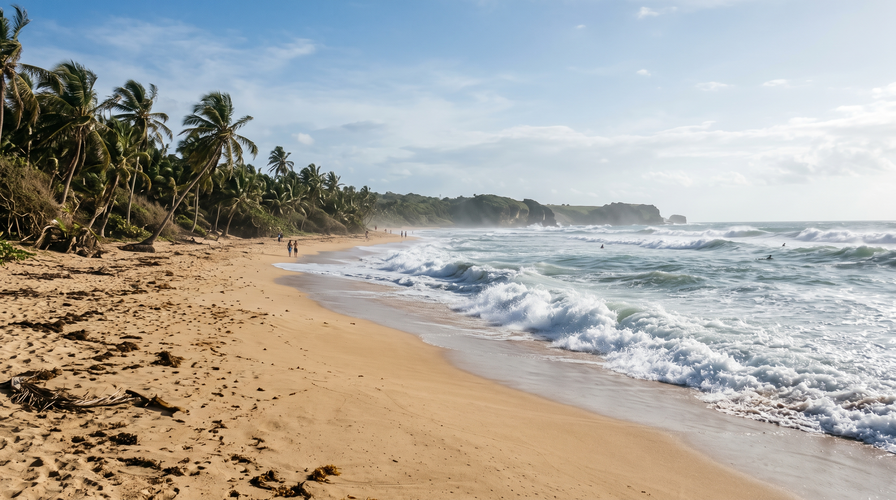
These northern beaches face the open Atlantic Ocean. There is no barrier reef here. You will find massive, rolling swells and heavy surf. It is an incredible spot for professional surfing, but the water is rough, churning, and entirely inappropriate for jet skiing or relaxed paddleboarding.
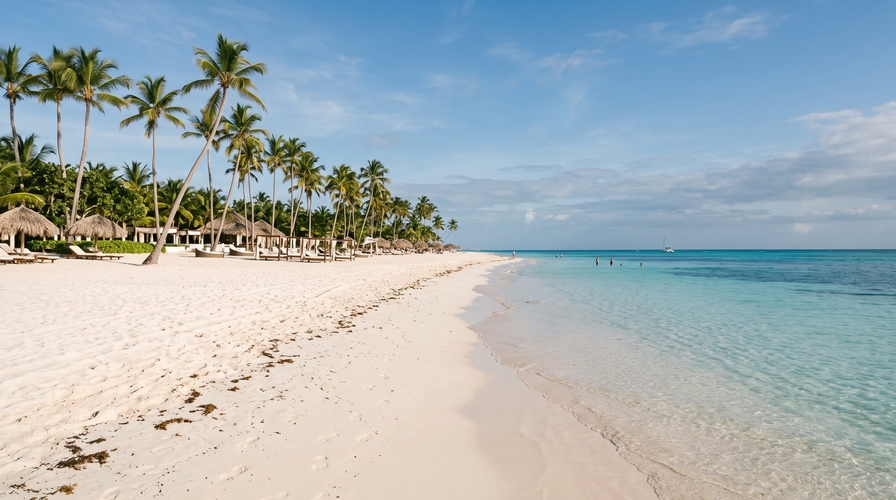
Down in the exclusive southern enclave, the waters are famously warm, shallow, and pristine. The ocean here stays remarkably calm, offering a luxury wading experience with almost zero wave action on standard days.
Here is your exact, data-driven look at how the climate and ocean behave throughout the calendar year.
| Metric | January Averages |
| Average Air Temp | 80°F (26°C) |
| Average Water Temp | 80°F (26°C) |
| Water Sports Rating | 4.5 / 5 Stars |
January kicks off the peak dry season. The humidity drops significantly, leaving behind crisp, comfortable trade winds. The reef-protected areas remain highly stable, making Punta Cana weather in January an absolute dream for snowbirds escaping the winter freeze. The combination of cool breezes and warm water makes early morning excursions flawless.
| Metric | February Averages |
| Average Air Temp | 80°F (26°C) |
| Average Water Temp | 79°F (26°C) |
| Water Sports Rating | 5 / 5 Stars |
For overall climate comfort, this is the champion. Humidity hits its annual low. The ocean clarity is piercingly sharp because there is very little terrestrial runoff from rain. If you are looking into Punta Cana weather in February for sailing, this is the month to book a catamaran Punta Cana Bavaro experience, as the skies are virtually cloudless.
| Metric | March Averages |
| Average Air Temp | 81°F (27°C) |
| Average Water Temp | 79°F (26°C) |
| Water Sports Rating | 5 / 5 Stars |
March delivers the highest volume of uninterrupted sunshine. The morning seas are often mirror-flat, providing the absolute best conditions for high-speed riding. The vibrant Punta Cana weather in March aligns perfectly with spring break, meaning the beaches are energetic, and water sports and adventure packages sell out rapidly.
| Metric | April Averages |
| Average Air Temp | 82°F (28°C) |
| Average Water Temp | 80°F (26°C) |
| Water Sports Rating | 4.8 / 5 Stars |
As the dry season concludes, the ocean begins to absorb the incoming summer heat. The waves remain gentle behind the reef. Punta Cana weather in April is characterized by this sweet spot—warm enough to stay in the water all day, but before the heavy humidity of summer fully sets in.
| Metric | May Averages |
| Average Air Temp | 84°F (29°C) |
| Average Water Temp | 81°F (27°C) |
| Water Sports Rating | 4 / 5 Stars |
May officially begins the transition into the wetter months. You will likely see short, warm afternoon showers. However, the Punta Cana weather in May offers incredible value. Resort prices drop, the crowds thin out, and the sea temperature spikes up to a bath-like 81°F.
| Metric | June Averages |
| Average Air Temp | 86°F (30°C) |
| Average Water Temp | 82°F (28°C) |
| Water Sports Rating | 4.5 / 5 Stars |
Summer heat arrives in full force. The humidity climbs, making the ocean the only place you will want to be. Because of the heat index, Punta Cana weather in June dictates that you book your heavy activity early. The early morning glass conditions are phenomenal for a buggy and jet ski package.
| Metric | July Averages |
| Average Air Temp | 86°F (30°C) |
| Average Water Temp | 84°F (29°C) |
| Water Sports Rating | 4 / 5 Stars |
The ocean feels like a heated swimming pool. July brings peak water temperatures, often hitting 84°F. While Punta Cana weather in July is intensely hot, it is the most popular time for families. The waters are high-energy, and passing tropical showers are frequent but brief.
| Metric | August Averages |
| Average Air Temp | 86°F (30°C) |
| Average Water Temp | 84°F (29°C) |
| Water Sports Rating | 4 / 5 Stars |
August is the hottest month on the island. The sun is searing, and the humidity is thick. To beat the heat, Punta Cana weather in August demands that you hit the water by 9:00 AM. This is also when you will start seeing significant off-peak pricing drops across all major resorts.
| Metric | September Averages |
| Average Air Temp | 86°F (30°C) |
| Average Water Temp | 84°F (29°C) |
| Water Sports Rating | 3.5 / 5 Stars |
Historically the quietest month for tourism, Punta Cana weather in September falls squarely in the middle of the storm season. You will see more rain, but you will also find completely empty beaches and the lowest travel prices of the year. Excursions still run daily, adapting dynamically to the shifting cloud cover.
| Metric | October Averages |
| Average Air Temp | 85°F (29°C) |
| Average Water Temp | 83°F (28°C) |
| Water Sports Rating | 4 / 5 Stars |
The heavy heat begins to break slightly. Punta Cana weather in October still sees regular afternoon showers, but the ocean swells begin to calm down as the late-summer weather patterns stabilize. It remains an excellent time for budget-conscious travelers seeking solitude.
| Metric | November Averages |
| Average Air Temp | 83°F (28°C) |
| Average Water Temp | 82°F (28°C) |
| Water Sports Rating | 4.5 / 5 Stars |
The island looks incredibly lush and green after the summer rains. The trade winds return, bringing refreshing breezes that cut through the humidity. Punta Cana weather in November is the ultimate shoulder month—offering high-quality water conditions right before the expensive holiday rates take effect.
| Metric | December Averages |
| Average Air Temp | 81°F (27°C) |
| Average Water Temp | 80°F (26°C) |
| Water Sports Rating | 5 / 5 Stars |
The rainy season is officially over. The skies clear up, the humidity plummets, and the ocean settles into a perfect rhythm. Punta Cana weather in December offers flawless 80°F water, bringing massive crowds and perfect conditions for every single excursion on the water.
Your ideal vacation timeline depends entirely on what you prioritize.
If your goal is zero humidity, clear skies, and a perfectly comfortable climate, book between February and April. The dry season guarantees optimal lounging conditions without the suffocating heat of the deep summer.
For throttle-heavy adrenaline junkies, the waters are best from March through July. Book early morning slots. This is the prime window to tackle the 4-hour thrill-fest Aqua Splash Pack before the afternoon chop builds up.
If you want to stay in a 5-star resort for a 3-star price, fly down in September or October. You will trade some afternoon sunshine for heavy discounts.
The shoulder months. You avoid the peak holiday pricing, but still largely avoid the heavy hurricane season rains.
Aligning with summer breaks, the warm waters and high-energy atmosphere make the summer months ideal for large groups looking for robust resort entertainment and easy scheduling.
You cannot talk about Caribbean weather without addressing the seaweed.
Sargassum is a natural marine algae that blooms heavily in the warmer summer months (May through September). Driven by rising ocean temps and shifting currents, it washes up on the shoreline. Resorts work tirelessly with tractors to clear it, but some days it accumulates faster than they can manage.
Here is the crucial distinction: the seaweed is only an issue directly on the sand. Once you get on a jet ski and push past the shallow breakline, the water is entirely clear. The barrier reef stops the massive floating mats, meaning our deep-water riding zones remain vibrant and stunning, completely unaffected by the shoreline sargassum.
Safety is a common concern when planning a trip between June and November. Is Punta Cana safe to visit during storm season? Yes.
The Dominican Republic sits in a highly fortunate geographical position. The Mona Passage (the strait between the DR and Puerto Rico) creates a complex atmospheric pressure zone that naturally deflects and shears apart incoming storm systems. According to data tracked by the National Hurricane Center (NHC), direct, catastrophic landfalls on the eastern tip of Punta Cana are exceptionally rare compared to other Caribbean islands.
In the event of heavy localized squalls, safety protocols instantly engage. We do not run machinery in lightning or unsafe marine swells. If severe weather hits, operations pause. We wait out the passing cell, and if it does not clear, operations are rescheduled immediately to ensure zero risk to riders.
| Excursion Type | Best Months | Morning Conditions | Afternoon Conditions |
| Jet Skiing | Dec - Aug | 5/5 (Glassy/Flat) | 3/5 (Choppy/Textured) |
| Parasailing | Jan - May | 5/5 (Stable Lift) | 2/5 (High Winds) |
| Catamaran Cruising | Year-Round | 4/5 (Calm Views) | 4/5 (Cooler Breeze) |
| Scuba/Snorkel | Feb - May | 5/5 (High Visibility) | 3/5 (Lower Clarity) |
Do not overpack. Keep it highly specific to sun protection and water mobility.
The Caribbean sun is punishing, even on cloudy days. You must pack reef-safe, biodegradable sunscreen to protect the fragile marine ecosystems, specifically if you plan an Isla Catalina snorkeling tour or a day exploring Saona Island excursions. High-quality polarized sunglasses are mandatory to cut the intense glare off the ocean surface.
Leave the heavy cotton on the beach. For jet skiing, wear a tight-fitting UPF 50 rash guard to prevent seat chafing and sun poisoning on your back. Always bring a heavy-duty waterproof phone pouch or a small dry bag that clips to your life vest.
In the dry season (Jan-April), focus purely on sun gear. In the rainy season (May-Nov), pack a lightweight, breathable rain shell. Do not pack umbrellas; the trade winds will snap them immediately.
Stop looking at the generic rain icons on your phone. They are useless for marine planning.
If you want to know what the water is actually doing, look at wind speed. We highly recommend using specialized marine radars like Windy to track the actual knots and swell directions pushing onto Bávaro Beach.
We monitor marine conditions daily. If the weather is unsafe, we offer 100% free rescheduling or full weather-related refunds. Book with confidence. If the ocean is too rough to safely operate, you will not lose a single dollar.
March is widely considered the best month for perfectly calm, flat water. The trade winds are highly predictable, and the morning seas are glassy.
No. Rainy season storms are usually intense, localized downpours that last 15 to 30 minutes. The sun typically returns immediately afterward.
Yes, you can ride in light rain as long as there is no lightning and the visibility remains clear. You are going to get wet anyway!
Yes, due to the Mona Passage pressure systems, Punta Cana is historically much safer and experiences far fewer direct hurricane landfalls than islands like the Bahamas or Florida's coast.
July and August boast the absolute warmest ocean temperatures, frequently cresting at an incredibly warm 84°F (29°C).
Bávaro Beach offers the calmest water because it is heavily protected by an offshore barrier reef, breaking the waves miles out.
The golden window for glassy, flat water is always between 8:00 AM and 10:30 AM before the afternoon trade winds pick up.
High winds create heavy chop, which makes jet skiing bumpy, and forces parasailing operations to ground their boats entirely due to severe canopy updraft risks.
Quick Overview: If you want absolute textbook-perfect weather, you need to book between February and April. If you're hunting for that sweet spot where flights are cheap but the sun is still shining, May is your golden ticket. And if you are strictly on a budget? September and October are the cheapest months, provided you don't mind dodging a few rainstorms.
Punta Cana has a tropical climate. That means it’s pretty much always warm, with temperatures rarely dipping below 75°F (24°C) even in the dead of winter. But "warm" doesn't mean the weather is exactly the same all year. The island goes through massive shifts in humidity, pricing, and tourist crowds. Here is how it actually breaks down.
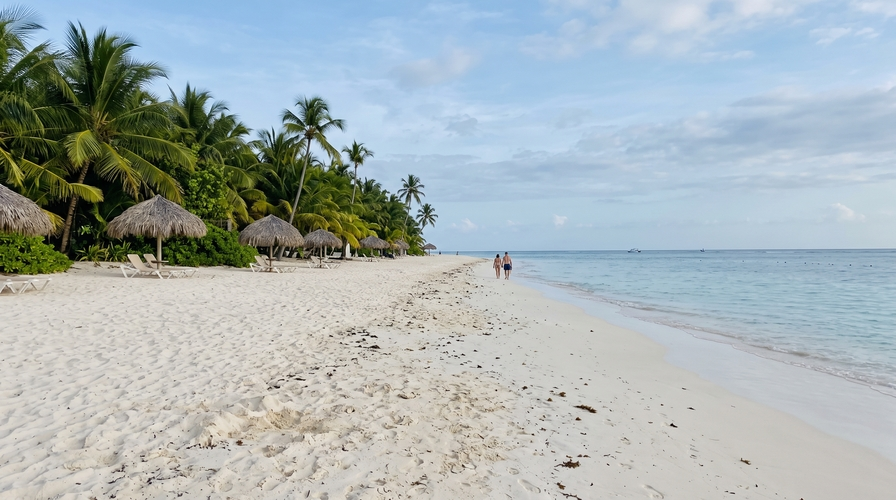
This is when the Caribbean looks like those glossy magazine covers. The humidity drops off a cliff, the evening breeze actually feels cool, and it hardly ever rains. But there's a catch. Everybody knows this is the best weather, which means prices skyrocket. Resorts book out completely. You'll see massive lines for popular excursions, and the beaches are packed. You are basically paying top dollar to guarantee you don't get rained on.
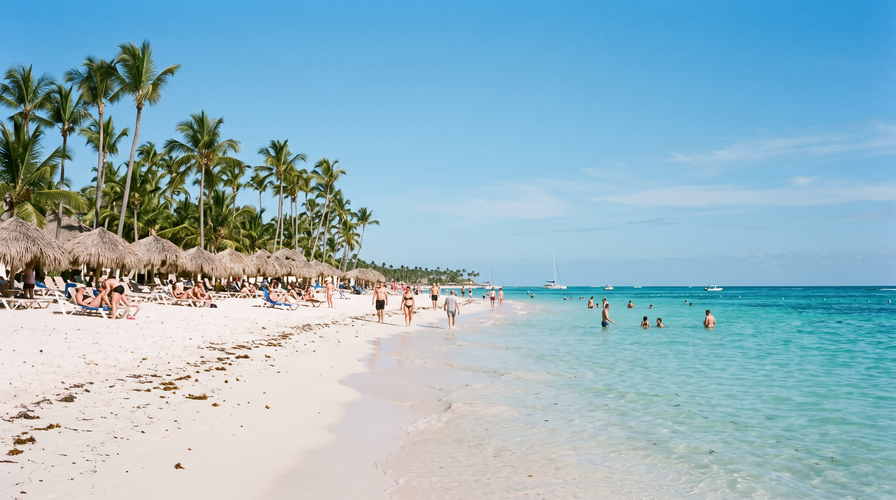
If you ask us, these two months are the ultimate travel hack. You get what we call the "value" sweet spot. In May, you catch the very end of the dry season before the crazy summer humidity kicks in, but the spring break crowds have all gone home. In November, the heavy autumn rains are finally wrapping up, leaving the island looking incredibly green and lush, and you can score discounted room rates right before the December holiday rush ruins the pricing.
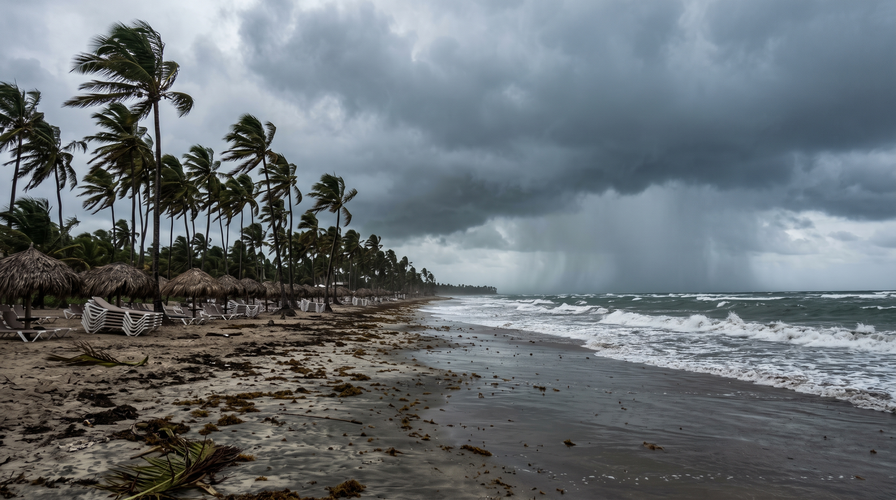
We aren't going to sugarcoat the Caribbean summer for you. From June through October, it gets incredibly humid. You will likely see quick, heavy downpours in the afternoons, and yes, it is officially the Atlantic hurricane season. Now, a direct hit from a major storm is pretty rare, but just the threat of bad weather makes demand plummet. Because of that, you can book high-end, all-inclusive luxury suites for a fraction of what they cost in February.
To help you figure out exactly when to request your PTO, we put together this cheat sheet. It breaks down the average temps, how many days it usually rains, and what the actual vibe feels like on the island.
| Month | Avg. High Temp | Rain Days | Vibe & Crowd Level | Pricing |
| January | 82°F (28°C) | 7 | High energy, everyone escaping the snow | Very High |
| February | 82°F (28°C) | 6 | Packed beaches, lots of honeymoons | Very High |
| March | 83°F (28°C) | 6 | Spring breakers everywhere, loud and fun | High |
| April | 84°F (29°C) | 7 | Busy, especially when Easter hits | High |
| May | 86°F (30°C) | 9 | Super chill, arguably the best value | Moderate |
| June | 88°F (31°C) | 10 | Sticky, family summer vacationers rolling in | Moderate |
| July | 88°F (31°C) | 11 | Very hot, locals are on break too | Moderate |
| August | 89°F (32°C) | 11 | Peak humidity, you will sweat just standing | Low |
| September | 89°F (32°C) | 12 | Ghost town, highest storm risk | Very Low |
| October | 88°F (31°C) | 11 | Heavy afternoon rain, very empty | Low |
| November | 86°F (30°C) | 10 | The weather breaks, snowbirds return | Moderate |
| December | 83°F (28°C) | 9 | Festive, gets insanely crowded by the 20th | Very High |
Right after New Year's, the island is buzzing. If you look at the Punta Cana weather in January, you’ll see why half of Canada and the northern US fly down here. The skies are an aggressive shade of blue, the ocean currents are totally manageable, and you don't step outside and immediately start sweating. It’s expensive, but it’s gorgeous.
A lot of locals consider this the driest month we get. The Punta Cana weather in February is flat-out spectacular for anything out on the water. The mornings are actually a little crisp, and the afternoons are warm but comfortable. Because Valentine's Day falls in the middle, this is peak honeymoon time. If you want a romantic beachfront dinner, book it months ahead.
March is all about spring break. The resorts get taken over by college kids and families with school-aged children. Luckily, the Punta Cana weather in March plays along perfectly. It stays consistently sunny, meaning the massive pool parties and beachfront entertainment never really get rained out. Expect high energy and loud music.
You’ll start feeling the temperature shift a bit here. The Punta Cana weather in April is still top-tier, but you might get hit with a random 10-minute tropical shower around 3:00 PM. The biggest thing to watch out for is Easter. Semana Santa (Holy Week) is a massive deal here, and locals flood the coastlines. It gets incredibly crowded.
Honestly, this is our favorite month. The Punta Cana weather in May is the ultimate compromise. The ocean has warmed up to bathwater levels, but that oppressive, heavy summer heat hasn't quite arrived yet. Best of all, the spring break crowds are gone. The resorts empty out, and the prices drop to a very reasonable level.
Summer has officially entered the chat. Checking the Punta Cana weather in June, you'll notice the humidity spikes hard. The passing rain showers become a bit more frequent. However, a local pro-tip: the mornings are almost always completely clear. If you want to do an excursion, just book the early morning slots.
Get ready to bake. The Punta Cana weather in July means serious tropical heat. You cannot skip the sunscreen, and you need to be drinking water all day. Because it's so hot, jumping into the ocean feels like the best thing in the world. Resorts are full of families on summer break during this window.
Historically, this is the hottest, stickiest time to be in the Dominican Republic. If you are tracking the Punta Cana weather in August, just know that the air feels heavy. You are going to spend your entire vacation doing one of three things: sitting in AC, floating in a swim-up bar, or ripping a jet ski across the water just to get some wind in your face.
Welcome to the absolute dead of the off-season. The Punta Cana weather in September comes with the highest statistical risk of tropical storms and hurricanes. A lot of people are scared to travel now. But if you are a gambler? You get the beaches entirely to yourself and you will pay peanuts compared to the folks who visited in February.
Pack a rain jacket. The Punta Cana weather in October brings the highest volume of rain to the coast. But it’s not like Seattle where it drizzles all day. It builds up into big, aggressive, booming thunderstorms in the late afternoon that flood the streets for an hour, and then the sun comes back out.
You can literally feel the humidity break this month. The Punta Cana weather in November acts like a reset switch for the island. By the time Thanksgiving rolls around, the heavy rains are basically gone. The "snowbirds" from the north start arriving, slowly bringing the island back to life before the winter rush.
Everything gets chaotic in the best way possible. The Punta Cana weather in December is legendary. The trade winds come back, completely wiping out that sticky feeling, leaving us with perfect 83-degree days. Just know that if you visit from December 20th onwards, you are paying the absolute highest premium possible.
Alright, let's talk about the elephant in the room. A lot of travel agents completely dodge the seaweed question because they want to sell you a room. We’d rather just be honest.
Sargassum is an issue all over the Caribbean, and it usually gets worse here during the hot summer months (June to August) when the ocean temps heat up. It’s a harmless, brown macroalgae that floats around in the ocean and washes up on the sand depending on how the tide and currents are behaving. Sometimes the beaches are pristine. Other times, the resorts have to bring out literal tractors at 6:00 AM to scoop it all up. You can actually look at real-time satellite sargassum tracking data from the optical labs at USF to see if a bloom is heading our way.
If you are stressing about seaweed in Punta Cana, there is a remarkably simple fix: get off the beach. The sargassum gets trapped right at the shoreline. If you book a water excursion, like a jet ski or a boat, you blow right past the seaweed line in about thirty seconds. Out in the open water, it’s completely clear and bright blue.
Where the Atlantic Ocean bumps into the Caribbean Sea right on our coast, things get interesting. If you are coming down here specifically to play in the water, you need to time it right.
If you want that crystal-clear, swimming-pool vibe where you can see straight to the bottom, aim for February through May. The trade winds shift during this window, and the waves along Bavaro Beach flatten out into tiny ripples. It makes it insanely easy to spot sea turtles, stingrays, and reef fish without fighting the current.
If you actually want the wind, January and February are your best bets. Those cooler breezes whip across the eastern coast pretty consistently. Down by Macao Beach and Cabeza de Toro, you'll see the sky filled with kitesurfers taking advantage of the gusts.
Look, getting on a personal watercraft is the coolest way to see the coastline no matter what month it is. But if we are talking about perfect conditions? April and May. The water turns to absolute glass, letting you open up the throttle without bouncing over heavy chop. If you are looking to get out there, our water sports Punta Cana packages hook you up with top-tier Yamaha wave runners. And if you want a whole day of dirty and clean fun, you can grab a buggy and jet ski package Punta Cana—you get to tear through the muddy jungle trails first, and then wash it all off jumping waves in the ocean.
Money talks. Depending on when you book, the exact same hotel room and the exact same flight can vary in price by well over 50%.
If you want to feel like a VIP on a budget, look at September and October. Because it's peak hurricane season, the travel industry panics. Rooms that normally go for $600 a night frequently plummet below $250. The catch? You might get rained out. If you roll the dice on these months, buy "Cancel For Any Reason" travel insurance, and keep a close eye on the official hurricane tracking forecasts from NOAA a few weeks before you fly.
We mentioned it before, but May is the ultimate loophole. You dodge the spring break surcharges, and the airlines drop their ticket prices because families aren't traveling yet. But the heavy summer rains haven't started. It is easily the best return on investment for a trip down here.
If you try to book a trip between December 20th and January 10th, or during the middle of March, prepare your wallet. The resorts know they will sell out, so they offer zero discounts. Flights are packed. Even the VIP airport fast-track services bump up their rates. You are paying a massive premium for the timing.
Not everyone wants the same vacation. Some want to party, some want to sleep, and some just want to keep their kids from complaining. Here’s when you should go based on your crew.
If you want romance and luxury, look at February or early May. The adults-only resorts really shine when the weather is cooperating, meaning you can actually enjoy those fancy sunset dinners on the beach without a thunderstorm ruining the mood. Plus, you can easily plan out plenty of things to do in Punta Cana, whether that's a secluded spa day or renting a private cabana.
You are probably stuck with the school calendar, which means July (summer break) or March (spring break). The trick to keeping kids happy when the resorts are crowded is getting them off the property. Booking a catamaran Isla Saona trip is amazing because they can swim in waist-deep natural pools with starfish. If you want something closer to the hotel, a catamaran Punta Cana Bavaro coastal cruise keeps them entertained for hours. Have teenagers that need more adrenaline? The aqua splash trio pack is non-stop action.
If you hate waiting in line at the buffet and want a beach chair without waking up at 6:00 AM, you belong in September or October. Yes, it might rain, but the absolute peace and quiet of the resorts is worth it for a lot of people.
Packing for the Caribbean is a little trickier than just throwing flip-flops in a bag. You have to adapt to the season.
Dry Season Essentials (December - April):
Wet/Humid Season Essentials (May - November):
Sometimes the island gets busy even if it isn't a US holiday. Keep an eye on these local dates because they definitely impact traffic and resort crowds.
If you try to wing a trip to the Dominican Republic, you are going to end up disappointed or broke. You need a game plan.
If you are coming down in the peak winter months (December to April), you need to have your flights and hotel locked down 6 to 9 months in advance. If you wait until November to book a January trip, the algorithms will punish you with surge pricing. If you are coming in the off-season, you can usually pull off a booking just 1 to 3 months out.
Do not wait until you are sitting in the resort lobby drinking a welcome cocktail to plan your fun. The really good water sports operations—the ones with the best equipment—book out days in advance during peak season because the cruise ships buy up all the slots. Do yourself a favor and pre-book online. Lock in your jet ski and aqua kart package Punta Cana a few weeks before you even pack your bags so you aren't left standing on the beach watching everyone else have fun.
At the end of the day, there is no "wrong" time to fly down here—it really just depends on what you care about most.
If you want the best possible weather and don't care what it costs, book February. If you want a killer deal and great weather, aim for May. If you want the cheapest vacation humanly possible and don't mind carrying an umbrella, we will see you in September.
Whenever you decide to show up, the ocean is going to be waiting. Book your ultimate wave-riding experience with Jet Ski Punta Cana today, and let us show you why we love calling this place home.
October is officially the rainiest month on the calendar here. But don't picture gray, miserable all-day drizzle; it usually comes in the form of short, heavy, booming tropical thunderstorms in the late afternoon, leaving the mornings totally fine for the beach.
Yes, it is generally very safe, as long as you pay attention to the weather channels and buy solid travel insurance just in case. The resorts here are built like fortresses to handle storms, but if you want to ease your mind, check out our deep dive on whether it is Punta Cana safe to visit.
September is the absolute cheapest time you can fly here. Because it sits right in the middle of the Atlantic hurricane season, a lot of tourists stay away, which forces the airlines and the massive resorts to completely slash their rates to get people in the door.
The sargassum situation changes constantly depending on the tide, but it is definitely worse during the hot summer months from June to August. The resorts work hard to clean the sand every morning, but the smartest way to avoid it completely is just booking a boat or jet ski excursion to get out into the clear water.
Quick Overview: September brings daytime highs of 88°F (31°C), incredibly warm 84°F (29°C) waters, and short, highly predictable tropical showers. Mornings guarantee sunny skies with glassy, flat waters, establishing 9:00 AM to 1:00 PM as the absolute best window for pristine beach lounging and high-speed Jet Ski excursions.
Key Weather Snapshot:
Bávaro Beach and the surrounding eastern coastline maintain a very specific microclimate during the early fall. The data below reflects the verified meteorological averages you will experience on the ground this September.
| Weather Metric | September Average | Operational Impact for Visitors |
| Air Temperature (High) | 88°F (31°C) | Intense midday heat. Optimal for full water immersion. |
| Air Temperature (Low) | 77°F (25°C) | Balmy, humid evenings. Light resort wear is required. |
| Ocean Temperature | 84°F (29°C) | Peak annual warmth. Feels like a heated swimming pool. |
| Average Rainfall | 4.5 inches (114 mm) | Arrives in sharp, 15-to-30-minute afternoon bursts. |
| Daily Sunshine | 9.5 – 10 Hours | Cloudless mornings followed by scattered afternoon cumulus. |
| Average Wind Speed | 8 – 11 mph (E/NE) | Morning breezes are light; afternoon trade winds pick up. |
Our on-the-ground analysis shows that these numbers only tell part of the story. While the humidity sits higher than in the winter months, the constant cross-shore Atlantic breeze mitigates the heavy air, making outdoor activities highly enjoyable provided you time them correctly.
Deciding on the exact month for your Caribbean vacation requires balancing your budget, crowd tolerance, and heat preference. September represents a strategic sweet spot for travelers prioritizing warm water and uncrowded beaches over zero-precipitation guarantees.
| Month | Avg High Temp | Ocean Temp | Crowd Level | Resort Pricing |
| September | 88°F (31°C) | 84°F (29°C) | Very Low | Lowest (Off-Peak) |
| January | 82°F (28°C) | 79°F (26°C) | Peak | Highest (Premium) |
| July | 87°F (31°C) | 83°F (28°C) | High (Summer Break) | Moderate |
If you are currently evaluating the best time to visit Punta Cana, comparing these transitional fall weeks against other seasonal data points offers clear operational advantages. Looking backward, Punta Cana weather in August carries similar heat profiles but retains the heavy family summer vacation crowds. Fast forward a few weeks, and Punta Cana weather in October sees a slight dip in humidity as the island prepares for winter.
Late fall patterns like Punta Cana weather in November and early winter arrivals looking at Punta Cana weather in December will notice significantly cooler evening breezes, requiring long sleeves for beachfront dinners. Meanwhile, strict high-season months highlighted in our Punta Cana weather in January guide feature the lowest humidity but command premium hotel rates and crowded excursion boats. Conversely, mid-summer comparisons like Punta Cana weather in July share September's ocean warmth but lack the VIP, empty-beach aesthetic that early fall provides.
The primary perk of September? You secure luxury resort accommodations at steep discounts, enjoy VIP-level uncrowded waters, and swim in the absolute warmest Caribbean sea temperatures of the entire calendar year.
Daytime temperatures in September are distinctly tropical. Thermometers consistently peak around 88°F (31°C) between noon and 2:00 PM. Factoring in the high relative humidity—often sitting at 80%—the actual heat index (what your body actually feels) easily pushes past 95°F (35°C).
However, Punta Cana features a geographic advantage. Because Bávaro Beach faces east toward the open Atlantic Ocean and the Mona Passage, steady trade winds hit the shoreline 24 hours a day. This constant ocean breeze acts as a massive natural air conditioner. Sitting under a palm tree or riding across the water feels incredibly refreshing, entirely neutralizing the oppressive stillness found inland.
Nighttime temperatures only drop to about 77°F (25°C). You will not need a jacket, sweater, or heavy pants at any point during your trip. Light linens, breathable cotton, and moisture-wicking evening wear are the practical choices for resort dinners and outdoor shows.
September delivers an average of 9.5 to 10 hours of highly intense, direct tropical sunshine daily. Because the Dominican Republic sits geographically close to the equator, the UV Index routinely hits extreme levels (10+) by 11:00 AM.
Protecting your skin requires specific gear. Standard aerosol sunscreens often wash off in saltwater within twenty minutes. We strictly recommend packing eco-friendly, reef-safe mineral sunscreen (zinc oxide or titanium dioxide). These formulas provide a physical barrier against the sun, last much longer during high-speed water activities, and protect the fragile coral ecosystems lining the eastern coast.
For water sports enthusiasts, sunscreen alone is not enough. Equip yourself with polarized sunglasses to cut the severe water glare and wear long-sleeved UPF 50+ rash guards. Rash guards offer zero-maintenance sun protection, allowing you to focus on driving your machine rather than worrying about mid-day shoulder burns.
Open any standard smartphone weather app in September, search for Punta Cana, and you will likely see a lightning bolt or rain cloud icon plastered across every single day of the month. This display creates massive panic for incoming travelers, but it represents a fundamental flaw in how global weather algorithms display tropical island meteorology.
Weather apps trigger a daily rain icon if there is even a 20% chance of precipitation anywhere within a 50-mile radius. In September, the immense daytime heat causes rapid evaporation over the warm ocean. This moisture condenses into localized cumulus clouds by early afternoon. The result is a brief, highly isolated convection shower. It does not rain all day. It rarely rains all morning.
Here is the factual, on-the-ground daily routine you can actually expect:
September represents the statistical peak of the Atlantic hurricane season. However, understanding the localized geographic reality of the Dominican Republic eliminates unnecessary anxiety.
Punta Cana sits on the extreme eastern tip of the island of Hispaniola. Historically, major cyclonic systems tend to track slightly north or south of this specific coordinate. Furthermore, the Dominican Republic features three massive central mountain ranges (including Pico Duarte, the highest peak in the Caribbean). These aggressive topographical barriers act as a natural weather shield, frequently disrupting and tearing apart low-pressure systems before they can establish direct, catastrophic landfalls on the eastern resort zones.
While the risk of a direct hit remains statistically low, passing offshore storms can generate elevated surf and localized squalls. We rely strictly on verified data from the National Hurricane Center to track marine conditions weeks in advance. To guarantee complete peace of mind, purchase standard "Cancel for Any Reason" travel insurance. This ensures your financial investment is fully protected if a rogue system forces flight delays, answering the common question of is Punta Cana safe to visit with a resounding yes—provided you plan intelligently.
Ocean temperatures hit their annual maximum in September, holding steady at an incredibly warm 84°F (29°C). Wading into the Atlantic feels exactly like stepping into a heated resort pool. This extreme warmth allows for extended snorkeling sessions, prolonged swimming, and zero "cold shock" when falling off a towable tube. Underwater visibility remains excellent, often exceeding 60 feet during the calm morning hours.
Bávaro Beach benefits from a massive, natural limestone barrier reef located roughly half a mile offshore. This structure acts as a marine shock absorber. Even if a distant September storm generates large offshore ocean swells, the barrier reef violently breaks the energy of the incoming waves. The resulting nearshore waters—where swimming zones and excursion departures exist—remain completely glassy, flat, and perfectly safe for high-performance riding.
Wind dynamics dictate water texture. During the morning hours (8:00 AM to 12:00 PM), wind speeds drop to a minimal 5–8 knots. This creates a "mirror glass" effect on the ocean surface, providing the smoothest, fastest, and most comfortable conditions for Jet Ski riding. By 2:00 PM, the trade winds accelerate to 12–15 knots, whipping the surface into a tighter chop. If you want speed and comfort, book your marine activities before lunch.
Sargassum seaweed influxes are a known operational reality across the entire Caribbean basin during the summer months. However, September typically marks the turning point. As ocean temperatures peak and global currents begin their subtle seasonal shift, Sargassum levels generally start dropping aggressively toward the end of the month.
When planning your days, you can track real-time satellite blooms via official Sargassum monitoring maps. On the ground, premium Bávaro Beach resorts and our specific tour departure zones utilize heavy-duty beach clearing tractors at sunrise every single day. This relentless mechanical clearing ensures that your immediate water entry points, lounging areas, and launch zones remain spotless and pristine, regardless of offshore algae mats.
Packing for a September arrival requires ditching heavy fabrics and focusing entirely on moisture management and marine utility.
Beating the afternoon convection showers is the ultimate September strategy. Booking an early buggy and jet ski package Punta Cana ensures you utilize the flattest waters of the day while the sun is shining brightest. There is no better way to explore the coastline than gripping the throttle of a high-powered Yamaha on mirror-glass ocean. If you prefer blending land and sea dynamics, securing a dual jet ski and aqua kart package Punta Cana offers unmatched mechanical adrenaline before the afternoon clouds even form.
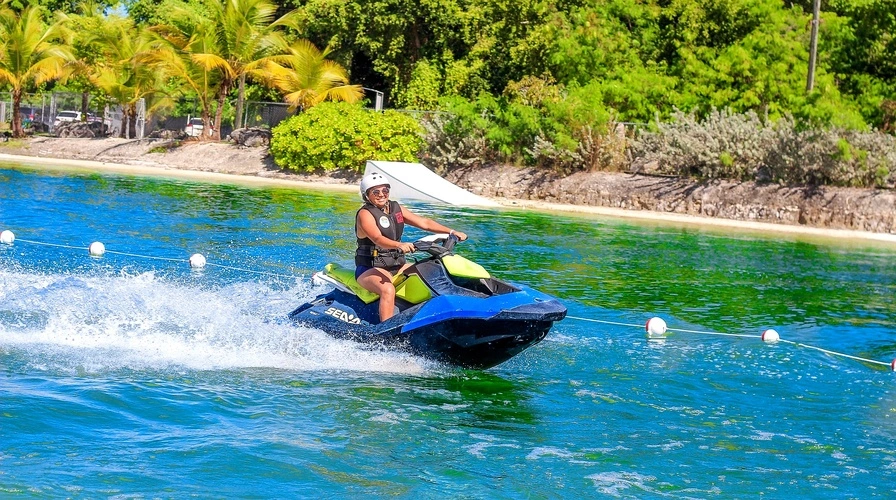
The brief, intense rain showers of September keep the Dominican coastline incredibly lush and vibrant green. Viewing this tropical canopy from 200 feet in the air offers a stunning contrast against the blue water. If you want maximum thrills, combining aerial views with marine speed via an aqua splash Punta Cana excursion delivers a flawless morning itinerary. No matter your preference, early booking for water sports Punta Cana guarantees you the prime, weather-cleared time slots.
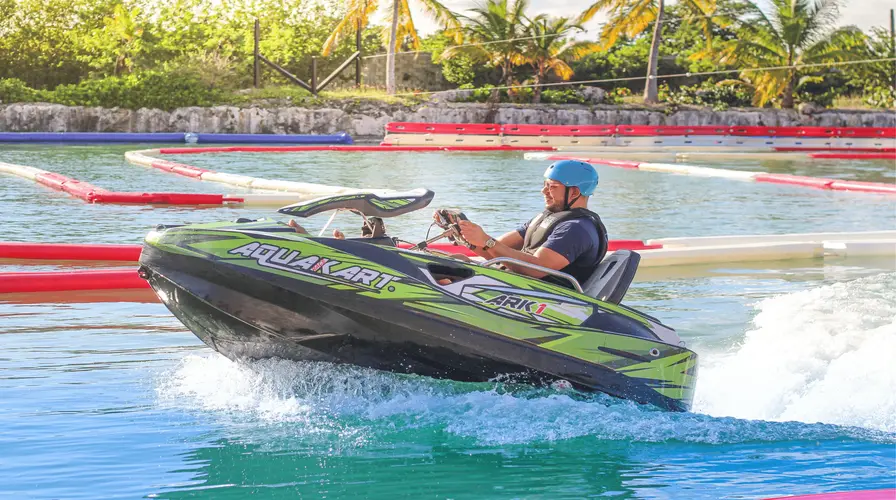
Because the ocean hits an annual peak of 84°F in September, you can snorkel the outer reef for hours without your core temperature dropping. Navigating to the best coral heads requires expert local captains. Booking a private catamaran Punta Cana provides exclusive access to isolated snorkeling zones far away from the crowded party boats. For families or friend groups looking to control their own music and itinerary, a dedicated catamaran Punta Cana Bavaro charter is the ultimate luxury upgrade.
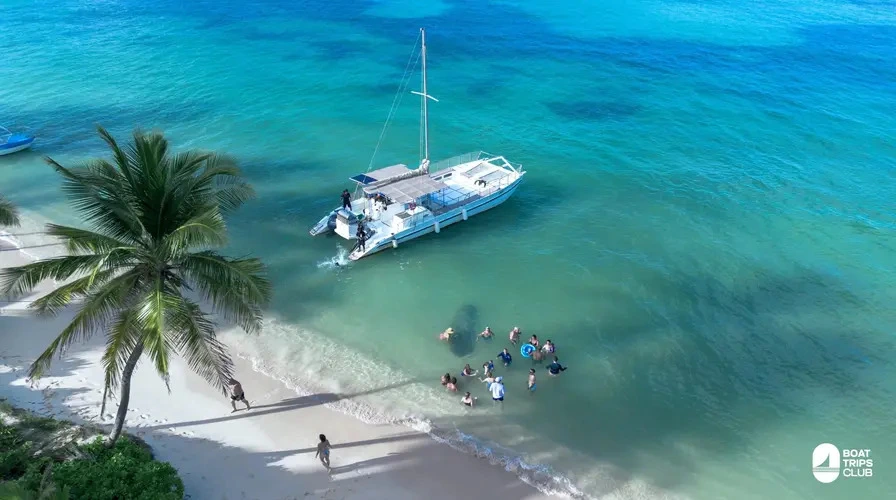
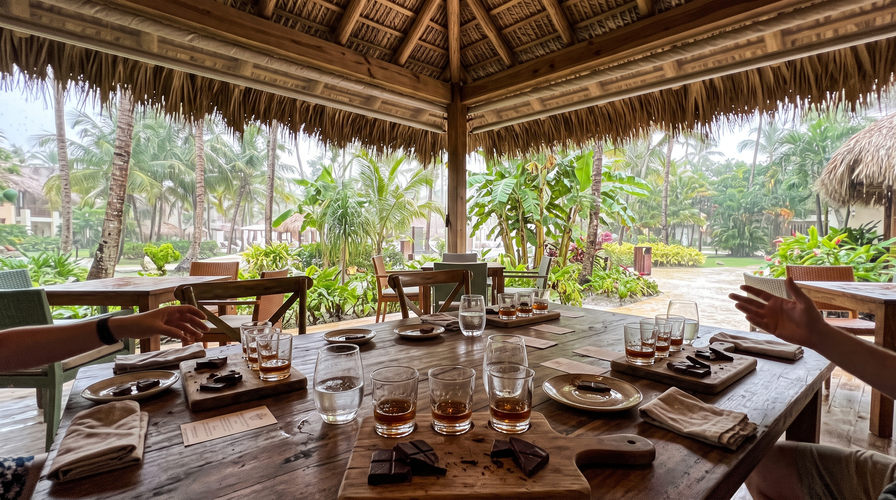
When the 3:00 PM convection shower inevitably rolls across the beach, simply transition to covered cultural experiences. Use this 45-minute rain delay to visit an indoor Dominican chocolate workshop, schedule a top-shelf rum-tasting session at your resort lobby bar, or head to the spa. By the time you finish your drink, the sun will be back out.
We operate with strict adherence to marine safety protocols, ensuring you never lose your vacation investment to a passing storm. Jet Ski Punta Cana monitors live dual-band marine radar and maintains direct communication with the Dominican Navy and Coast Guard.
If official maritime authorities issue a port closure (a "bandera roja" or red flag warning) due to severe offshore swells or lightning, our weather guarantee immediately activates. We offer a 100% free, priority rescheduling policy to move your run to the next available sunny morning. If your flight leaves the next day and rescheduling is impossible, we issue an instant, no-questions-asked cancellation and refund. You assume zero financial risk when booking your water adventures.
Yes, absolutely. Mornings in September offer the calmest, flattest waters of the entire year. By booking your rental between 9:00 AM and 1:00 PM, you avoid the afternoon chop and secure pristine riding conditions inside the protected reef.
No, it represents one of the most strategic times for smart travelers. While the chance of brief afternoon rain increases, September offers the lowest resort crowds, the warmest ocean waters, and massive discounts on luxury hotel pricing.
Rarely. Over 90% of rain events in September are heavy, localized convection showers that last under 30 minutes in the mid-to-late afternoon. All-day washouts are extremely uncommon unless a direct cyclonic system is passing over the island.
The ocean temperature peaks at a very warm 84°F (29°C). This bathwater-like warmth eliminates the need for wetsuits, making extended snorkeling sessions and deep-water swimming incredibly comfortable.
Our operational team tracks live radar and strictly follows Dominican Coast Guard safety flags. If sea conditions become hazardous, our proactive notification system will contact you directly via WhatsApp or email to execute a seamless reschedule or immediate refund.
Quick Overview: Is August a Good Time to Visit Punta Cana? Yes. August is a fantastic time to fly down to the Dominican Republic—but only if you know exactly what you are signing up for. You want empty beaches? You got them. You want insanely warm ocean water that feels like a heated pool? Done. You want top-tier luxury resorts slashing their nightly rates? August is your month.
The trade-off? The heat. The Punta Cana weather in August is intense. We are talking about peak Caribbean summer. It sits right in the middle of the wet season, meaning the humidity will hit you the second you walk out of the airport doors. But smart travelers don’t let that ruin a trip. They adapt. If you are sitting at home right now plotting out your daily schedule using a solid Punta Cana travel guide, the strategy is simple: wake up early, get on the ocean by 8:30 AM, and spend the afternoon sitting waist-deep at a swim-up bar.
Trying to figure out the best time to visit Punta Cana always comes down to your personal travel style. If you absolutely hate sweating, maybe look at January. But if you want glass-flat morning waters for high-speed jet skiing and you don't mind a 20-minute afternoon rain shower cooling things off, late summer delivers incredible value.
Numbers matter. We track the regional climate patterns constantly to make sure our boats and wave runners are operating in peak conditions. Based on decades of meteorological tracking and the forecast models lining up for 2027, here is the raw data you need to know before you pack your bags.
| Weather Metric | August Average | Practical Traveler Impact |
| Average High Temperature | 87°F (31°C) | Do not trust this number alone. Humidity pushes the "feels like" factor to 95°F+ midday. |
| Average Low Temperature | 79°F (26°C) | Nights stay warm and sticky. Leave the jeans and light jackets at home. You won't wear them. |
| Average Rainfall | ~3.8 inches | This usually drops all at once. Think heavy, fast, 20-minute tropical dumps, not all-day drizzle. |
| Ocean Temperature | 84°F (29°C) | Absolute perfection. You can swim for three hours straight without catching a chill. |
| Average Sunshine | 9 to 10 hours | The sun sits right overhead. The UV index is brutal. Proper protection is not optional. |
| Humidity Level | 80% - 85% | You will sweat. Stay near the coast where the Atlantic trade winds act as natural A/C. |
Look closely at that chart. The Punta Cana August temperature barely drops when the sun goes down. But the real standout data point? The ocean temperature. When the water matches the air temperature, you get the ultimate playground for marine sports.
We see it every single week. A tourist steps off the plane, grabs their luggage, walks out the sliding glass doors of PUJ airport, and stops dead in their tracks. The punta cana august temperature officially averages around 87°F (31°C). That sounds manageable, right? It sounds like a warm day in Ohio.
Wrong. The thermometer lies.
The defining characteristic of the Dominican Republic in late summer is the humidity. It hovers right around 85%. That moisture turns the air incredibly thick. By 1:00 PM, the heat index—what your body actually feels—routinely punches up into the mid-90s. If you try to play a round of tennis at 2:00 PM, you will regret it. You will sweat simply standing still in the shade.
But there is a massive geographical advantage to staying on the eastern coast. The Atlantic trade winds blow consistently from the water onto the shore. As long as you are physically standing on the beach or sitting on a boat, that breeze cools you down instantly. The moment you walk inland, behind the resort buildings or into the jungle for a dune buggy ride, that wind dies. The air stagnates. It gets incredibly hot. Plan your days accordingly. Do the heavy lifting in the morning.
Stop staring at your iPhone weather app. Seriously. If you look at an automated global weather forecast for Punta Cana in August, it will show a depressing gray cloud with a lightning bolt on Monday, Tuesday, Wednesday, Thursday, and Friday. It makes people panic. They think their entire $5,000 vacation is going to be a total washout.
That is entirely false. Here is the actual "Rain Truth."
August is absolutely part of the wet season. Punta cana august rainfall is real. But it does not behave like rain in London or Seattle. We rarely get locked into massive, gray, low-pressure systems that drizzle for 48 hours straight. Instead, the heat builds up all morning. The humidity rises. Then, right around 3:30 PM or 4:00 PM, the sky suddenly goes dark over the ocean. The wind kicks up. And the sky just completely opens up.
It pours. Aggressively. You will see sheets of water coming down.
Twenty minutes later? The clouds break apart. The aggressive Caribbean sun comes right back out, and because the sand is so hot, the beach is bone dry an hour later. These afternoon squalls are actually amazing. They drop the ambient temperature by ten degrees and wash all the sticky humidity out of the air right before dinner. So, how much does it rain in Punta Cana in August? Enough to keep the palm trees neon green. But it rarely ruins a boat trip or a beach day. If it starts raining, grab a local President beer, get under a thatched roof, and just wait. It passes fast.
Let’s talk about the water. The Punta Cana ocean temperature in August sits at a glorious 84°F (29°C).
For a little perspective, most high-end luxury hotels heat their swimming pools to about 82 degrees. The ocean here is literally warmer than a heated pool. You know that horrible feeling of inching your way into cold water, freezing up to your waist before you finally dive under? That doesn't exist here in August. You can sprint full speed from the sand right into the waves. Is the ocean warm enough for swimming in August in Punta Cana? It is arguably the best month of the entire year to be in the water.
Surface conditions dictate how you should structure your day. From sunrise until about 10:30 AM, the Atlantic is usually flat. Glassy. The wind hasn't woken up yet. This creates perfectly calm water beaches in Punta Cana in August. It is the ultimate window for stand-up paddleboarding, clear-water snorkeling, or pushing a wave runner to its absolute top speed without taking a beating. Once the clock hits 2:00 PM, the trade winds pick up, bringing choppier waves to the shoreline.
We don't hide the facts. Let’s address the seaweed.
Sargassum is a brown, floating macroalgae. It lives out in the open ocean, catching rides on major currents. During the summer months, massive blooms of this stuff push up against the Caribbean islands. Does August get seaweed? Yes. Historically, late summer can bring heavy waves of seaweed in Punta Cana.
But you need context. Sargassum is incredibly unpredictable. A beach can look like a pristine postcard on Monday, and by Wednesday morning, a massive brown patch has washed ashore. The good news? The Dominican Republic's tourism sector fights back hard. The major resorts along the coast do not mess around. They deploy massive tractors and fleets of local workers at 5:00 AM every single day. They rake, scoop, and haul the stuff away before you even finish your morning coffee.
If your specific hotel beach happens to get hit hard by a bloom, you pivot. Don't sit on the sand complaining. Sargassum pools up right against the shoreline. Book a boat. Once a captain drives you just a few hundred yards off the beach, you clear the seaweed line entirely. The water turns back into that bright, glowing turquoise, and the seaweed becomes a total non-issue.
You are going to get anywhere from 9 to 10 hours of bright, aggressive sunshine every single day.
Because the island is positioned so close to the equator, the sun hits the earth here at a very direct angle. The UV index routinely spikes into the "Extreme" category by 11:00 AM. You can burn in twenty minutes. Even if a thin layer of clouds rolls in, those UV rays punch right through and will roast your shoulders while you aren't paying attention.
Standard drugstore sunscreens are terrible for the environment down here. They wash off your skin, settle onto the coral, and literally bleach the reefs to death. You need to pack a physical, mineral-based reef-safe sunscreen. Check the label. Make sure it uses Zinc Oxide or Titanium Dioxide.
But sunscreen isn't a magic shield. You need physical barriers. If you are spending four hours on a boat, you need a long-sleeved UPF-rated rash guard. It blocks 98% of the sun. Add polarized sunglasses to cut the brutal glare coming off the white sand, and wear a hat. Take the sun seriously.
Is August part of hurricane season in the Dominican Republic? Yes, it absolutely is. The Atlantic hurricane window opens in June and runs all the way through November. August is when the ocean water gets hot enough to start fueling larger systems.
But let’s look at the actual geography. The Dominican Republic is highly protected. We have a massive neighbor to the east: Puerto Rico. We also have the Mona Passage separating the islands. Historically, when major storm systems roll off the coast of Africa and cross the Atlantic, they hit Puerto Rico's mountainous terrain or the harsh currents of the passage and get ripped apart before they ever reach our beaches. Direct, catastrophic hits on Punta Cana are incredibly rare.
Should you sit at home in fear? No. Should you be smart about your booking? Yes.
Meteorology is advanced. Storms do not sneak up on people anymore. You will have a solid week of warning if a depression is forming. Keep an eye on the official National Hurricane Center website before your trip. The absolute best move you can make is spending an extra $75 on third-party travel insurance that includes a "Cancel for Any Reason" weather clause. If you know exactly how to protect your vacation from a Punta Cana hurricane financially, you can book an August trip, save a ton of money on low-season resort rates, and sleep perfectly fine at night.
Packing for August is a specific science. You are fighting heat, humidity, and the occasional downpour. Your heavy cotton t-shirts will feel like a wet blanket after ten minutes outdoors.
Here is your exact Punta Cana packing list for August weather:
Don't fight the climate. Work with it. Here is how to build your itinerary.
If you want to just lay out and do nothing, head straight to Bavaro Beach. It offers miles of soft sand and water that is heavily protected by offshore reefs, keeping the waves minimal. If you want a more rugged, local experience, tell a taxi driver to take you north to Macao Beach. It has larger waves, surfing lessons, and incredible fresh fish shacks. Just get your beach walking done before 11:00 AM, because that sand will physically burn your feet by midday.
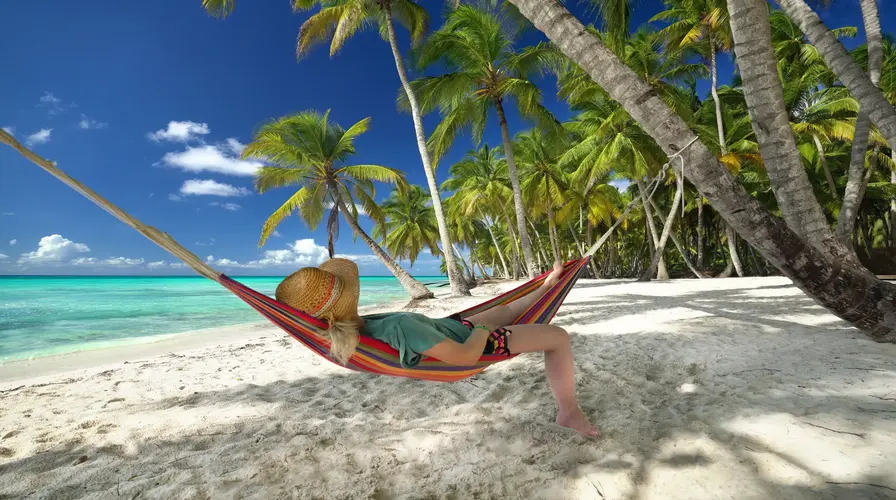
Getting off the mainland is the best hack for August. Booking a private catamaran Isla Saona charter takes you far south, away from any coastal sargassum, straight into waist-deep natural swimming pools that look fake they are so blue. If you care more about snorkeling than drinking rum on a beach, you want the Caribbean side. Checking out an Isla Catalina day trip, specifically an Isla Catalina snorkeling tour, puts you on the best living reef in the country. Before you book anything, read a detailed Saona Island guide to make sure the boat's vibe matches your group.
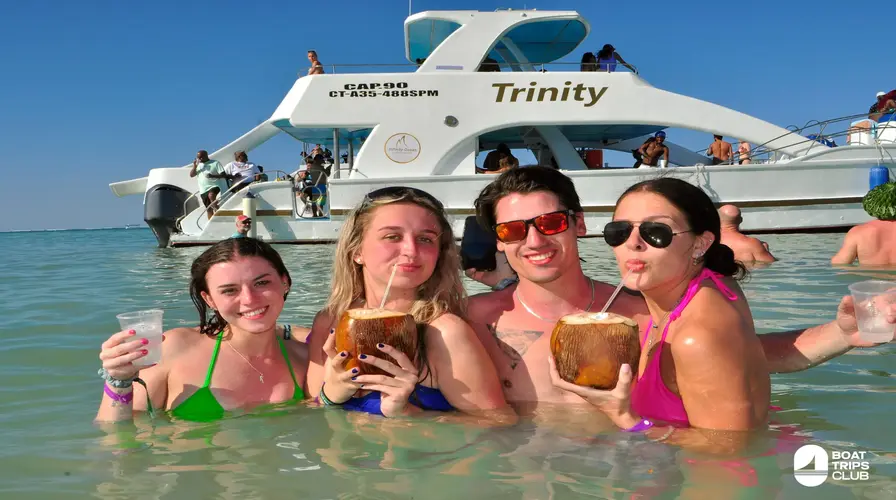
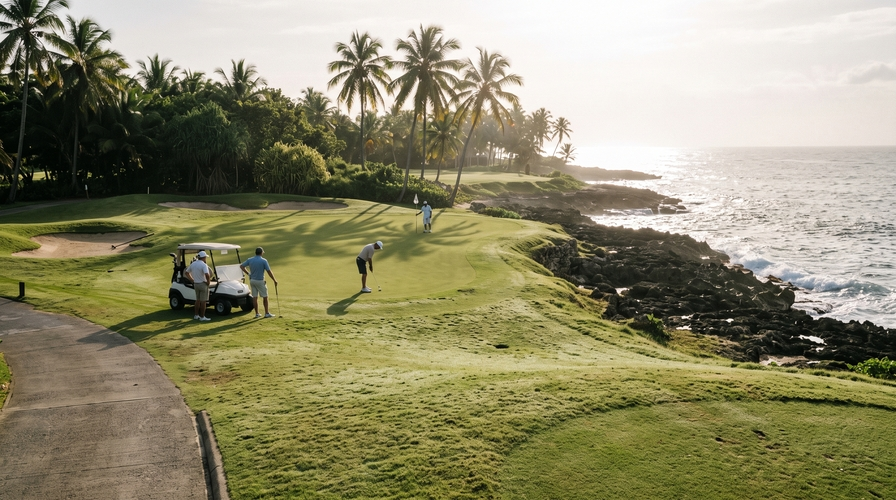
Punta Cana has unbelievable oceanfront golf. But listen closely: if you tee off at 1:00 PM in August, you will be miserable. The heat reflecting off the fairway grass is brutal. If you want to play 18 holes, demand the very first tee time of the morning. Finish by 11:00 AM and get inside.
Because the ambient air temperature is so heavy, the single fastest way to lower your core body temperature is to generate wind. Get on the water. Go fast. That is exactly why water sports in Punta Cana completely sell out during the late summer months.
Here is the insider secret. The clock is everything. Between 7:30 AM and 10:00 AM, the ocean wind is dead. The water flattens out into a massive, glassy mirror. When you rent with Jet Ski Punta Cana, our Yamaha wave runners absolutely tear through those morning conditions. You don't have to fight the chop. You don't bounce around. You just pull the throttle back and fly. Taking an 84-degree ocean spray to the chest while ripping down the coastline at 45 miles per hour is the ultimate way to beat the August heat. Do not wait until 3:00 PM to book a ski. The wind picks up, the water gets rougher, and the afternoon rain clouds start threatening. Book the morning slot. Always.
If you want to stay cool, you have to book smart.
Get the adrenaline out of the way before the sun goes into overdrive. A Jet Ski and Aqua Kart package is perfect for this. You get out there early, hit high speeds on the open water, race the karts, and by the time that heavy 1:00 PM heat sets in, you are already done, showered, and ordering a burger at the resort.
If you have a group and want to spend a full afternoon escaping the heat, nothing beats a private catamaran Punta Cana trip. You tell the captain what to do. Park over the reef for an hour, then slide over to the sandbar where the water is waist-deep. You literally just sit in the ocean with a drink while the boat's sound system plays. If your group is slightly more active, grab the Aqua Splash Pack or go all out with the Aqua Splash Trio Pack. These packages mix high-speed driving with guided snorkeling stops so you are constantly getting wet and staying cool.
Stuck trying to pick a date? Let's look at the Punta Cana weather August vs September and July data.
Honestly, Punta Cana weather in July is a carbon copy of August. You are dealing with the exact same heat, the exact same high humidity, and the exact same ocean temperatures. The only minor difference is that July traditionally sees slightly less total rainfall. It’s a bit drier.
September is a different story. The Punta Cana weather in September brings significantly more risk. September is the undisputed peak of the Caribbean hurricane season. It is historically the wettest month of the year. If you are staring at a calendar debating between August and September, take August. You get the same massive hotel discounts, but you secure much more reliable sunshine and a lower risk of storm delays.
Absolutely. If your main goal is spending hours in warm ocean water, trying out water sports, and avoiding heavy winter crowds, August is prime. Yes, the heat is intense. Yes, it is humid. But if you plan early morning activities and spend your afternoons submerged in a pool or the ocean, you will have an incredible trip.
You will see about 3.8 inches of rain over the course of the month. But again, it does not rain all day. You will typically experience brilliant morning sunshine followed by a massive, 20-minute heavy downpour in the late afternoon. Once it stops, the sun returns and dries everything out immediately.
It averages 84°F (29°C). It is literally bathwater. It is impossible to feel cold in the ocean in August. It is perfect for long snorkeling sessions or just floating at the sandbar for hours.
Yes. Heat plus wet season rain equals bugs. They mostly hide during the heat of the day but come out swinging right at dusk. Do not sit down for an outdoor dinner at 7:00 PM without spraying your ankles and legs with DEET first.
We don't shut down for a little water. If it is just a light tropical rain, the tours run as scheduled—you are going to get wet on a jet ski anyway. But safety is our baseline. If a captain sees lightning, dangerous wind chop, or zero visibility rolling in, we halt operations. If we have to cancel, we will immediately work with you to rebook for the next sunny window, or we issue a refund based on our weather policy. We don't mess around with ocean safety.
Quick Overview: Is July a good time to go to Punta Cana? Yes. Punta Cana weather in July 2027 features high temperatures around 86°F (30°C) with bathwater-warm ocean conditions perfectly suited for swimming and water sports Punta Cana. While it lands in the wet season, rainfall typically occurs in brief, late-afternoon showers, leaving mornings bright and ideal for excursions. Identifying the best time to visit Punta Cana depends entirely on your vacation goals, and July delivers peak summer ocean conditions for thrill-seekers.
Yes, July lands right in the middle of the Caribbean wet season. Do not let that deter you. Visiting the Dominican Republic mid-summer offers some of the most spectacular, high-energy beach days of the entire year. The secret? Understanding the daily rhythms. The ocean water is blissfully warm, acting as the ultimate natural escape from the midday heat. If you map out your itinerary correctly, July provides an incredible, sun-drenched backdrop for a tropical getaway.
July in Punta Cana brings distinct peak summer patterns. You will experience high heat, significant humidity, and incredibly warm ocean temperatures. When planning your daily activities, rely on these historical averages to structure your time outdoors.
| Weather Metric | Historical Average in July | What It Actually Means for You |
| Average High Temperature | 86°F (30°C) | Expect intense midday heat. You need to be in the water or shade by 1:00 PM. |
| Average Low Temperature | 78°F (26°C) | Evenings remain very warm and humid. Light clothing is mandatory. |
| Total Rainfall | 89mm (3.5 inches) | Rain comes in fast, heavy, and highly localized afternoon bursts. |
| Ocean Temperature | 84°F (29°C) | The water feels like a warm bath. Perfect for extended swimming sessions. |
| Average Sunshine | 11.7 hours/day | Despite the "wet season" label, you still get massive amounts of direct sun. |
Comparing this data to Punta Cana weather in June or Punta Cana weather in August reveals a consistent tropical plateau. The temperatures do not swing wildly. Instead, the humidity creates a "feels like" temperature that pushes well into the 90s. The ultraviolet (UV) index consistently hits a level 11 (extreme) during this month. Protect your skin aggressively.
Planning around the daily weather pattern is the single most important factor for a July vacation. Mornings in July are almost always bright, sunny, and clear, making it the absolute best time to book excursions like Jet Skiing. If rain does happen, it usually arrives in the late afternoon.
At 7:30 AM, the horizon off the eastern coast of the Dominican Republic is usually razor-sharp. The humidity hasn't fully cooked off the sand yet, and the ocean resembles a massive sheet of glass. From our operational experience running watercraft tours, the window between 8:00 AM and 1:00 PM is golden. The sky is a vibrant blue, the visibility underwater is pristine, and the winds are light.
By 2:00 PM, the dynamic changes. The intense morning heat causes moisture to evaporate rapidly off the ocean, forming towering cumulonimbus clouds over the island's interior. Around 3:30 PM or 4:00 PM, these clouds push toward the coast. The wind picks up. The sky darkens. And then, the rain drops.
This predictable pattern is the ultimate travel hack. Eat breakfast early. Get out on the water by 9:00 AM. Run your high-energy excursions while the conditions are flawless. Then, when the 4:00 PM shower hits, you are already sitting comfortably under a thatched palapa at the resort bar with a rum cocktail in hand, enjoying the sudden drop in temperature.
A "rainy day" in the Caribbean rarely means it rains all day. July rain usually comes in brief, heavy 15-to-20-minute tropical showers that actually help cool down the hot afternoon air.
One of the biggest mistakes travelers make is checking their iPhone weather app a week before their trip. The app inevitably shows a dark rain cloud with a lightning bolt every single day for the entire month of July. Panic sets in. Tourists assume their vacation is ruined.
Here is the Punta Cana weather July real data reality: weather algorithms flag a 20-minute passing shower as a "rainy day." They fail to communicate that the remaining 11 hours and 40 minutes of daylight will feature blinding sunshine. The 89mm of total rainfall spread across the month is actually quite manageable.
When it rains in July, it pours. The drops are massive. It is a dramatic, visually stunning display of tropical weather. But it moves fast. Within 30 minutes, the storm system blows offshore, the sun breaks back through the clouds, and the intense humidity begins to steam off the pavement. Locals actually welcome these afternoon showers because they temporarily shatter the stagnant afternoon heat, making the evening dinner hours significantly more comfortable.
Summer months can bring Sargassum (seaweed) to the shoreline. However, once you get past the shore, the deep water is crystal clear, turquoise, and completely seaweed-free.
We prefer to be entirely transparent with our guests regarding seaweed in Punta Cana. July is historically one of the heavier months for Sargassum blooms in the Caribbean. Ocean currents push these floating mats of brown algae onto the eastern-facing beaches of the Dominican Republic.
Resorts spend massive amounts of money and deploy fleets of tractors at dawn to clear the sand before you even wake up. Some days the shoreline is completely clear; other days, a fresh wave washes up overnight.
But here is the critical solution: the seaweed is strictly a shoreline issue. It piles up in the shallow break zone. If you book an excursion that takes you off the beach, the problem vanishes instantly. When you are out on a jet ski ripping across the waves or anchored out at a snorkeling reef, you are surrounded by the flawless, electric-blue Caribbean water you see in magazines. You do not have to let shoreline seaweed dictate your vacation. Just get off the beach and get onto a boat.
July brings gentle trade winds that keep the heat manageable. The wave conditions at Bavaro Beach and Macao Beach are generally calm and flat in the mornings, creating the ultimate smooth "playground" for high-speed jet skiing.
The eastern tip of the island is heavily influenced by the Atlantic trade winds. In July, these winds average a steady 10 to 15 mph. This breeze is your best friend. Without it, the 86°F heat would feel suffocating.
Geography plays a massive role in water conditions. If you look at where is Bavaro Beach located, you will notice a massive, natural offshore coral reef system that wraps around the coastline. This reef acts as a protective barrier. It absorbs the kinetic energy of the deep ocean swells before they can reach the shore. The result is a massive, shallow lagoon of remarkably flat water.
Over at Macao Beach Punta Cana, the geography opens up to the Atlantic, providing fun, rolling waves for bodyboarding and surfing. But for high-speed maneuvering, the inner reef zones of Bavaro in the early hours are unmatched. The surface tension of the water is practically glass. Cutting through those calm morning waters on a high-powered machine is an entirely different experience than bouncing over afternoon chop.
The ocean temperature in July sits at an incredibly inviting 84°F (29°C), accurately described as "bathwater warm". With 11.7 hours of daily sunshine and high humidity, the absolute best way to stay cool is to be out on the ocean feeling the sea breeze.
You will not experience that shocking, breath-stealing chill when you jump into the water here. The ocean temperature is physically comfortable enough to submerge yourself for hours without feeling cold.
When the midday sun hits its peak, sitting on a dry beach chair becomes an endurance test. The sand gets hot enough to burn your feet. The smartest travelers abandon the lounge chairs by noon. They spend their afternoons wading waist-deep in the water, drinking from floating bars, or exploring the beaches in Punta Cana via watercraft.
To truly maximize this warm water and beat the heavy summer heat, you need to combine the ocean with velocity. Sitting still in 84°F water is nice. Ripping across it at 45 mph with the sea spray hitting your face is incredible. There is no better method to naturally air-condition your body. Secure your ride and cool off immediately with Jet Ski Punta Cana.
Packing for July requires prioritizing heat management, intense sun protection, and moisture-wicking materials. Leave the heavy denim at home.
Structuring your itinerary around the heat is critical. Focus on the water. Check out our comprehensive guide on things to do in Punta Cana for a wider list, but specifically for July, these are the absolute top-tier options.
Make this your primary morning target. As mentioned, the ocean is flattest between 8:00 AM and 11:00 AM. Firing up a Yamaha Waverunner and tearing across the Bavaro coastline offers unmatched freedom. You dictate the pace. You find the hidden coves. Combine the thrill of high speed with the refreshing ocean spray by booking an Aqua Splash pack. It is the perfect antidote to the stagnant summer air.
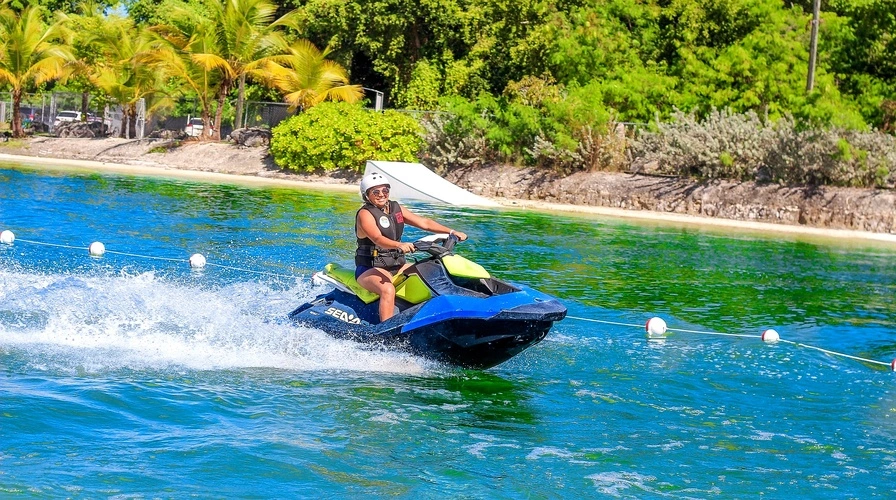
If you want to spend a half-day out on the deeper water away from any potential shoreline seaweed, boat tours are the answer. Securing a spot on a catamaran Punta Cana Bavaro allows you to enjoy the coastal views while shaded by the massive sail. The sea breeze on the top deck is phenomenal. Alternatively, take an Isla Catalina snorkeling tour to explore world-class reef drop-offs where the July water clarity often exceeds 80 feet.
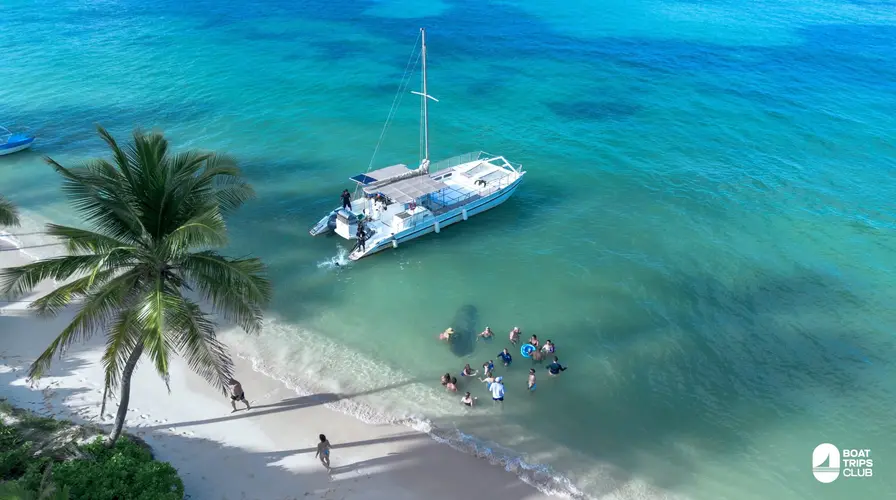
Even in the peak of summer, you should explore the rugged interior. Yes, riding through the jungle trails gets hot and muddy. That is the point. The ultimate payoff comes at the end of the trail when you reach a hidden, underground natural spring. Jumping into a cool cenote feels absolutely incredible in July. You can easily pair the dirt trails with ocean time by booking a combo Buggy and jet ski package. If you want a more relaxed freshwater experience, swimming in the electric blue waters of hoyo azul Punta Cana offers a brilliant escape from the heat.
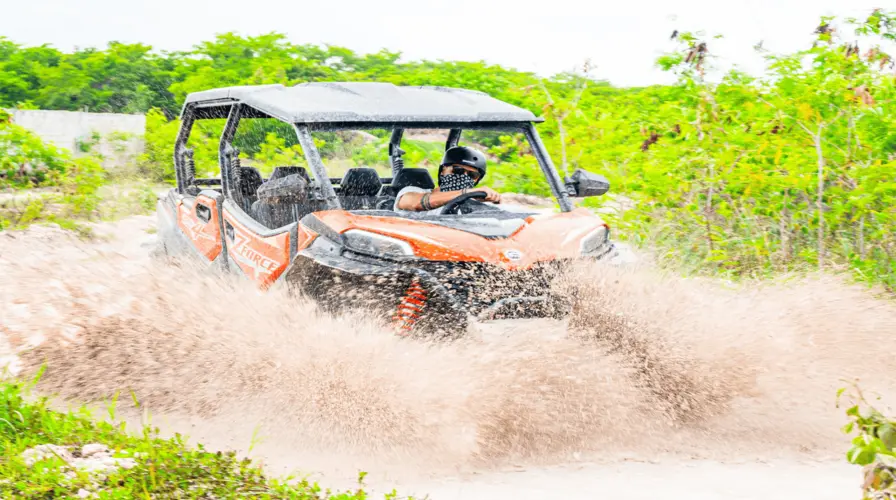
July is a fantastic, warm month to visit the Dominican Republic. The heat is intense, the ocean is incredibly inviting, and the energy around the island is pure summer. Ignore the generic weather apps showing lightning bolts every afternoon. Understand that the brief 20-minute tropical showers only serve to cool the island down for a perfect evening. To maximize your trip, you must embrace the morning conditions. The ocean is at its absolute best before lunch. Secure your prime sunny morning slots right now. Check availability and book your ultimate water adventure directly through our reservation page.
Yes, light rain is fine and actually quite refreshing while you are already wet. Reputable operators only pause tours for nearby lightning strikes or severe, heavy storm fronts with high winds. Once the brief storm passes, operations resume immediately in calm waters.
Top-tier operators understand tropical weather dynamics. We feature a highly flexible rescheduling and cancellation policy specifically designed for bad weather. If conditions become genuinely unsafe, your excursion will be moved to the next sunny morning or fully refunded.
Yes, the Atlantic hurricane season officially begins in June and runs through November. However, according to historical tracking data from the National Hurricane Center, direct hits to Punta Cana are statistically very rare. If you are concerned about trip interruptions, read our expert guide on managing a Punta Cana hurricane scenario.
The brief afternoon rains combined with high heat create prime breeding conditions for mosquitoes. They are heavily active during the dawn and dusk hours, so packing a high-quality DEET bug spray is highly recommended to protect your ankles during evening dinners.
Quick Overview: June in Punta Cana brings average daytime temperatures of 85°F (30°C) and warm ocean waters sitting perfectly at 82°F (28°C). While it is technically the start of the wet season, the brief afternoon showers rarely interrupt morning water sports, making it an excellent time for jet skiing and beach activities without the winter crowds.
Understanding the specific mechanics of the Punta Cana weather in June is critical for planning a flawless vacation. If you look at historic weather patterns and operational marina data, this transitional summer month offers some of the most favorable marine environments of the entire year. Deciding the best time to visit Punta Cana often comes down to balancing crowd sizes with ambient temperatures. In June, you get the distinct advantage of high summer heat tempered by consistent oceanic trade winds, coupled with marine conditions that heavily favor early-risers and thrill-seekers.
Before booking flights, you need hard data. Our operational teams track weather patterns daily to ensure maximum safety and performance out on the water. The consensus? June is a summer paradise, not a washout.
| Weather Metric | June 2027 Average Expectation | Impact on Vacation Plans |
| Air Temperature | 85°F High / 78°F Low | Intense midday heat. Morning activities are highly recommended. |
| Water Temperature | 82°F (28°C) | Wetsuits are completely unnecessary. Perfect for prolonged swimming. |
| Wind Speed | Average 10-15 mph | Provides necessary cooling on the beach. Creates afternoon surface chop. |
| Wave Conditions | Flat mornings (1-2 ft) | Ideal for high-speed watercraft riding before 11:30 AM. |
| Average Rainfall | 3.8 inches total | Heavy, isolated late-afternoon showers. Full-day washouts are exceptionally rare. |
The numbers completely dispel the myth that early summer travel means ruined beach days. A monthly average of 3.8 inches of rain spread out across thirty days equates to highly localized, short-lived tropical bursts. You get bright, dominant sunshine for the vast majority of your daylight hours, paired with a marine environment that practically begs you to hit the throttle.
The quick answer is no, but you must respect the heat. With daytime highs reliably hitting 85°F, the ambient heat is intense, driven heavily by humidity levels that hover around 80%. When assessing the Punta Cana June temperature, the physical sensation often feels closer to 92°F due to the tropical moisture in the air.
More importantly, the sun's angle during this time of year generates severe UV index levels that can easily reach 10 or 11 by midday. Unprepared travelers routinely underestimate this intensity. Sun protection is non-negotiable. If you are building out your checklist using a comprehensive Punta Cana travel guide, heavy-duty reef-safe SPF 50+ must be at the absolute top of the page. Reapply every hour if you are in and out of the salt water.
If 85°F with high humidity sounds oppressive, you are forgetting the geographical secret weapon of the eastern Dominican coast. The constant Atlantic trade winds act as a massive, natural air conditioning system. Because the coastline faces eastward, these prevailing breezes strike the shore directly.
This specific wind pattern is exactly what makes planning things to do in Bavaro so enjoyable in the summer. If you step a half-mile inland away from the coastline, the heat instantly becomes stifling. But right on the sand at Bavaro Beach or Macao Beach, the continuous 10 to 15 mph breeze keeps the perceived temperature incredibly comfortable. You can sit under a palm tree at 1:00 PM and feel entirely relaxed, so long as that trade wind is blowing.
There is a massive difference between a persistent, dreary coastal drizzle and a Caribbean tropical rainstorm. As the region shifts out of the drier Punta Cana weather in May, the humidity begins to fuel localized storm cells.
Here is exactly how the Punta Cana June rainfall typically behaves: You wake up at 7:00 AM to cloudless, brilliant blue skies. The sun beats down intensely throughout the morning, heating the landmass. By 3:00 PM, that rising hot air forms dense, dark cumulus clouds slightly inland. By 4:00 PM, the sky opens up, dropping heavy, dramatic rain for roughly twenty to thirty minutes. By 4:45 PM, the storm breaks, the clouds evaporate, and you are left with a spectacularly clear, humid evening.
The mornings are almost always bright and sunny. Our operational data explicitly shows that over 85% of early morning excursion slots run under completely clear skies. We strongly recommend booking all outdoor activities, especially any jet ski Punta Cana rentals, for the 8:00 AM or 9:30 AM slots to guarantee maximum sunshine.
A brief 20-minute shower does not stop the action. Getting splashed is the entire point of riding a personal watercraft. We do not ground the fleet for a standard afternoon rainstorm.
What actually pauses operations are high sustained winds or the presence of cloud-to-ground lightning. Safety dictates that if lightning is tracked within the immediate bay area, the water must be cleared. However, because we understand exactly how rapid these storm cycles are, flexible booking policies are standard. If an unexpected squall rolls through during your designated riding time, operations simply pause. You grab a drink under a palapa, wait thirty minutes for the cell to blow offshore, and get right back out on the throttle.
Punta Cana ocean temperature June data reveals one undeniable fact: the water feels exactly like bathwater. At a sustained 82°F (28°C), the thermal shock of jumping into the ocean is entirely eliminated.
You do not need a wetsuit in June. Period. This warm environment fundamentally changes how you experience high-speed riding. When you are blasting across the swell at 45 mph, getting sprayed with warm salt water is refreshing rather than freezing. You can stay out on the water for hours without your core temperature dropping, making extended rentals significantly more enjoyable than in the deeper winter months.
Water texture dictates ride quality. If you want the ultimate experience, you must understand the daily marine cycle. Early mornings between 7:30 AM and 10:30 AM offer "glassy" marine conditions. The wind has not yet picked up, and the surface tension of the ocean is completely smooth. This flat water is highly coveted. It allows you to push watercraft to their absolute top speeds without taking a brutal physical beating from choppy waves.
By 1:00 PM, the daily trade winds intensify, and the tidal shifts alter the Bavaro beach water conditions. The surface transforms from flat glass into aggressive "chop" with unpredictable, steep two-foot variations. While hitting waves is incredibly fun for experienced riders looking to catch air, it demands significantly more physical stamina. If you are planning water sports in Punta Cana, secure the early shift for the smoothest, fastest ride possible.
The coastline is shielded by an extensive natural barrier reef system. This geographical feature absorbs the heavy, deep-ocean kinetic energy rolling in from the Atlantic, creating massive, protected shallow-water zones directly off the main resort beaches.
During June, the warm water brings immense clarity to these protected zones, provided a rainstorm hasn't just stirred up the sandy bottom. Riding within the designated safe zones behind the reef line means you avoid dangerous offshore undertows. The barrier acts as a giant structural breakwater, keeping the riding arena safe, controlled, and visually stunning.
Throw out the heavy denim and thick cotton. You need lightweight, highly breathable fabrics that dry rapidly. Linen shirts, moisture-wicking athletic wear, and ventilated hats are mandatory. Because you will likely be planning things to do in Punta Cana with kids and dragging gear down to the sand, pack a durable, sand-resistant dry bag.
Include two pairs of polarized sunglasses. The glare coming off the white sand and the bright blue water in June is blinding. Also, ensure your SPF is strictly reef-safe to protect the fragile marine ecosystems you will be exploring.
Generic beachwear will leave you exposed on a watercraft. The combination of an 85°F sun, reflective water, and 45 mph winds creates a perfect storm for severe windburn and sunburn.
The absolute pinnacle of the June weather window is harnessing the morning calm for maximum adrenaline. Booking an Aqua Splash Trio Pack guarantees you hit the ocean right as the sun hits its optimal angle, combining jet skis with other high-speed marine tech. The flat morning water also makes parasailing exceptionally smooth, offering completely clear, unobstructed views of the entire eastern coastline before the afternoon clouds build.
For groups focused purely on maximizing throttle time, an aqua splash Punta Cana booking ensures you dominate the pristine early-hour conditions.
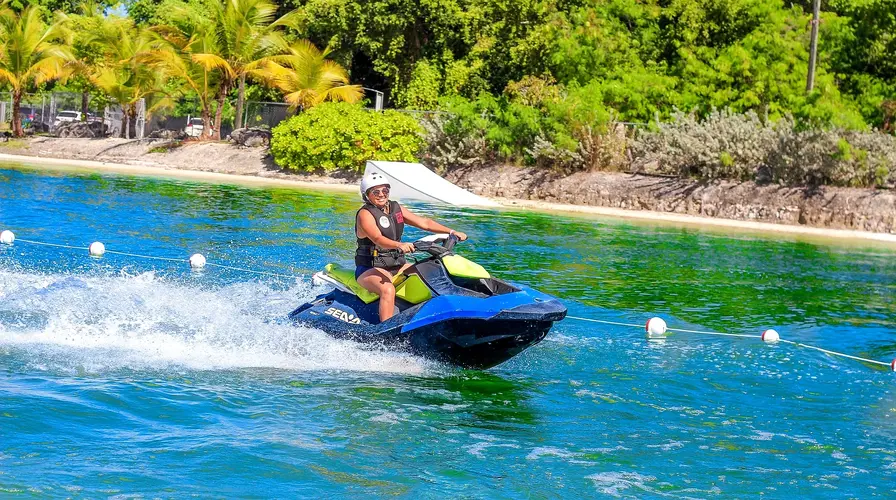
With ocean temperatures sitting comfortably at 82°F, snorkeling transitions from a quick dip into a prolonged, immersive exploration. The tropical fish populations are incredibly active in these warm currents. Getting off the main beach to explore secondary reef structures is a brilliant way to spend the midday hours. Booking a dedicated Isla Catalina tour provides access to some of the clearest, most vibrant underwater drop-offs in the entire country.
If you have a free day, leaving the mainland is practically mandatory. Evaluating the Saona Island guide reveals that June offers incredibly vivid water colors out in the Caribbean Sea. To avoid the massive party boats and experience the natural pools with genuine luxury, chartering a catamaran Isla Saona ensures a premium, highly tailored experience. It is easily one of the most requested things to do in Punta Cana for couples looking to escape the resort crowds.
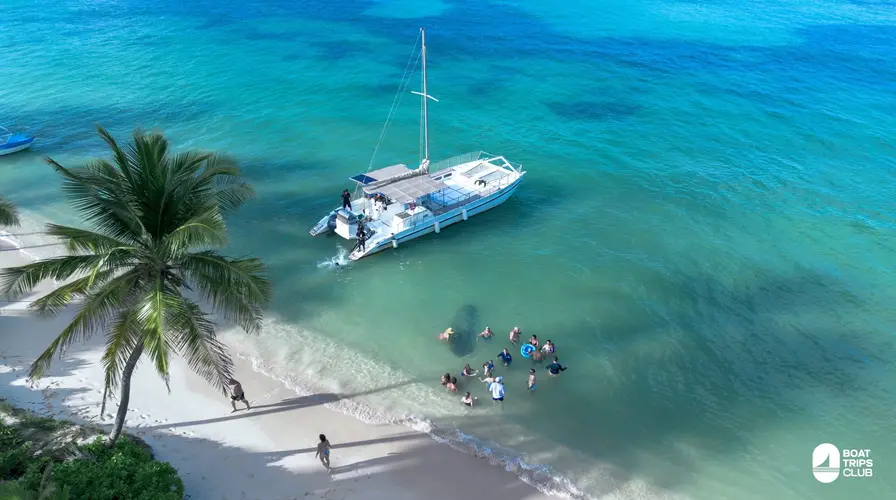
When the late afternoon showers inevitably roll in, the jungle trails transform. This is the exact moment to head inland. Booking a buggy and jet ski package Punta Cana allows you to split the day logically: ride the clear ocean in the morning, and tear through the muddy, rugged backroads of the Dominican countryside in the afternoon. The brief rain actually improves buggy riding by knocking down the heavy dust and creating massive mud puddles to drift through.
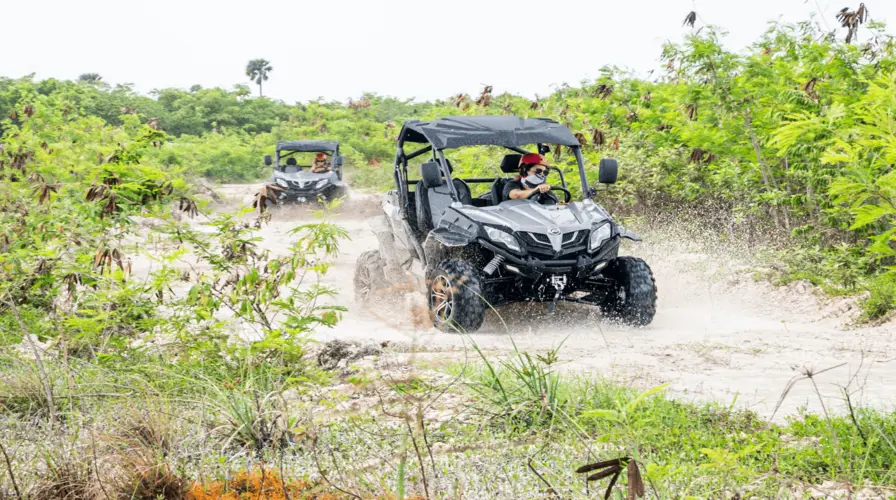
Comparing June directly to the deep winter months exposes a major tactical advantage for smart travelers. If you look at Punta Cana weather in January, you find the absolute peak of tourist season. Yes, the air temperature is slightly cooler and the humidity drops, but the beaches are shoulder-to-shoulder, the resort prices are exorbitant, and you will wait in long lines for watercraft rentals.
June strips away the overwhelming crowds. It offers a much more relaxed, authentic island pacing. The ocean water in June is significantly warmer than in January, making prolonged swimming infinitely more comfortable. If you cross-reference against late summer and look at Punta Cana weather in July, June generally edges it out with slightly lower historical hurricane risk and slightly less oppressive baseline humidity before the true dead-heat of August sets in.
Yes, June provides exceptional conditions for water sports. The warm 82°F ocean water combined with flat, glassy morning wave patterns creates an ideal environment for high-speed riding. The brief afternoon rain showers rarely impact early scheduled excursions.
The ocean temperature in Punta Cana during June averages a remarkably warm 82°F (28°C). The water feels incredibly comfortable, removing the shock of jumping in and allowing for hours of swimming or snorkeling without feeling chilled.
Absolutely not. The combination of an 85°F air temperature and 82°F water temperature means a wetsuit will cause you to overheat instantly. A high-quality UV rash guard is the only gear you need to protect your skin from the intense sun.
Before 11:00 AM is the undisputed best time to jet ski. You get the flat water before the afternoon trade winds arrive to chop up the surface, and you secure the clearest, sunniest skies before the daily localized rain clouds begin forming inland.
Yes, June 1st marks the official start of the Atlantic hurricane season. However, direct hits in June are extremely rare historically. To ensure your trip remains completely uninterrupted, frequently monitor the National Hurricane Center and read up on whether is Punta Cana safe to visit during early summer weather shifts.
Quick Overview: Punta Cana weather in May features high temperatures averaging 86°F (30°C), warm ocean conditions at 81°F (27°C), and 10 to 11 hours of daily sunshine. While May marks the beginning of the tropical wet season, rain typically arrives in short, localized late-afternoon showers. This weather pattern makes early morning hours the absolute best time for travelers to book high-speed water sports, boat tours, and coastal excursions before the trade winds pick up.
May stands as the ultimate transition month in the Dominican Republic. It bridges the gap between the heavily crowded, dry spring and the hotter, more humid summer. For smart travelers, it represents incredible value. Flight prices drop. Resort availability opens up. Most importantly, the ocean conditions remain spectacular for off-shore adventures. Our on-the-ground operational data proves that if you structure your day correctly, you can entirely bypass the seasonal weather shifts.
Determining the best time to visit Punta Cana often depends on what you want to do on the water. If you want glassy ocean surfaces, lower tourist density, and high-adrenaline riding, May delivers perfectly.
Historical and local forecast data indicate that May in Punta Cana brings a noticeable increase in both humidity and daytime heat compared to the early spring months. However, the Caribbean Sea remains extremely warm, and wave heights stay remarkably low during the early daylight hours, allowing for safe and thrilling high-speed coastal adventures.
To give you an accurate picture of what to expect on the shoreline, we pulled the exact meteorological metrics you need before stepping onto the sand.
| Weather Metric | May 2027 Average Expectation |
| Average High Temperature | 86°F (30°C) |
| Average Low Temperature | 75°F (24°C) |
| Average Rainfall | 4.5 inches (spread across 10-11 days) |
| Average Ocean Temperature | 81°F (27°C) |
| Average Wind Speed | 10 to 13 mph (16-20 km/h) |
| Average Wave Height | 2 to 4 feet (Morning conditions are lowest) |
May in Punta Cana is undeniably warm, with daytime highs consistently hitting the mid-80s Fahrenheit (around 30°C). The nights remain beautifully balmy at around 75°F (24°C), meaning you can leave the heavy jackets at home and comfortably walk the beaches in light evening wear.
When you step off the plane at PUJ airport in May, the humidity hits you immediately. It feels different from the crisp air of February. The tropical moisture thickens the air, making the midday heat feel slightly warmer than the thermometer suggests. This is why midday resort pool sessions become a daily necessity.
By the time the sun sets, the heat drops off significantly. The coastal breeze acts as a natural air conditioner sweeping across the resorts. You never have to worry about shivering during dinner or needing thick layers for late-night beach walks. The warmth is constant, predictable, and deeply relaxing.
No, rain will not ruin your trip to Punta Cana in May. The Caribbean wet season is characterized by brief, highly localized afternoon downpours rather than massive, all-day continuous rain fronts. Mornings remain exceptionally bright, clear, and perfectly suited for outdoor itineraries.
Many travelers panic when they hear the phrase "wet season." We see it constantly. They imagine gray skies locking out the sun for an entire week. The reality of island meteorology looks completely different. When the humidity builds up over the island interior throughout the morning, it eventually reaches a tipping point. Around 3:00 PM or 4:00 PM, the sky might darken, dropping a sudden, intense burst of rain that lasts twenty minutes.
Once that quick shower passes, the sky clears right back up. The evaporation creates a stunning golden hour for photography. If you look at the historical data for Punta Cana weather in July, you see heavier, longer bands of rain. May simply gives you a gentle introduction to the tropical summer.
Standard weather apps predict rain based on atmospheric moisture percentages over a 24-hour period, meaning they will almost certainly display a rain cloud icon for Punta Cana every single day in May. In reality, that moisture condenses into a brief, isolated afternoon shower, leaving the other 23 hours completely clear.
This is the biggest source of anxiety for incoming tourists. You check your phone a week before departure, and the screen shows seven straight days of thunderstorms. Do not cancel your plans. Atmospheric algorithms struggle to calculate hyper-local Caribbean weather patterns. A 60% chance of rain does not mean it will rain 60% of the day. It simply means there is a 60% chance that it will rain for ten minutes somewhere in the province. Ignore the app; trust the local horizon.
The ocean temperature in Punta Cana during May averages 81°F (27°C), which feels remarkably similar to warm bathwater. These temperatures, combined with the incredibly glassy and calm morning surface conditions, create the perfect environment for high-speed water sports.
Hitting the throttle on a wave runner is entirely different when the water is this warm. You do not need a wetsuit. You do not dread the ocean spray hitting your skin. When you book a jet ski and aqua kart package Punta Cana, the warmth of the Caribbean Sea actually enhances the adrenaline.
Our local captains always stress the importance of timing. The ocean surface between 8:30 AM and 11:00 AM acts like a mirror. The chop is virtually nonexistent. For those wanting to max out their speed and cut sharp corners on the water, you must claim these morning slots. Once the afternoon thermal shifts occur, the water gets a bit rougher.
Morning wind speeds in Punta Cana during May stay between a mild 10 and 13 mph, keeping wave heights at a very manageable 2 to 4 feet. These calm, stable conditions make it completely safe and highly thrilling for off-shore riding, parasailing, and private boat charters.
The trade winds are a permanent fixture of the Dominican coastline. They dictate everything we do on the water. During May, the winds behave predictably. They start as a gentle breeze at dawn and slowly pick up velocity as the land heats up.
By prioritizing your water sports Punta Cana bookings before noon, you guarantee yourself the safest, smoothest ride possible. Safety is non-negotiable for off-shore operations. The morning window provides the exact structural stability needed to ride fast without fighting severe ocean pushback.
May officially marks the beginning of the Sargassum seaweed season in the Caribbean, where shifting oceanic currents push organic algae onto eastern-facing beaches. However, this seaweed only affects the immediate shoreline; once you travel just 50 yards off the coast, the water remains crystal clear and entirely free of debris.
We believe in radical transparency regarding the coastal conditions. Sargassum is a natural, unavoidable reality. Depending on the exact tides, some resort beaches will wake up to piles of brown algae on the sand. Resort staff work tirelessly with tractors every morning to clear it away.
If you are worried about seaweed in Punta Cana, you need to understand that it has zero impact on off-shore excursions. You are not riding a jet ski through dense vegetation. We operate in the pristine, deep-blue zones. Furthermore, the geographic curve of the coastline means different beaches get hit differently. Understanding where is Bavaro Beach located helps explain why certain coves stay protected while others take the brunt of the incoming currents.
Travelers can expect 10 to 11 hours of intense, direct sunshine per day in Punta Cana during May. Because the Dominican Republic sits extremely close to the equator, the UV index remains exceptionally high, making aggressive sun protection an absolute necessity for anyone spending time on the water.
You will burn faster here than you do back home. The tropical sun reflects violently off the white sand and the ocean surface, doubling your UV exposure. Do not rely on a single morning application of lotion. You need physical barriers.
We highly recommend purchasing reef-safe sunscreen before you arrive. Traditional chemical sunscreens damage the fragile coral ecosystems that sit just beneath the surface of our tour routes. Protect your skin, but protect the Caribbean marine life at the same time.
Packing for Punta Cana in May requires lightweight, highly breathable clothing to handle the escalating humidity, alongside specific technical gear for water activities. Leave the heavy denim, thick cotton shirts, and cold-weather layers at home, as the tropical climate renders them completely useless.
Your suitcase strategy should focus heavily on moisture-wicking fabrics and secure accessories.
If you forget anything, you can always hunt down local gear, but it helps to know exactly what to look for when shopping for Punta Cana souvenirs versus practical survival items.
The optimal strategy for Punta Cana in May is to schedule all high-stakes ocean activities during the calm morning hours and reserve the afternoons for inland adventures or resort relaxation. This specific scheduling hack avoids both the peak midday heat and the potential for a sudden afternoon rain shower.
If you want to experience the absolute best the coastline has to offer without fighting the weather, the aqua splash trio pack is designed entirely around these optimal morning windows.
As previously stated, mornings belong to the throttle. The ocean is flat, the winds are low, and the visibility stretches for miles. Booking a jet ski Punta Cana run at 9:00 AM guarantees you the most premium ocean conditions of the entire day. You skip the afternoon chop and beat the heavy sun.
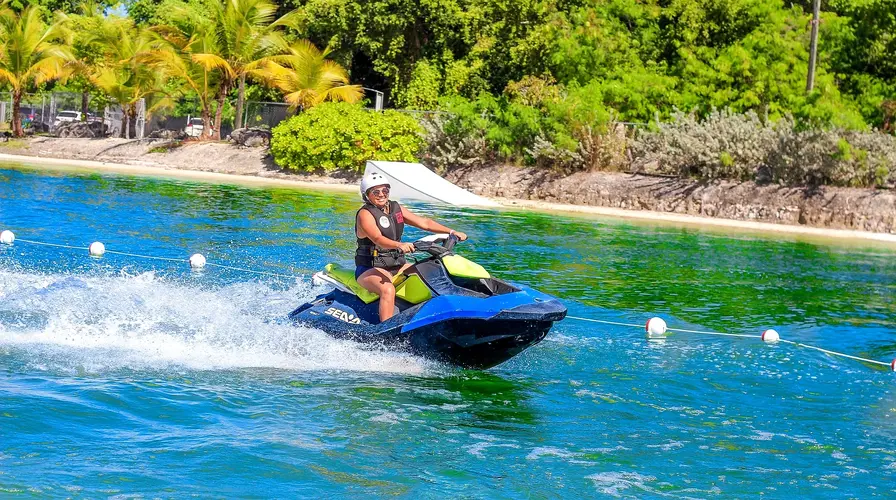
The 81°F water makes prolonged swimming incredibly comfortable. You do not have to ease yourself into the water; you can dive right in. If you are traveling with a group looking to celebrate, chartering a private catamaran Punta Cana offers the perfect mix of open-water sailing, reef snorkeling, and onboard entertainment.
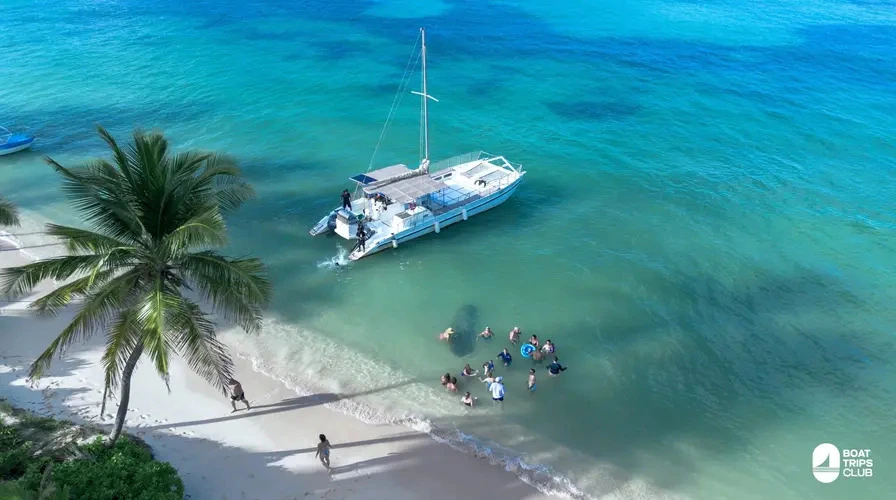
What happens if that 4:00 PM rain shower actually hits? You pivot to the mud. A little bit of rain instantly transforms the dusty inland trails into an epic, slippery playground. Booking a buggy and jet ski package Punta Cana allows you to dominate the clean ocean in the morning, and tear up the muddy jungle trails in the afternoon.
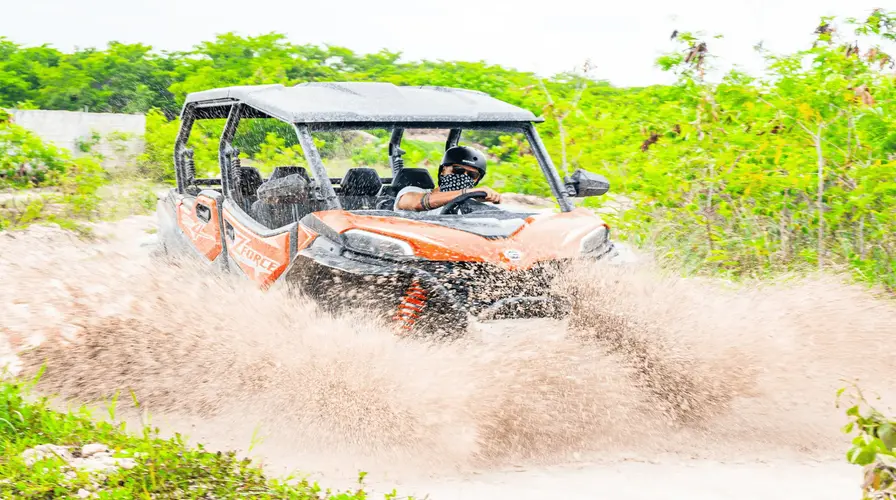
May serves as the crucial bridge between the dry spring and the hotter, wetter summer months in the Dominican Republic. It offers significantly warmer water temperatures than April, but features far less rainfall and oppressive humidity than June.
If you are currently debating your exact travel dates, looking at the immediate shoulder months provides the clearest perspective on what you are signing up for.
| Travel Month | Average High Temp | Rainfall Profile | Tourist Crowd Levels |
| April | 85°F (29°C) | Very Low (Dry Season) | Very High (Peak Season) |
| May | 86°F (30°C) | Moderate (Short PM Showers) | Medium (Value Season) |
| June | 88°F (31°C) | High (Start of Summer Wet) | Low to Medium |
If you demand zero rain and don't mind paying peak resort prices, Punta Cana weather in April is your target. If you are chasing deals and don't mind the heat, Punta Cana weather in June works. May is the perfect middle ground.
Yes, May is an excellent time to visit Punta Cana for travelers seeking lower resort rates, smaller crowds, and fantastic morning ocean conditions. While the humidity rises, the ocean remains pristine for activities before the later summer months, like Punta Cana weather in August, bring much heavier heat.
May averages about 4.5 inches of rain spread across roughly 11 days of the month. However, this rain almost exclusively falls in short, 20-minute bursts in the late afternoon, meaning it rarely impacts full-day itineraries like the sustained fronts detailed in our Punta Cana weather in September guide.
Absolutely. The Caribbean Sea averages a stunning 81°F (27°C) throughout May. It feels like slipping into a heated pool, making it incredibly comfortable for extended snorkeling, swimming, and water sports without any need for wetsuits.
No, May is not officially part of the hurricane season. According to official hurricane season data, the Atlantic hurricane season formally begins on June 1st, meaning May travelers bypass the traditional storm risks entirely.
Quick Overview: April serves as the ultimate "sweet spot" for visiting the Dominican Republic. You get calm, predictable ocean conditions ideal for high-speed jet skiing, average highs of 82°F (28°C), and water temperatures hovering near 81°F (27°C). While quick afternoon tropical showers happen, they rarely ruin a day on the water.
If you are hunting for the perfect Caribbean escape, you probably already know that spring weather can be wildly unpredictable. Our on-the-water operations show that April represents a massive transition period for the local climate. The heavy winter ocean swells flatline. The intense mid-summer heat hasn't yet arrived. What remains is a perfectly balanced micro-climate that turns the coastline into a flawless playground for water sports Punta Cana.
As local aquatic experts running daily coastal excursions, we track sea states, wind knots, and incoming fronts with exact precision. We see travelers panic over standard weather forecasts that display storm clouds every single day of their upcoming trip. Do not let your smartphone application fool you. The reality of coastal Dominican weather operates entirely differently than standard radar models suggest.
Understanding the exact atmospheric conditions requires separating satellite data from daily reality. Standard forecasting tools aggregate regional data, meaning they often pull moisture readings from the high-altitude central mountains rather than our specific eastern shoreline.
| Climate Metric | Average April Data | What It Actually Means For You |
| Average High Temperature | 82°F (28°C) | Warm enough for swimwear all day without suffocating mid-summer heat. |
| Average Low Temperature | 74°F (24°C) | Perfect evening weather; you rarely need a jacket, even after the sun sets. |
| Ocean Surface Temperature | 81°F (27°C) | Feels like stepping into a heated pool; no wetsuits required for snorkeling. |
| Average Monthly Rainfall | ~3 to 5 inches | Highly concentrated into aggressive, 15-minute afternoon downpours. |
The Weather App Effect: You will almost certainly open your iPhone before your flight and see a rain icon plastered across your entire 7-day forecast. This causes immense, unnecessary panic. In our localized coastal zone, a 60% chance of rain simply means there is a high likelihood of a rapid, 15-minute passing shower occurring somewhere in the region. It does not mean the sky will be gray from sunrise to sunset. If you want the absolute best time to visit Punta Cana, relying on local behavioral patterns rather than global digital models is essential.
Air temperature readings only tell half the story when you evaluate tropical climates. When the mercury hits 82°F (28°C) on the eastern coastline of the Dominican Republic, it does not carry the stagnant, heavy oppression of an August afternoon.
The secret lies in the coastal trade winds. These steady breezes blow off the Atlantic Ocean directly onto the Bavaro and Uvero Alto shorelines, acting as a massive, natural air conditioning system. During peak daylight hours, the direct solar radiation is undeniably intense. You will feel the heat baking the white sand. However, the moment you step onto a boat or accelerate away from the beach, the ambient temperature drops significantly.
Nighttime conditions shift the dynamic slightly. Once the sun drops below the horizon, the air cools to a very comfortable 74°F (24°C). The humidity levels stabilize, making outdoor dinners and evening beach walks incredibly pleasant. You do not need to pack heavy sweaters or thick layers.
Many travel forums mistakenly lump April into the beginning of the Caribbean rainy season. This generalized statement completely ignores the localized "Tropical Shower Pattern" that defines our eastern coastline.
While it is true that April technically sees roughly 5 inches of precipitation, the delivery mechanism of that rain matters most. The moisture does not arrive in slow, drizzling, all-day frontal systems. Instead, the intense morning sun heats the shallow coastal waters, generating localized condensation clouds by mid-afternoon. Around 3:00 PM, the sky might suddenly darken. The wind picks up. For about 10 to 15 minutes, a heavy, torrential downpour washes over the beaches.
Almost as quickly as it started, the shower pushes inland. The clouds break apart, and the late afternoon sun returns, reflecting off the freshly washed palm trees. These rapid showers actually drop the humidity and cool the late afternoon air. Your entire day is never washed out, and most tours continue operating right through these brief tropical resets.
For anyone looking to book aquatic adventures, this is the most critical metric. The condition of the ocean dictates exactly how much fun you will have.
By the time April rolls around, the heavy, aggressive winter swells rolling down from the North Atlantic have completely died off. Unlike the choppy, surging waters you might experience earlier in the year—as detailed in our Punta Cana weather in February breakdown—springtime brings a localized calm. The ocean surface smooths out considerably.
Sea temperatures stabilize at a stunning 81°F (27°C). This temperature eliminates any initial shock when jumping off a boat. It literally feels like bathwater. Furthermore, the lack of massive winter wave action means the sand sediment settles to the ocean floor. Underwater visibility skyrockets during this month, creating pristine, crystalline conditions for observing coral reefs and marine life. Whether you are throttling a personal watercraft or floating with a snorkel mask, the Caribbean Sea is highly cooperative.
Timing your excursions correctly can drastically improve your vacation experience. Based on years of launching tours, here is the exact operational breakdown of a typical April day.
Morning is undeniably the crown jewel of the Caribbean day. The offshore winds have not yet energized, leaving the ocean surface entirely flat and glass-like. For pure performance and speed, this is the ultimate window. You will glide over the water rather than slamming into choppy waves. If you plan on booking a high-adrenaline jet ski and aqua kart package Punta Cana, reserve the earliest time slot available. Beginners will find the lack of wave resistance incredibly reassuring, allowing them to build confidence quickly.
As the sun reaches its zenith, the UV index spikes dramatically. This direct overhead lighting illuminates the shallow sandbars, transforming the water into that iconic, blindingly bright turquoise color you see on postcards. It is the absolute best time for photography and high-visibility swimming. Because the heat is at its peak, getting soaked during an aqua splash Punta Cana excursion provides the perfect thermal relief. Just remember to aggressively reapply your sunblock.
By mid-afternoon, the trade winds fully activate. The flat morning water shifts into a slightly choppier, textured surface. While it requires a bit more physical effort to navigate, this texture provides excellent launch ramps for wave jumping. Riders looking for a more aggressive, bouncy ride often prefer the late afternoon conditions. This is also the exact window when the brief tropical showers are most likely to pass through, cooling everything down before sunset.
Here is a massive insider secret that directly impacts your travel logistics. Semana Santa (Holy Week) is the largest domestic holiday in the Dominican Republic. During this week, massive crowds flood the coastal resorts, and the government strictly prohibits motorized water sports to protect beachgoers.
In many years, this restrictive week lands squarely in the middle of April. However, Easter Sunday 2027 falls on March 28. This calendar shift means the intense holiday rush—and all associated boating bans—will be entirely contained within the previous month. If you are comparing travel windows, reading about the crowds during Punta Cana weather in March will show you exactly what you are avoiding. Visiting in April 2027 guarantees you get the beautiful spring weather without navigating the suffocating holiday traffic. You will have wide-open access to the reefs and untouched rental availability.
Forget packing heavy denim or thick jackets. Your suitcase needs to focus entirely on solar defense and aquatic utility. The sun acts as a physical force here.
With the ocean swells minimized and the heat manageable, certain activities yield significantly higher satisfaction rates during this specific month.
The calm morning sea states we discussed earlier create a drag-racing strip just off the Bavaro coastline. Without heavy winter chop pushing against the hull, you can maximize your top speed safely. Booking a dedicated jet ski Punta Cana rental allows you to explore miles of shoreline in a fraction of the time it takes a standard boat, capitalizing entirely on the flat water conditions.
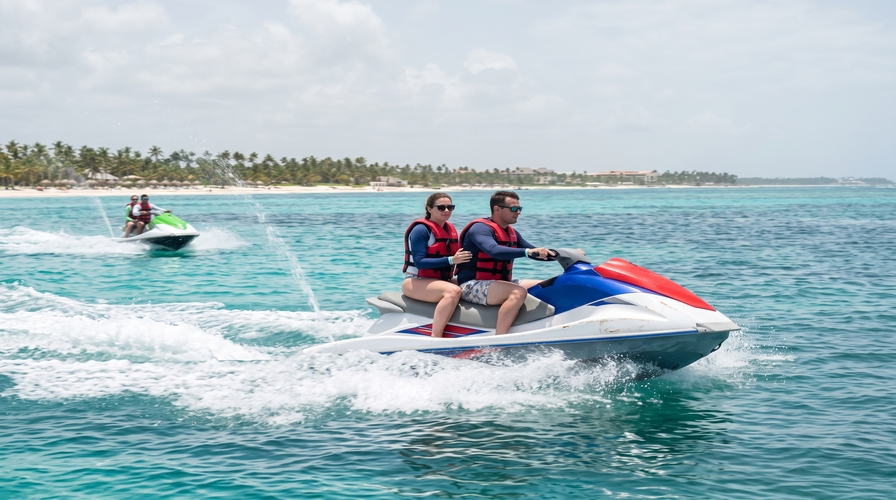
Remember those brief, 15-minute afternoon showers? They serve a brilliant purpose. The sudden influx of rainwater saturates the inland dirt trails, turning dusty jungle paths into spectacular mud tracks. Tearing through these coastal farmlands on an off-road buggy is infinitely more enjoyable when the trails are slick. Combining this with a coastal run through a buggy and jet ski package gives you the ultimate dual-terrain experience.

Because the winter waves are gone, the ocean floor sediment settles perfectly. April offers some of the highest underwater visibility rates of the entire year. Chartering a private catamaran Punta Cana allows your group to anchor at the protected reefs and natural pools without bouncing violently in the swells. You get crystal-clear views of the tropical fish below.
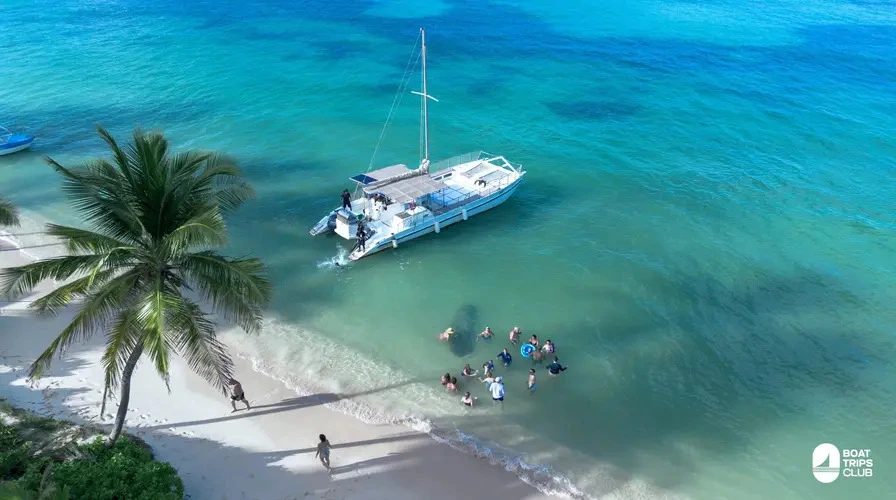
Choosing exactly when to fly down requires balancing crowds, heat, and storm risks. April sits in the perfect transitional middle ground.
If you travel during the peak winter rush—outlined in our Punta Cana weather in January guide—you face massive tourist crowds, significantly higher hotel rates, and ocean waters that can feel surprisingly brisk (dropping down to 77°F). You also deal with rougher sea states driven by northern weather fronts.
Push your trip into the late summer, as seen in our Punta Cana weather in September data, and you run directly into the heart of the Atlantic hurricane season. The humidity becomes suffocating, and the risk of multi-day washouts increases dramatically.
Even when comparing it to the immediate following month—see Punta Cana weather in May—April holds a distinct advantage. May historically triggers the start of the heavier spring rains. By targeting April, you secure the winter-level sunshine while avoiding the winter-level crowds, all while enjoying bathwater-warm oceans.
Yes, April is arguably the best month for high-speed water sports. The heavy winter swells have completely died down, leaving the morning ocean surface flat and glass-like, while the water temperature sits at a perfect 81°F (27°C).
No, all-day washouts are incredibly rare. You should expect the "Tropical Shower Pattern," which consists of brief, heavy 15-minute downpours in the mid-afternoon, followed immediately by clearing skies and bright sunshine.
Yes, absolutely. The ocean surface temperature averages 81°F (27°C), which feels incredibly warm. You will not need a wetsuit, and the calm spring conditions provide excellent underwater visibility.
The UV index is extremely high, frequently hitting levels between 7 and 10. The tropical sun is intense, making UPF-rated clothing, hats, and mandatory reef-safe sunblock non-negotiable if you plan on being out on the water.
No, April is completely outside the Atlantic hurricane risk window. According to the National Hurricane Center, the official storm season does not begin until June 1st. If you want to understand the exact climate shift that happens later in the year, review our Punta Cana weather in June guide.
Quick Overview: Planning a trip to the Dominican Republic early in the year? February is the undisputed peak of the dry season. Expect daytime highs around 81°F (27°C), evening lows near 74°F (23°C), and water temperatures sitting comfortably at 79°F (26°C). You will see over 10 hours of daily sunshine and barely 3 inches of rain all month. Whether you want to lounge on the sand, book an offshore charter, or throttle up a watercraft, the conditions simply do not get better than this.
Ask any local boat captain or tour operator when they actually prefer to hit the water, and they will almost always give you the exact same answer: February.
It sits perfectly in the sweet spot of the Caribbean calendar. The suffocating summer humidity is entirely gone. The ocean breezes are crisp. The water is clear, flat, and inviting.
Yet, every single winter, we see incoming travelers completely panic just days before their flights. Why? Because they checked their phone’s default weather widget, saw seven consecutive days of lightning bolts and rain clouds, and assumed their expensive vacation was about to wash down the drain.
Take a deep breath. Your trip is going to be spectacular.
This guide strips away the algorithmic forecasting errors and gives you the actual, on-the-ground truth about what to expect. We are breaking down real temperature data, surf conditions, packing strategies, and the undeniable reality about why weather apps get the Dominican Republic so incredibly wrong. Let's dive in.
Forget the vague daily forecasts. If you want to plan your daily itineraries and excursions, you need to look at the historical and operational averages for La Altagracia province.
Here is exactly what the climate metrics look like for this specific month:
February delivers the most physically comfortable climate profile of the entire year. While folks up north are aggressively scraping ice off their windshields, eastern Hispaniola sits under a blanket of consistent, mild warmth.
During the core of the day—roughly 10:00 AM to 4:00 PM—the temperature typically caps out right around 81°F (27°C). The true magic here isn't just the number on the thermometer; it is the absolute lack of heavy humidity. The air actually feels breathable. You can comfortably hang out by the shore, explore local markets, or hike without feeling that sticky, draining tropical exhaustion that hits travelers in the late summer.
Once the sun dips below the horizon, things cool off nicely to about 74°F (23°C). With the offshore trade winds blowing in, the evenings feel refreshing. You can sit outside at a beachfront restaurant in total comfort. If you are trying to weigh your options across the entire winter quarter, our deep dive on the best time to visit Punta Cana breaks down exactly how February stacks up against the surrounding months.
This happens every week. A guest books a premium excursion, checks their iPhone five days before arrival, and frantically emails us asking to cancel because the app shows thunderstorms for a week straight.
Do not let bad software ruin your anticipation.
February represents the absolute peak of the dry season. The total rainfall for the entire month barely scratches 3.1 inches.
When it does rain, it almost never ruins a day. Roughly 80% of the precipitation we get in February falls between 2:00 AM and 6:00 AM. It is driven by the maritime air cooling rapidly overnight. You will likely sleep right through it. By the time you wake up and grab a coffee, the resort staff has already wiped down the lounge chairs, and the sky is brilliant blue. And this fantastic dry streak isn't just a fluke; it rolls right along into the Punta Cana weather in March.
So why does Apple or Google Weather insist a monsoon is coming?
Standard mobile apps use broad geographic forecasting models. These models scan massive grids of land and sea. When they detect high ambient humidity and warm ocean water—which the Caribbean always has—the algorithm calculates a 30% chance that a tiny, isolated rain cloud will form somewhere within a 50-mile radius.
Because the probability is above zero, the app slaps a rain icon on your entire day.
What it doesn't tell you is that a tiny cloud might drop rain on an empty sugarcane field three towns over for exactly ten minutes, while your specific resort sits under blinding sunshine all day long. Stop stressing over the app. Your vacation is safe.
We operate commercial vessels and watercraft off these beaches every single day. We know the water dynamics down to the hour. And from a purely operational standpoint, February is a dream.
Absolutely. The ocean holds incredibly steady at a welcoming 79°F (26°C).
You won't experience that awful, breath-stealing cold shock when you wade in. Based on official ocean surface temperature data tracked by satellite, the water here stays remarkably consistent. It feels genuinely refreshing. Kids, adults, and the elderly regularly spend hours swimming or floating without getting chilled to the bone.
The winter months bring steady Easterly Trade Winds. To an outsider, "wind" might sound like bad news for a beach trip, but it is actually the secret ingredient to perfect water conditions.
Bavaro Beach specifically is shielded by a massive natural offshore coral reef. This reef acts as a physical wall, absorbing the heavy, deep-ocean swells rolling in from the Atlantic. Inside that barrier, the water stays incredibly flat, clear, and glassy.
These flat-water lagoon conditions are absolutely flawless for parasailing and high-speed riding. It is exactly why renting personal watercraft here feels so dialed in—you get razor-sharp steering and smooth acceleration without bouncing violently over heavy chop.
Nobody wants to fly thousands of miles to look at a beach covered in brown algae.
Fortunately, February is historically a highly reliable, low-sargassum month. The massive seaweed blooms you read about in the news require intense heat to reproduce rapidly. Because the Atlantic surface waters are at their coolest point of the year, the algae simply doesn't grow fast enough to become a nuisance.
Verified historical sargassum tracking data consistently shows February marking the annual low point for biomass density in our region. You can expect clean sand and striking blue water. For a closer look at how this changes throughout the year, check out our dedicated report on seaweed in Punta Cana.
Prepare for massive amounts of daylight. You will get over 10 hours of bright sunshine daily, with sunrise kicking off just before 7:00 AM.
But there is a trap here that catches thousands of tourists off guard. Because the temperature is a mild 81°F and the ocean breeze feels so cooling, people forget they are sitting remarkably close to the equator.
The UV index here routinely hits 10 or 11. That is extreme territory. Unprotected skin will burn badly in under 20 minutes around midday.
Do not mess around with the Caribbean sun. Slather on a broad-spectrum SPF 50+ sunscreen every two hours. More importantly, make sure you buy a reef-safe formula (look for zinc oxide or titanium dioxide) to ensure we keep the local coral structures alive. Throw on a wide-brimmed hat, grab UV400 polarized sunglasses to kill the glare off the ocean, and keep a rash guard handy.
Packing for this specific window requires a bit of strategy. You need gear for the intense midday sun, but you also want to be comfortable when the wind picks up at night.
Keep your suitcase focused on this core list:
Leave a little extra space in your checked bag for the flight home. You will definitely want to bring back some local cigars, whole-bean Dominican coffee, or a traditional bottle of mamajuana to share with friends.
Dry skies, manageable heat, and calm seas open up the entire playbook. If you want to build an itinerary that actually maximizes these specific weather patterns, take a look at our full lineup of water sports Punta Cana to see what fits your style.
Sometimes the best activity is doing absolutely nothing. Post up at Bavaro Beach or Macao Beach. The white coral sand at Bavaro has a unique property—it actually stays cool to the touch even when the midday sun is blasting it. Grab a lounger, flag down a drink server, and just relax.
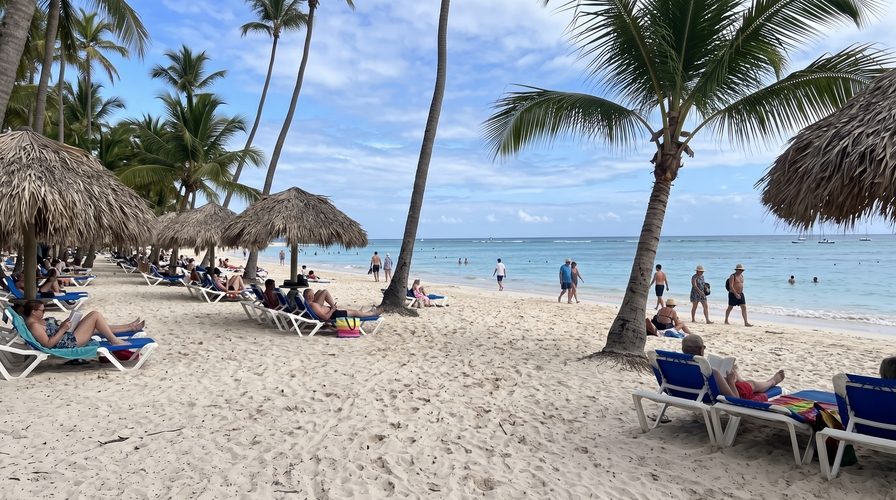
We cannot stress this enough: February's water conditions are the best you will get all year for personal watercraft. The barrier reef knocks out the heavy waves, leaving you with an aquatic playground.
At Jet Ski Punta Cana, we maintain a premium fleet of high-output machines designed to let you carve up the flat water with total confidence. If you want to push the adrenaline even higher, look into our jet ski and aqua kart package. It pairs traditional agile riding with the wildly unique experience of drifting a specialized go-kart directly across the ocean surface. Just a heads up—February is the absolute peak of the high season, so advance reservations are strictly mandatory.
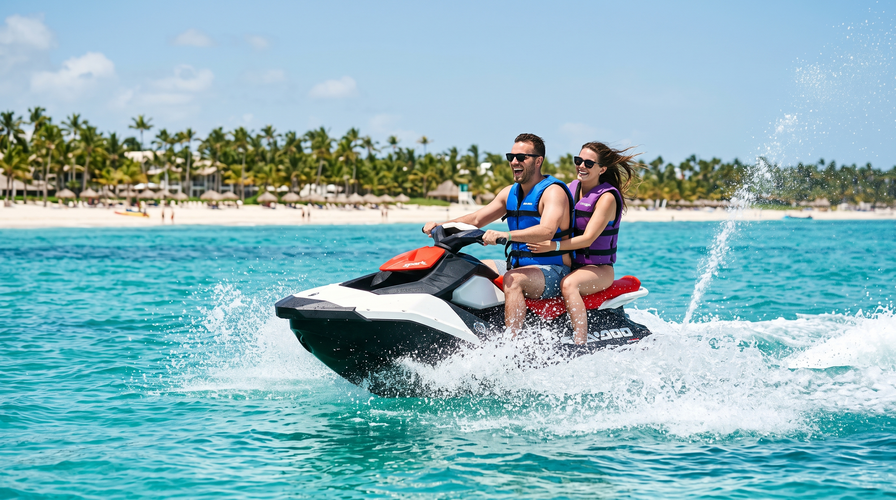
The calm winter sea state means offshore boat rides are smooth, stable, and highly enjoyable. Book a spot on a catamaran Isla Saona run to spend the afternoon standing waist-deep in a natural ocean sandbar surrounded by starfish. If you are more interested in marine life, an Isla Catalina tour offers access to incredible coral walls with underwater visibility easily pushing past 80 feet this time of year.
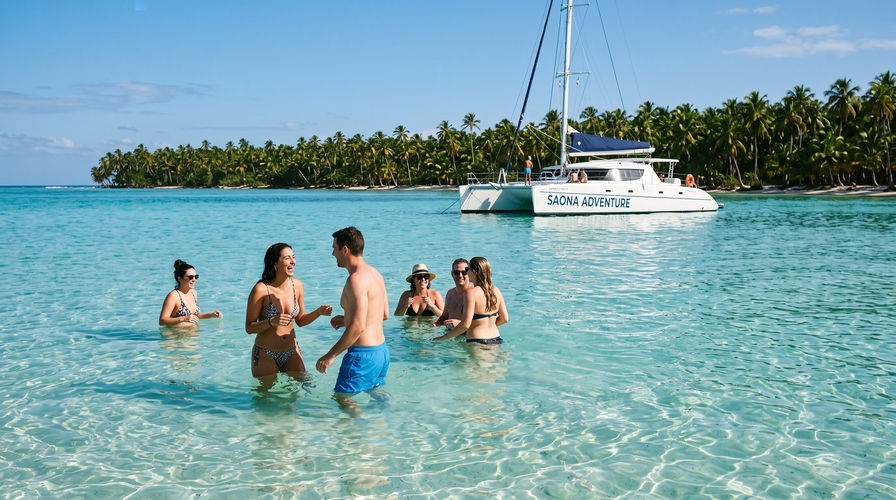
The Dominican Republic features some of the best golf architecture on the planet. Courses like Punta Espada and Corales are legendary. Playing 18 holes in February is a joy because you get the stunning coastal views without dealing with the exhausting, dripping sweat of a July tee time.
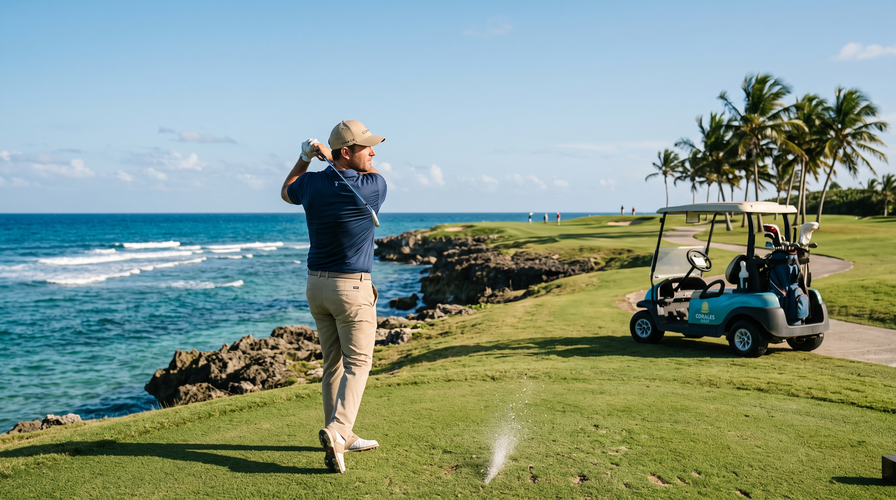
If you are traveling with kids, or if you just prefer floating over fighting heavy surf, location matters. The coastline here is not uniform.
Bavaro Beach is the undisputed champion for calm water. Because it faces east and sits behind a massive, continuous coral barrier reef, the heavy ocean energy gets destroyed hundreds of yards away from the sand. The water lapping at the shore is gentle and highly protected.
Macao Beach, located further northwest, tells a different story. It lacks that protective reef system, meaning it takes the North Atlantic swells right on the chin. It is visually stunning and excellent for surfing, but it features heavy breaking waves that can easily knock you off your feet. Stick to Bavaro for a relaxed, flat-water experience.
The vibe in town during February is electric. The resorts are full, the weather is perfect, and the tour operators are running at full capacity.
With Valentine's Day anchoring the month, the demand for couples' excursions skyrockets. Sunset catamaran cruises are the heavy favorite here. Drifting along the coastline while the sky turns neon pink, armed with a glass of sparkling wine and a warm ocean breeze, is exactly why people book these trips in the first place.
If you get bored easily sitting on a beach towel, it is time to mix dirt and saltwater. The ultimate local hack is booking combination tours that knock out two completely different biomes in one day.
Lock in the buggy and jet ski package Punta Cana to tear through muddy jungle trails and local villages before washing off the dirt by blasting across the Caribbean Sea. If you want maximum variety, the aqua kart and buggy package Punta Cana lets you drift on the dirt tracks in a 4x4, then head to the ocean to drift on the water in a marine kart.
Why do travel veterans fiercely defend February as the ultimate time to fly down? Look at the hard numbers compared to the rest of the calendar.
| Time of Year | The Reality on the Ground |
| February | The Gold Standard: You get zero humidity, completely flat water, zero storm threats, and perfect mid-80s heat. |
| January | The Warm-Up: Very similar to February with excellent dry conditions and cool nights. See the data in our Punta Cana weather in January guide. |
| July | The Sweaty Season: The heat spikes, the humidity gets heavy, and the rain starts picking up. Compare the vibe in our Punta Cana weather in July breakdown. |
| September | The Storm Watch: High heat, heavy rain potential, and active hurricane monitoring. Check out our Punta Cana weather in September analysis. |
Is February a good time to visit Punta Cana?
Absolutely. It is arguably the best month of the entire year. You land right in the middle of the dry season, guaranteeing mild 81°F temperatures, low humidity, and beautifully clear skies for your entire trip.
Does it rain a lot in Punta Cana in February?
No, it barely rains at all. February averages just about 3.1 inches of rain for the entire month. When showers do pop up, they usually happen in the middle of the night and disappear in ten minutes.
Is there seaweed in Punta Cana in February?
No, you are traveling during the lowest risk period. The cooler winter ocean temperatures prevent the sargassum seaweed from blooming aggressively, leaving the beaches and swimming areas remarkably clean.
Is the water too cold to swim in February?
Not even close. The ocean stays right around a highly comfortable 79°F (26°C). You can jump right in without taking a cold shock, and it is warm enough to swim in for hours.
Are the waves too rough for Jet Skiing in February?
No, the waters are generally calm and perfect for it. The offshore barrier reef completely protects the Bavaro coastline, keeping the surface flat, smooth, and ideal for pushing a watercraft to its limits.